
Neonatal MRI
Description
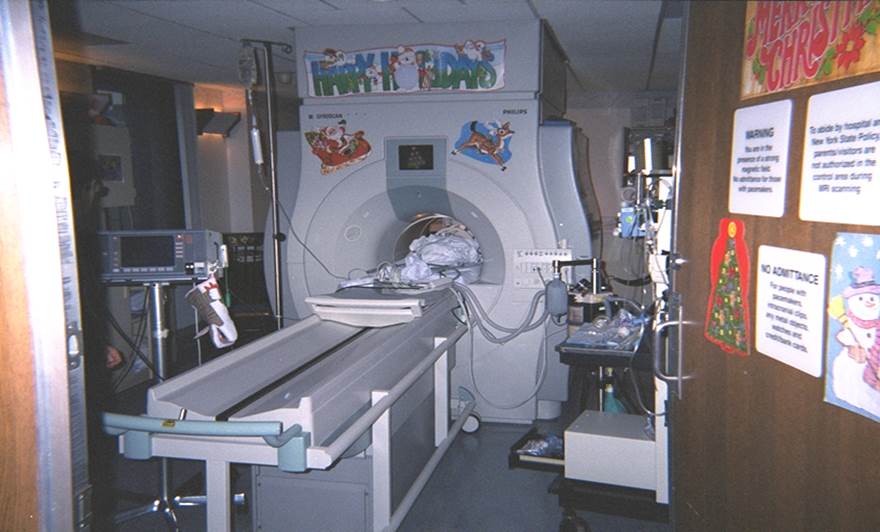
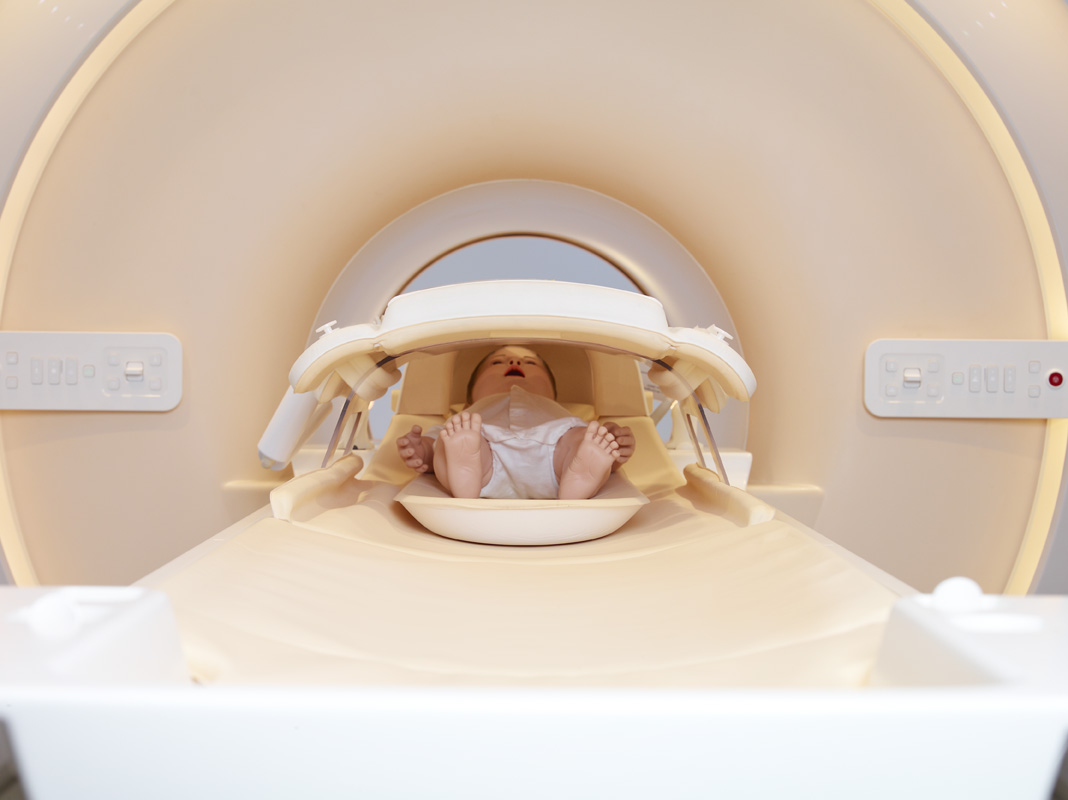
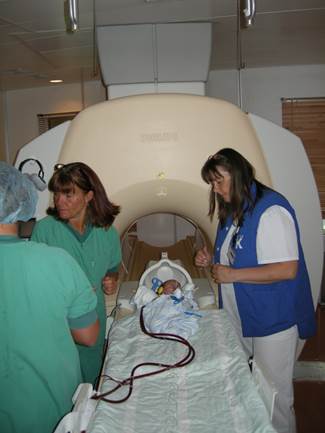
Examining newborn babies is a very special branch of diagnostics. When these little patients need an MRI examination, they are often sick, premature or have an abnormality. They cannot be asked to lie still, hold their breath or not cry! Heart rate and breathing rhythms are very high. Sedation or anaesthesia is not really wanted to be used except in the most serious cases. Monitoring and ventilation equipment is sometimes needed within an MR room and partly even within the magnet. A child can sometimes even be placed in an MRI compatible incubator to be scanned. The necessary coils and equipment then fit the specific requirements of MRI. A radiology department does not always have access to such equipment and then it is to consider whether the baby really needs to be scanned or not.
An MRI examination of their newborn can also be a traumatic experience for parents and it often requires a lot of tact from the operating staff to prepare parents for such an examination.
Children may have abnormalities that do not occur in older children and adults. An MRI image of a body changes over time depending on the stage of development. It is necessary to know milestones to know whether the image is a normal image or an abnormality is development. This requires special training for the operating staff and the radiologist involved.
Elizabeth van Vorstenbosch-Lynn, as a clinical application specialist within Philips Healthcare, focuses on imaging newborn children with MRI and what special measures are needed for this.
Speaker(s)
Elizabeth van Vorstenbosch-Lynn
Location
Lecture room in Gemini-Z building (arrow at no. 15)
Organiser
Region South
Name and contact details for information
ing. Koos Mulder, tel. 06 39681065