

Symposium | Aviation within defence: a look at technology and operations
This symposium, organised in cooperation with the NVvL (Netherlands Aeronautical Engineering Association), highlights current technological developments within our Dutch defence aviation sector, and their interaction with operations. We have a programme filled with presentations by readers from various defence industries. For dinner, a hot buffet will be provided halfway through the programme, and we will end the evening with a networking reception, during which there will be ample opportunity to talk about the inspiring lectures!
- The lectures will be held in Dutch.
- For participants registering as students, we will ask to show the student card upon reception.
- A timeline of the Symposium programme follows at the bottom of this page.
- Dietary requirements can be indicated upon registration.
Lectures
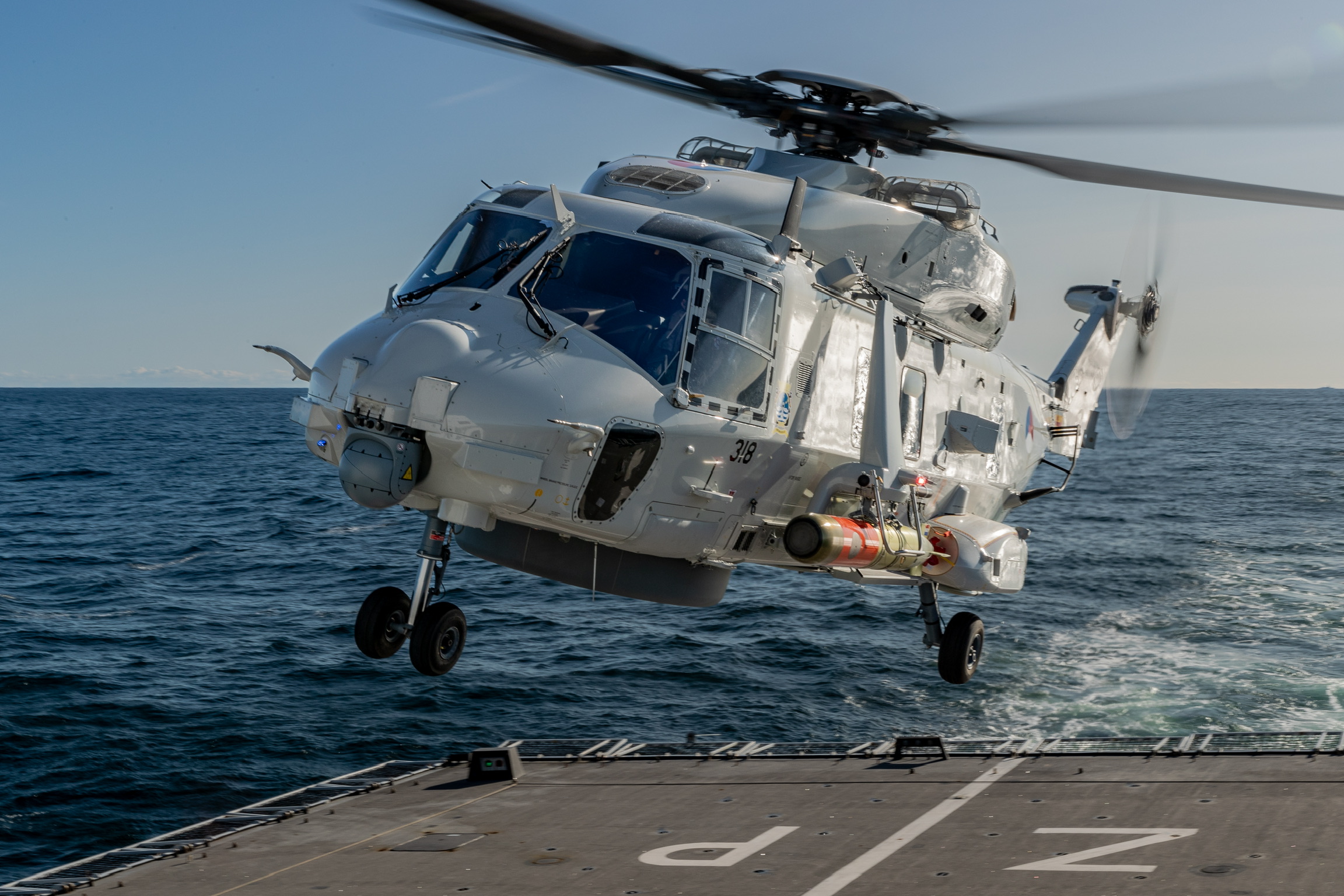
Lecture 1 - Deployment of the NH90 within the NL Navy
The symposium will kick off with a lecture by an Air Operations Staff Officer with years of experience on the NH90 platform, discussing the past present and future of the NH90 helicopter. This speaker has experience with this aircraft from a role as product manager, staff officer and has been involved in the first NH90 factory training in Italy. Among the topics that will be covered in this lecture are the tasks of the NH90 within the Dutch armed forces, what has been achieved with this aircraft over the past 10 years, its capabilities and future developments.
Lecture 2 - Drones/Counterdrones by Jacco Dominicus
Jacco Dominicus studied Aerospace Engineering at TU Delft. He is currently Principal R&D Manager within Royal NLR's Defence Operations. Within this, he manages a team that deals with the operational deployment and weapon system performance of all flying platforms within Dutch Defence. Jacco was involved early on in establishing effective defences against small unmanned flying objects such as drones. Among other things, he chairs a NATO working group on C-UAS.
After a brief visit to the definition of Airpower, there follows a "big steps fast home" overview of the developments of manned Airpower, including air defence. This then forms the starting point for identifying possible parallels with development of military unmanned small Airpower and counter-UAS. Historical developments, examples of current deployment, and developments in "enabling" technologies then form the basis for an attempt to interpret the future of small Airpower and counter-UAS.
Lecture 3 - Frisian Flag/F35/Training&Simulations by a pilot at Frisian Flag
After working in the Royal Air Force for 23 years, David van Pelt recently started working part-time at NLR. In his Defence time, David gained over 3,000 hours of experience on the F-16AM, F-16CM and the F-35A. In his career, he completed the Weapons Instructor Course in 2010, flew as an Exchange Officer with the USAF from 2015 to 2019 and served several deployments. During Frisian Flag 2023, apart from live assets, virtual assets participated in the exercise for the first time. As former Commander of the 323 Air Combat Development Centre, responsible for the execution of Frisian Flag, he has been closely involved in this.
Besides a brief introduction and capability brief of the F-35, an explanation of exactly what Frisian Flag entails and what training is achieved during the exercise follows. From the different mission sets flown, to the participants and supporting units. The integration of Live, Virtual and Constructive entities that enrich such an exercise is discussed in detail.
Lecture 4 - Spaceflight by Bernard Buijs
With the successful demonstration of Brik 2 and the Norwegian Dutch Milspace2 satellites, we have shown that thanks to "new space" technology, the Netherlands can develop relevant satellite capabilities. How will we further develop these capabilities and how does this fit into a hybrid architecture with commercially available information? This briefing outlines plans for the implementation of the space domain for security and defence.
Bernard Buijs joined the air force after graduating from TU Delft (L&R), where he was allowed to specialise as a Flight Test Engineer on the F16 and F35. In 2016, Bernard joined the then agency Space, which is now set to become a formal Space organisation with the Defence Note 2022.
Excellent accessibility
The KIVI building is a seven-minute walk from The Hague CS and tram 9 stop in front of the door. Parking is available for a fee in parking garage Q-Park Malieveld or parking garage Museumkwartier, which are within walking distance of the building.