

E-Lunch session Energy Transition in Practice Project SpaarGas of the Ramplaan Quarter in Haarlem
From the Climate Tables to the neighbourhoods.
At the climate tables, including that of the Built Environment, they discussed how to achieve the goals of the Climate Agreement. At the Climate Table for the Built Environment, they discussed how (office) buildings and homes can be supplied with energy for heating, lighting and other things. The final report was discussed in political circles in The Hague, after which the 30 energy regions of the Netherlands were commissioned to work things out for their own region and to outline a strategy on what solutions are envisaged for the regions. The results were laid down in RESs (Regional Energy Strategies). The municipalities are tasked with elaborating these RESs for each district into concrete solutions to provide homes and office buildings with energy, the district heating plans. In practice, residents/house owners, although this affects them directly, are hardly involved, if at all. Residents do not know what is in store for them, do not understand the technology and do not know what it will cost them. So residents' acceptance of municipalities' plans is not very high.
Residents take the initiative themselves.
In a number of municipalities, residents and homeowners do not wait to see what municipal plans they will be confronted with. They then take the initiative themselves and start looking for a way to power the homes in their own neighbourhood for when the gas is finally disconnected. Neighbourhood residents unite and start a project to shape the energy transition in their neighbourhood together. Often, other professional parties are involved for advice on technical, organisational, financial and legal matters. A not easy process with the necessary risks!
Project SpaarGas in Haarlem.
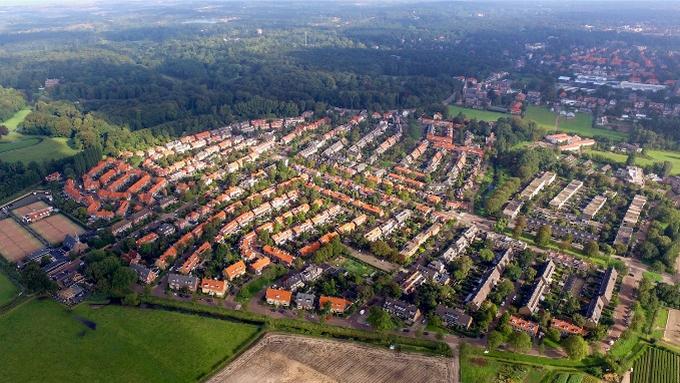
One such project is the SpaarGas project in the Ramplaan district in Haarlem. This neighbourhood is characterised by houses that were partly built before the Second World War, with all the attendant features! Here, residents/residents of some 1,200 homes are uniting and, in cooperation with the municipality of Haarlem, want to make their homes suitable for going off the gas themselves. The thread of this webinar includes the following elements:
1. the technical solution designed by TU Delft. It focuses on insulating homes, using PVT and heat pumps and building a district heating network.
2. the question of how to get enough residents on board with the plans. A clear story about funding, among other things, is extremely important here!
3. The cooperation with the municipality of Haarlem. What role does the municipality play now that residents are developing their own initiatives?
Also important are questions such as which other parties are involved, and how do you organise realisation? There appear to be a lot of hurdles to take to get such a project up and accepted!
The speaker
Peter Bon provided insight into the various aspects of the project. He himself is a resident of the neighbourhood and actively involved as a neighbourhood building master and member of the core team.
He owns a Management & Consultancy firm; he also worked for years as a divisional director at AEG Power Systems.
Presentation and webinar:
The Savings Gas project presentation and Intro with Q&A, can also be found under"Documents". Further project info can be found at: https://ramplaankwartier.nl/spaargas/
Would you like to watch the webinar of our E-lunch 21-07-2021 again? You can watch it again on the private KIVI YouTube channel after 6 August, definitely a reason to become a KIVI member.