
E-Lunch session: The 'forgotten' bottlenecks of the Energy Transition
Climate change presents us with a huge challenge. We will have to do our utmost to keep the impacts within acceptable limits. Governments, industry, education and citizens are developing initiatives on various fronts to halt greenhouse gas emissions. In its series of lunchtime webinars, KIVI's Electrical Engineering Department wants to highlight the Energy Transition from different angles. Many plans have been made, many developments initiated and projects underway. Think of our earlier webinars on the SpaarGas project in Haarlem and trucks running on hydrogen. However, we also wanted to point out bottlenecks in the plans. Because these can hinder the smooth progress of the Energy Transition.
Dutch laws and regulations do not always cooperate with a smooth transition. Rules from the old situation stand in the way of implementation of the new situation and are slow to be adjusted.
Municipalities mostly focus on new energy from wind and solar in their RESsen. But there is also something like the concept of "Dunkelflaute". What do we do when the wind does not blow and the sun does not shine? Necessary energy storage remains undiscussed or passed on to grid operators. Where is the concern for the balance between production and consumption ven electricity, which should ensure a stable grid? As the feed-in of wind and solar power is mostly decentralised, generation becomes increasingly climate-sensitive as parts of the grid become "full". Recent news: power companies cannot connect new wind and solar farms. By solving bottlenecks together, the Energy Transition can be successfully completed in time!
The speaker, Sanne de Boer, has written a book entitled: "The Energy Transition Explained", in which she highlights the Energy Transition from many angles. In this webinar, she highlighted some aspects that are essential for a successful energy transition, but are often underexposed. She talked about the capacity and stability of the Dutch electricity grid and explained the need for short- and long-term storage of electrical energy. Finally, she highlighted the pros and cons of decentralised versus centralised control of the whole process that triggers the energy transition.
The sheets of the presentation during the E-Lunch session can be found under "Documents", the recording can be viewed here. the presentation can be run simultaneously via the second screen.
To do this, you have to open the presentation on your second screen, as it is under "Documents" and then click through while watching the video.
It is not ideal, as KIVI Electrical Engineering are going to look, how we can solve this for future E-Lunch sessions.
The speaker:
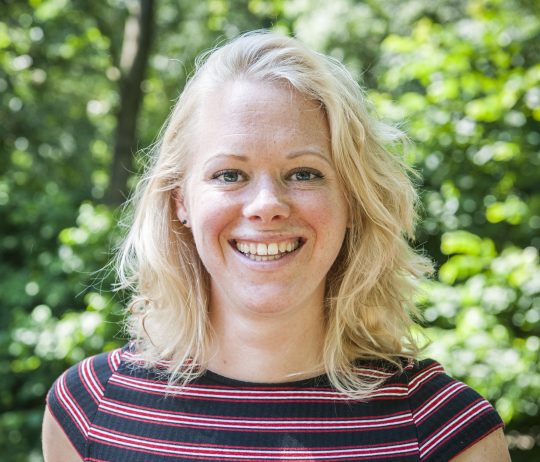
Sanne de Boer studied Innovation and Energy Sciences and graduated cum laude and has the National Energy Traineeship. She has carried out assignments for the European Commission and Dutch governments in the field of renewable energy through a consultancy firm. As a senior energy transition analyst, she worked at Stedin's Innovation Department. She is also active in KEK, a foundation of young professionals working on energy and climate issues.