

You'll never regret Delta21! Energy transition, water safety and nature restoration
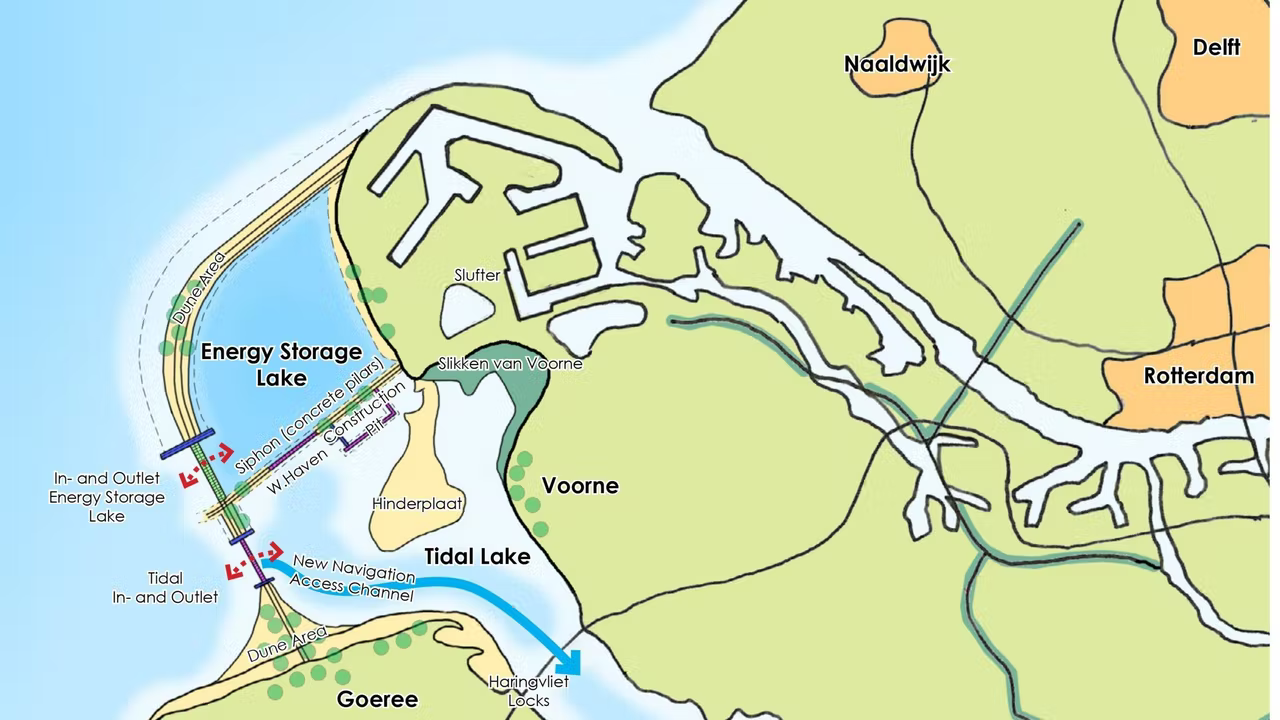
At the heart of Delta21: Large-scale energy storage, which also ensures dry feet in the South West Delta, and also offers plenty of opportunities for greater biodiversity and nature restoration.
Looking back E Lunch session: You'll never regret Delta21!
Power storage after 2030 is indispensable:
Due to the high weather dependence of electricity from both wind and solar, power supply and demand will be increasingly out of sync. If more than 70% of power is to be sustainably generated from 2030 onwards, without storage, the potential supply of power would exceed even more than 3 times demand on average.
The high excess capacity of both renewable and conventional installed capacity will then simply be needed for the times when there is too little wind and solar supply, and this will automatically lead to huge wastage of power. That huge surplus can only be utilised through storage, both small-scale and large-scale and in all forms that are then available and efficient.
Worldwide, over 93% of all power storage currently takes place using water, and fortunately, this can also be done excellently and very efficiently in the Netherlands.
Synergy is at the heart of Delta21
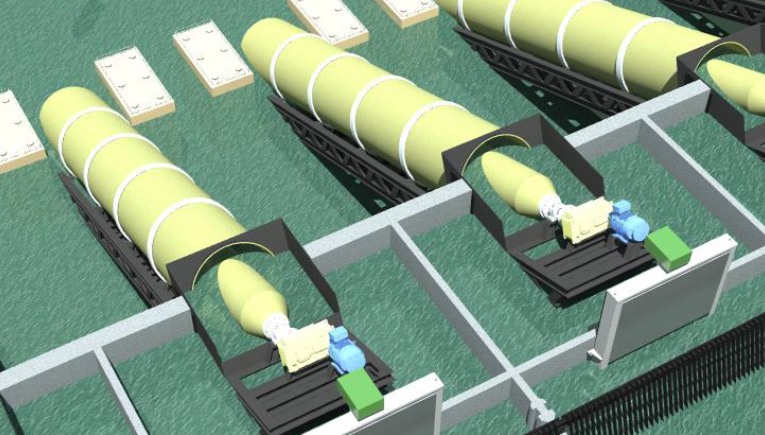
The Energy Storage Lake is a fall lake and has a total surface area of about 40 km2. With the help of pump turbines, it can store and co-generate 1.8 GWe gross for 12 hours.
Excess power, which drives the pumps, is used to empty the lake. When the demand for energy is high, the pumps are used as turbines are, and, during the filling of the lake, the previously used power is largely (80%) returned.
This large-scale storage enables significantly better use of the installed capacity in the wind and solar farms; increasing the "load factor".
During storms and high river discharges, the large pump capacities are used as super pumping stations to pump excess river water to the sea. This does require a new storm surge barrier and a spillway.
This could save billions on the €40 billion cost of the Delta Commissioner's dyke reinforcement project.
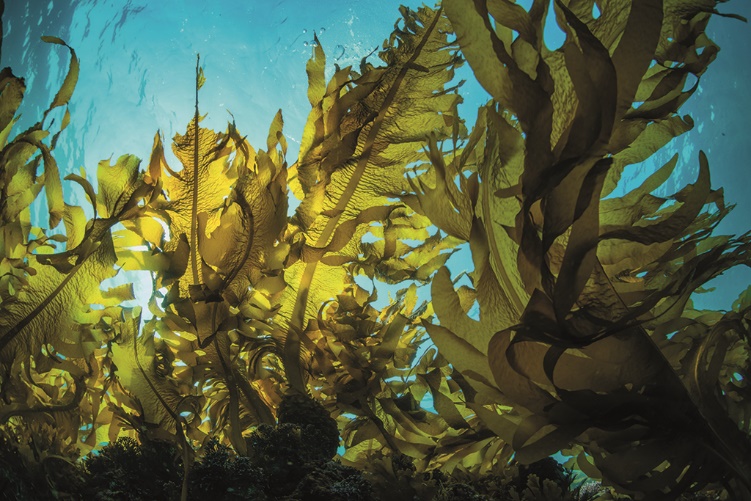
The Energy Storage Lake also offers optional space for floating solar parks, wind farms and saltwater batteries. The lake also offers great potential for aquaculture development.
Improving natural values and more biodiversity at the Haringvliet
Since the Delta Works, fish migration from the North Sea to the rivers has been virtually blocked. The Kier decision does provide a small improvement, but with Delta21, a fish migration pier will also largely restore fish passage through the Haringvliet. In the Tijmeer to be formed, the lost brackish water habitat can be restored.
The mouth of the Haringvliet is silting up at Oostvoorne, the Hinderplaat is moving towards Rockanje and sand transport from the Kwade Hoek is silting up the channel to Stellendam. Without intervention, these morphological developments lead to a complete silting of the Haringvliet estuary.
This will also jeopardise the discharge of river water to the North Sea via the Haringvliet during high river discharges and will lead to an even further rise in water levels at Dordrecht and the surrounding area.
With Delta21, the shipping channel to Stellendam will be considerably widened and deepened and the silting up in the estuary will come to a virtual standstill. Delta21 will also give nature plenty of opportunity to recover via mudflats and creeks and restore the once diverse nature area in the estuary.
What will it deliver?
Tentative assumptions for 2030 indicate that the savings from offshore wind farms could be up to 9 GWe, representing a value of over 15 billion Euros.
This large-scale storage also generates a further 400 million euros a year in terms of grid relief and revenue from price arbitrage.
The annual CO2 savings are around 4 Mtonnes, which could also be worth €400 million in 2030.
Then there is the saving on dyke raising and dyke reinforcement of €5 billion until 2060, rising to over Euro10 billion in 2100 at an assumed sea level rise of 1m.
The speakers:
Huub Lavooy
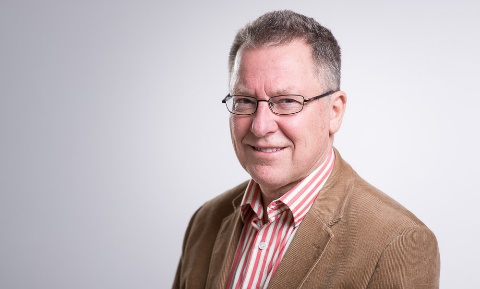
Huub Lavooy studied at Delft University of Technology. He has worked at Volker Wessels, Rijkswaterstaat and Ministry of Infrastructure and the Environment, among others. He is owner/director of consultancy firm Babel 21. From 2016, he developed the plan for Delta21 together with Leen Berke.
Leen Berke
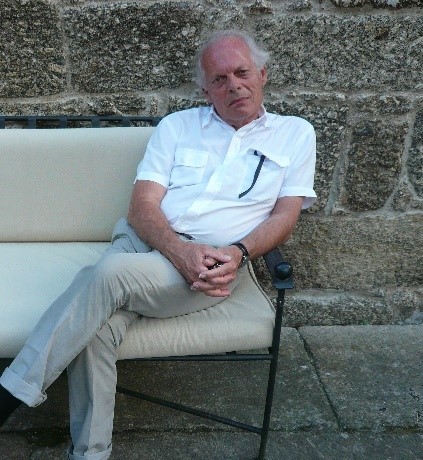
Leen Berke graduated as an economist from the University of Amsterdam. He has worked at Ultra Centrifuge Netherlands, VolkerWessels and bpfBOUW. He is director/owner of the agency LBE Treasury & Finance.
Looking back E Lunch session: You'll never regret Delta21!
Left:
Newsletter No 16, June 2022 Delta21 continues to develop
Delkta21 The integrated approach, The makers this morning
https://www.kivi.nl/afdelingen/elektrotechniek/activiteiten/activiteit/e-lunchsessie-schaalbare-energieopslag-op-zee-de-missing-link-in-de-energietransitie
https://oceangrazer.com/