

Lorentz: celebrated physicist, born conciliator
Due to the new coronagraphs, the lecture on 17 October cannot take place.
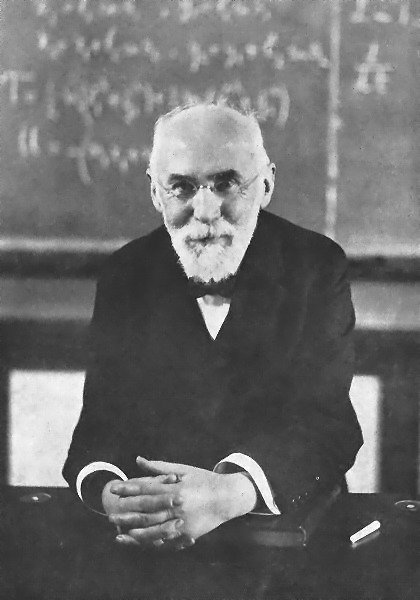
The boards of the KIVI Department of the History of Technology (KIVI-GdT) and of the Histechnica Association have the pleasure of inviting you to attend a lecture to be given by Prof Dirk van Delft, entitled "Lorentz: celebrated physicist, born conciliator" on Saturday 17 October 2020.
Programme:
10.30 h: Building open; reception with coffee
11.00 hrs: Lecture by Prof Dr Dirk van Delft
11:50 a.m.: Break
12:15: Continuation of lecture / concluding discussion.
Due to governmental and TU Delft regulations, we have to limit the total number of attendees for this lecture. The lecture is therefore only open to members of Histechnica and KIVI.
Registration is strictly on a first-come-first-served basis, with no distinction made between GdT and Histechnica members. After registration, you will receive a confirmation of receipt. A little later, an e-mail will follow with either notification that there is room and an e-ticket, or that the maximum number of participants has been reached and you have been placed on the reserve list.
No entry without e-ticket!
Registration as usual via the website. This can be done until Friday 9 October 2020 at the latest. If you have registered and received an e-ticket but are unexpectedly unable to attend, please notify the secretary (ton@tdlbv.nl) so that your place can be allocated to someone else. Important information about the Corona protocol can be found at the bottom of this page.
Summary of lecture
Hendrik Antoon Lorentz (1853-1928) is, with Christiaan Huygens, the Netherlands' greatest physicist. Born in Arnhem, in which city he invented the electron in splendid isolation , he became professor of theoretical physics in Leiden at the age of 24. After his 1902 Nobel Prize, Lorentz grew to become an international coryphée. His electron theory was on a par with Einstein's theory of relativity.
With his deep insight, engaging character, tact and language skills, Lorentz was the ideal chairman of the world-famous Solvay Councils in Brussels. He exploited these same gifts in and after the World War as a tireless conciliator. A gifted populariser, Lorentz witnessed the revolutionary transition from classical to modern physics. And in the International Commission on Intellectual Cooperation, forerunner of UNESCO, he served world peace. The lecture pays extra attention to Lorentz's views on technology and his involvement with the Afsluitdijk.
Information about the speaker, Prof Dirk van Delft
Dirk van Delft (1951) studied physics in Leiden. He stood in front of the classroom, was chief scientist at NRC Handelsblad and director of Rijksmuseum Boerhaave. At Leiden University, he is emeritus professor of 'Material heritage of the natural sciences'. Since his retirement in 2018, he has been a visiting fellow at the Institute Lorentz. In 2015, he obtained his PhD with Heike Kamerlingh Onnes. A biography. With Ton van Helvoort, he wrote Images without parallel: the electron microscope from Ernst Ruska to Ben Feringa (2018) and with Frits Berend the biography Lorentz: celebrated physicist, born conciliator (2019). He is currently working on a biography of astrophysicist Henk van de Hulst.
Upcoming activities:
* saturday 14 November 2020: Lecture on micro-electro-mechanical systems. Speaker: Prof Dr Peter G. Steeneken, TU Delft, Faculty 3mE.
* saturday 12 December 2020: Lecture on the history of the TNO Complex Zuidpolder Delft 1960 - 2015. Speaker: Drs Gerard van de Schootbrugge, former TNO employee.
* saturday 9 January 2021: Lecture on Jacques C. van Marken: social engineer and visionary. Speaker: Jan van der Mast, urban planner, writer, biographer.

CORONAPROTOCOL for members of Histechnica and KIVI
When visiting lectures of Histechnica and KIVI at the Science Centre Delft, the following rules apply:
Hygiene rules:
- We urge you to stay at home in case of any of the following symptoms:
o Nasal cold, cough, sore throat or fever.
- Cough and sneeze into your elbow.
Visitor rules:
- Please report to the board members standing at the entrance to the Mekel Hall at the start of your visit to the lecture.
- The maximum number of visitors is 70 (seventy).
- A maximum of one person at a time is allowed to enter or exit through the entrance.
If necessary, wait outside in front of the hall entrance for your turn.
- Always keep at least 1.5 metres distance from attendees.
Adhere strictly to these rules and to the instructions of Science Centre staff and board members.