Lorentz: celebrated physicist, born conciliator
The Board of Department of History of Technology (KIVI-GdT) has the pleasure of inviting you to attend an online lecture to be delivered by Prof Dirk van Delft, entitled:
"Lorentz: celebrated physicist, born conciliator"
this lecture is organised in cooperation with Histechnica.
>Date: Saturday 30 January 2021 at 11:00 am
> Venue: On line, this time with Zoom
Please note: this lecture will not be recorded you will not be able to watch it again later
> Programme:
10.45am: Log in to Zoom. You will be emailed a link in advance. More information on how to attend a Zoom meeting can be found here
11.00 hrs: Lecture by Prof Dirk van Delft
12:00: Answering questions. These can be asked during or after the lecture via email: gdthisvragen@gmail.com or via the Zoom chat function.
12:30: End of lecture.
> Summary of the lecture
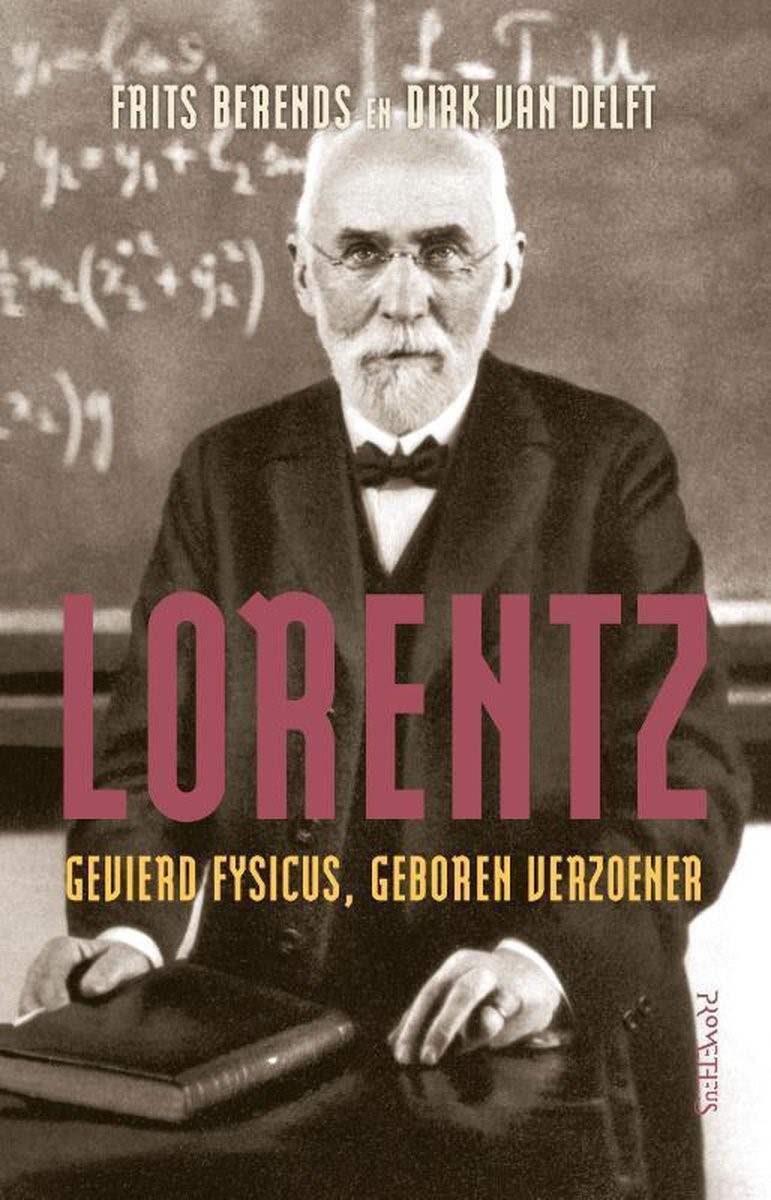
Hendrik Antoon Lorentz (1853-1928) is, with Christiaan Huygens, the Netherlands' greatest physicist. Born in Arnhem, in which city he invented the electron in splendid isolation , he became professor of theoretical physics in Leiden at the age of 24. After his 1902 Nobel Prize, Lorentz grew to become an international coryphée. His electron theory was on a par with Einstein's theory of relativity. With his deep insight, engaging character, tact and language skills, Lorentz was the ideal chairman of the world-famous Solvay Councils in Brussels. He exploited these same gifts in and after the World War as a tireless conciliator. A gifted populariser, Lorentz witnessed the revolutionary transition from classical to modern physics. And in the International Commission on Intellectual Cooperation, forerunner of UNESCO, he served world peace.
The lecture pays extra attention to Lorentz's views on technology and his involvement with the Afsluitdijk.
> Information about the speaker, Prof Dirk van Delft
Dirk van Delft (1951) studied physics in Leiden. He stood in front of the classroom, was chief scientist at NRC Handelsblad and director of Rijksmuseum Boerhaave. At Leiden University, he is emeritus professor of 'Material heritage of the natural sciences'. Since his retirement in 2018, he has been a visiting fellow at the Institute Lorentz. In 2015, he obtained his PhD with Heike Kamerlingh Onnes. A biography. With Ton van Helvoort, he wrote Images without parallel: the electron microscope from Ernst Ruska to Ben Feringa (2018) and with Frits Berends the biography Lorentz: celebrated physicist, born conciliator (2019). This spring, his biography of astrophysicist Henk van de Hulst will be published: Traveller in the World Space.