
A century of fluid dynamics in the Netherlands - the role of Delft
Your Board, in cooperation with Board of Histechnica, has the pleasure of inviting you to attend a lecture to be delivered by Dr Fons Alkemade entitled:
"A century of fluid dynamics in the Netherlands - the role of Delft"
Programme:
10.30 h: Building open; reception with coffee.
11.00 hrs: Lecture by Dr Fons Alkemade
11:50: Short break.
12:00: Continuation of lecture / concluding discussion.
12:40: End of meeting
Due to governmental and TU Delft regulations, we have to limit the total number of attendees for this lecture. This lecture is therefore only open to members of Histechnica and KIVI.
Registration is strictly on a first-come-first-served basis, with no distinction made between KIVI and Histechnica members. After registering, you will receive an e-mail with either confirmation that there is room - this is your e-ticket - or a message that the maximum number of participants has been exceeded and you will therefore not be able to attend the lecture and will be placed on the reserve list.
No entry without e-ticket!
Registration as usual via the website www.kivi.nl and can be done until Friday 28 August 2020 at the latest. Once you have registered you will receive a confirmation but this is not your e-ticket, which will be sent separately if there is space. If you have registered and received an e-ticket but are unexpectedly unable to attend, we ask you to notify the secretary(ton@tdlbv.nl) so that your place can be allocated to someone else. See below for important information on Corona protocol.
 Summary of the talk
In October 1918, physicist Jan Burgers, aged 23, started as professor of 'aerodynamics, hydrodynamics and their applications' at the Technische Hogeschool in Delft. Although there had of course been interest in the behaviour of fluids and gases before that, this moment can be considered the birth of fluid dynamics in the Netherlands. Not only as an academic discipline but also as the beginning of the serious study of flow phenomena in technical environments.
During Burgers' time in Delft (until 1955), three Dutch institutes were founded that remain important research centres in different areas of fluid dynamics to this day: aerospace engineering, 'hydraulic engineering' and shipbuilding/marine research. Citizens and others developed mathematical, experimental and numerical approaches to a wide range of flows. Some of their achievements have become world-renowned and can be seen as highlights of Dutch flow science. Delft University College/University and Delft-based engineers played an important role in all these developments.
From the 1950s, fluid dynamics gained a permanent and respected place in the curriculum and research of (technical) universities, at many old and new research institutes and also at various industrial research laboratories. In the 1980s, fluid dynamics was finally 'recognised' as a serious branch of physics and an important (applied) field of science. This resulted in close cooperation between academic groups, institutes and industry and the establishment of the BurgersCentrum, the Research School for Fluid Dynamics in the Netherlands.
Drawing on a number of research institutes and Delft engineers and scientists, the speaker will give a picture of the development of fluid dynamics in our country and the role 'Delft' has played in it.
Information about the speaker, Dr Fons Alkemade
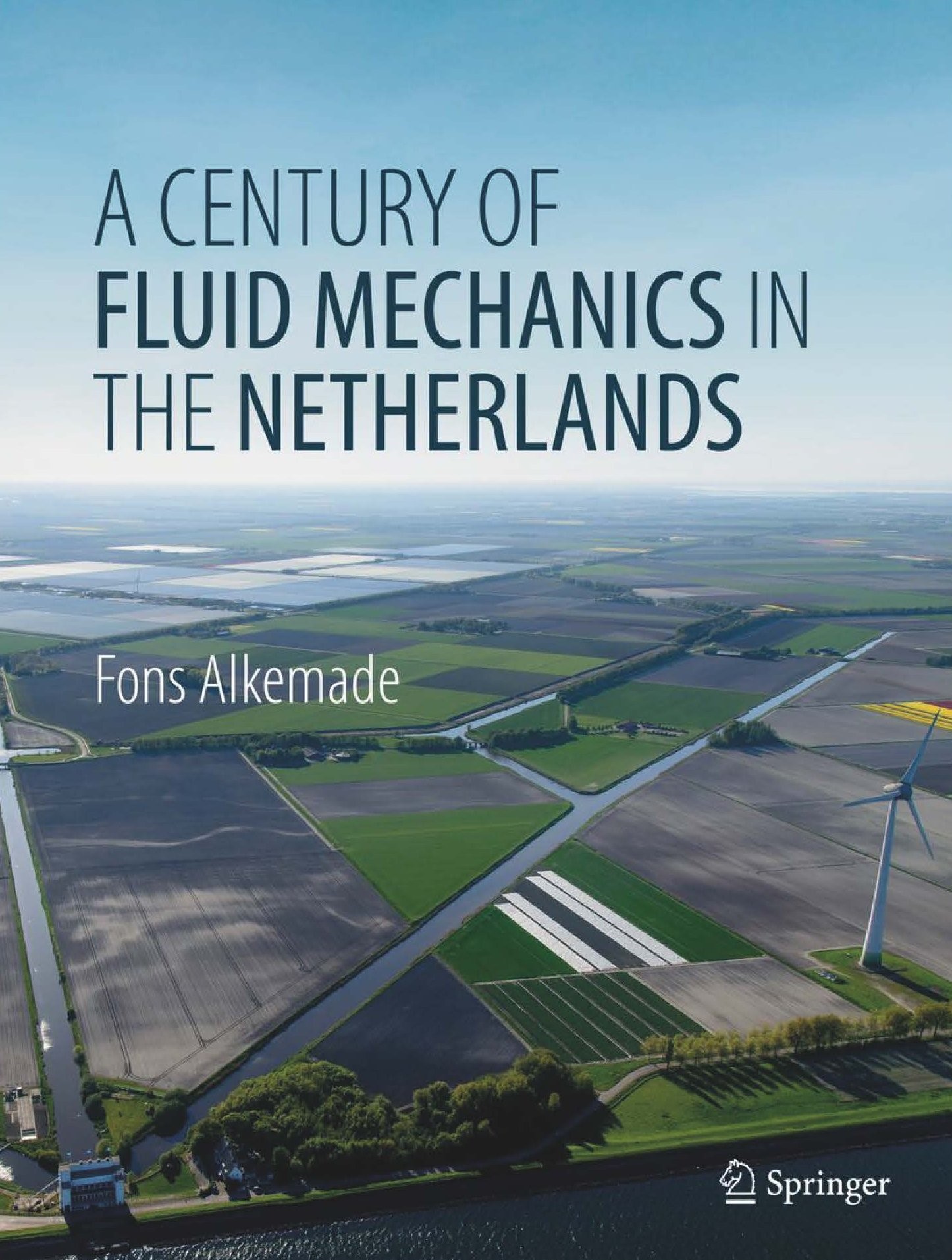
Dr Fons Alkemade (1966) became involved in fluid dynamics as a mechanical engineering student at Delft University of Technology in 1987. After graduating, he went on to do PhD research in 1989 at the Laboratory of Aerodynamics and Hydrodynamics, the laboratory founded by Jan Burgers around 1920. He witnessed the revival of fluid dynamics in the Netherlands and the birth of the Burgers Centre in the early 1990s. In 1994, he defended his PhD thesis 'On vortex atoms and vortons' before a committee chaired by Professor Frans Nieuwstadt. Even during his PhD period, he started to inventory and organise the archival material related to Burgers and in 1995 he published a biography of Burgers, for which he interviewed many people from the (former) fluid dynamics community. After 1994, Fons Alkemade became a freelance science journalist, automotive historian, physics teacher and author/editor of textbooks on physics and engineering. Occasionally, he still does (historical) research and publishes on topics from his old field. In 2019, his book 'A century of fluid mechanics in the Netherlands' was published by Springer publishers.
Upcoming activities:
- saturday 10 October 2020 subject to change; lecture on Lorenz
- saturday 14 November 2020: Lecture on micro-electro-mechanical systems (Speaker: Prof. Dr Peter G. Steeneken, TU Delft, Faculty 3mE)
- saturday 12 December 2020: Lecture on the history of the TNO Complex Zuidpolder Delft 1960 - 2015 (Speaker: Drs Gerard van de Schootbrugge, former TNO employee)
Explanation of the Science Centre's Corona Protocol
To safeguard the health of us all, the Science Centre has drawn up a so-called "Corona Protocol" in close consultation with TU Delft. That protocol applies to all visitors to our lectures. They are obliged to adhere to it.
Corona Protocol for members of Histechnica and KIVI-GdT
When visiting lectures of Histechnica and KIVI-GdT in the Science Centre Delft, the following rules apply:
Hygiene rules:
- We urge you to stay at home in case of any of the following symptoms
- Nasal cold, cough, sore throat or fever.
- Coughing and sneezing into your elbow.
Visitor rules:
- At the start of your visit to the lecture, please report to the board members standing at the entrance to the Mekel Hall. You can have a cup of coffee or tea and then go directly to your seat in the Mekel Room.
- There is a maximum number of visitors.
- A maximum of one person at a time is allowed to enter or exit through the entrance. If necessary, wait outside in front of the hall entrance for your turn.
- Always keep at least 1.5 metres distance from those present.