

Radar and Electronic Warfare in World War 2
The boards of the Histechnica Association and of the KIVI Department of the Historyof Technology are pleased to invite you to attend a lecture to be given by Prof J.F. Abbink entitled:
Radar and Electronic Warfare in World War 2
on Saturday 24 June 2023 at the Science Centre of TU Delft.
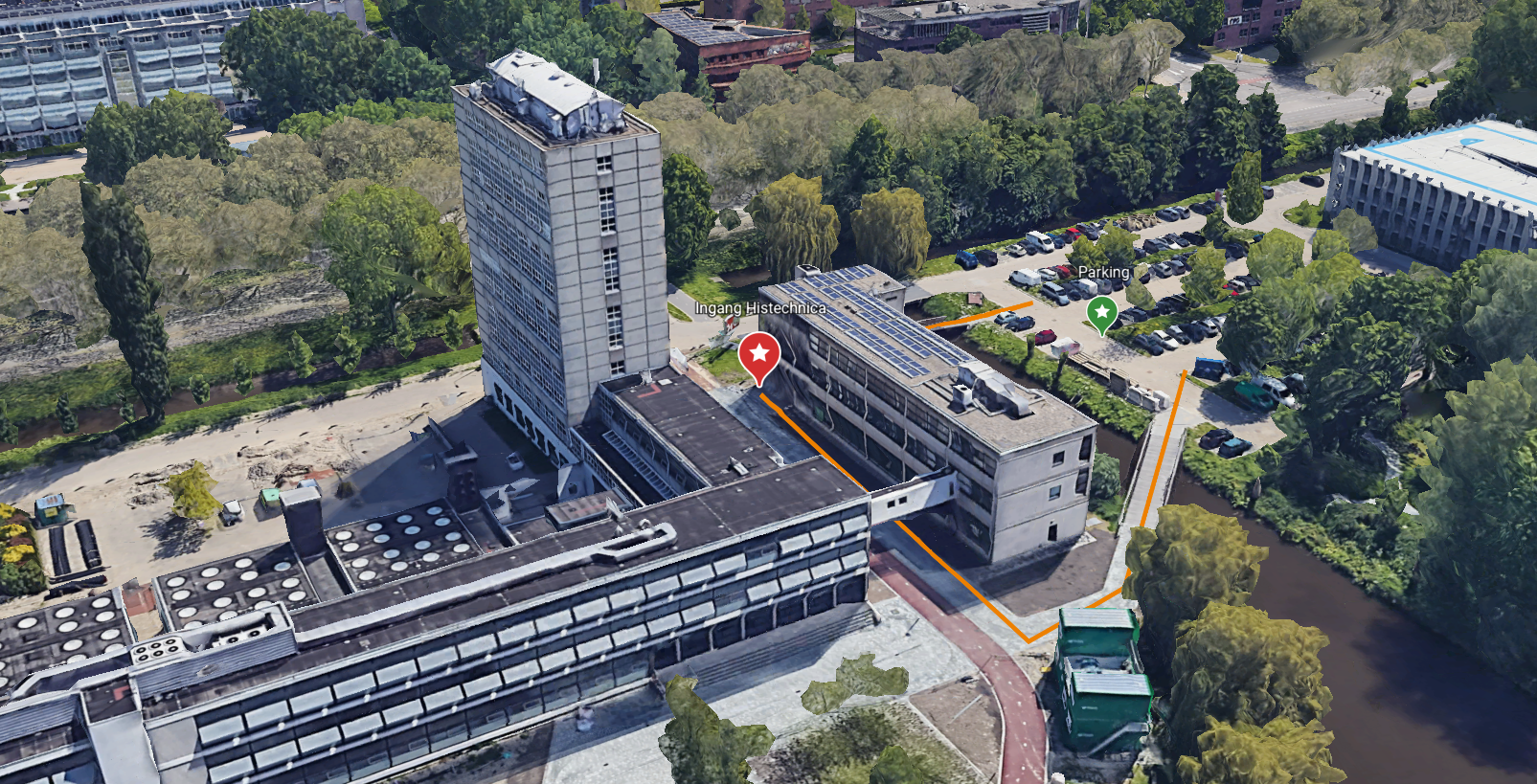
Entrance 'B' of the Science Centre
Programme
10.30 hrs: Walk-in with coffee and tea
11:00: Welcome and introduction
11.05:00: Lecture by Prof Fred Abbink
11:50 a.m.: Break
12:15: Continuation of lecture and closing discussion
12:45: End of meeting.
Summary of lecture
As World War II approached, Britain was preparing for a possible invasion by Germany and Germany was looking for ways to counter the superior British Navy. Both countries developed radar as one of the possible tools. The British developed the integrated Chain Home Air Defence System and Airborne radar. Germany developed advanced Early Warning radars (Freya) and fire control radar (Würzburg). During the Battle of Britain and the Blitz that followed, Chain Home and Airborne radar were used efficiently and effectively to neutralise the German Luftwaffe.
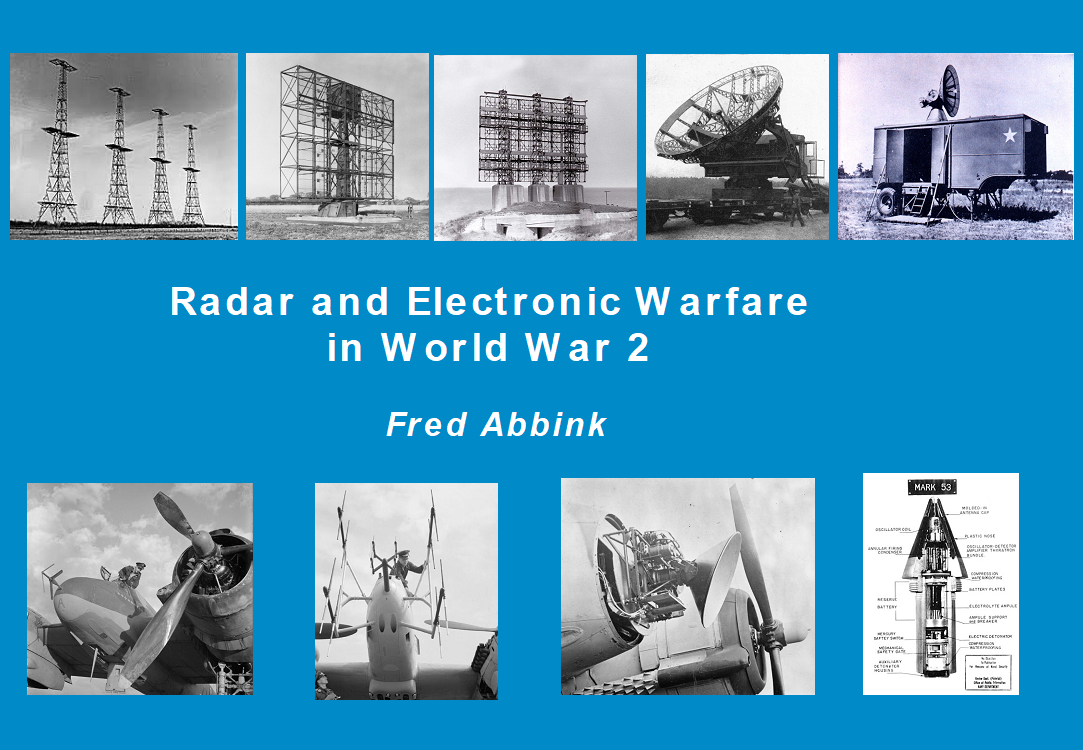
A major breakthrough in radar technology was the development and mass production of the Cavity Magnetron. This made it possible to develop accurate and lightweight Airborne radar systems. These were decisive in air warfare, anti-submarine warfare and bombing flights over Germany. To take advantage of US development and production capacity, many British developments were made available to the US at the beginning of the war.
During World War II, new systems were constantly being developed to use the opponent's navigation and radar systems undetected for their own applications, jamming (jamming) and using them to mislead the opponent (spoofing). Often, falling into the opponent's hands of aircraft with new systems played a vital role in the development of new jamming and spoofing systems and methods.
The presentation will provide an insight into the development and deployment of the various radar systems and the ongoing monitoring of measures and countermeasures, as well as Dutch contributions in this field.
Information about the speaker
Fred Abbink graduated as an electrical engineer from TU Delft in 1968. After his military service in the navy, he started working at the 'Netherlands Aerospace Laboratory' (NLR) in 1969.
From 1980 to 1997, in addition to his work at the NLR, Fred was part-time professor of 'flight test instrumentation and avionics' at TU Delft's Faculty of Aeronautical Engineering. He also held various positions at NATO and other national and international organisations, among others.
Even after his retirement at the end of 2009, Fred remained active in his field of aviation.
To attend this lecture, please register:
- KIVI members should register via the KIVI website
- Members of Histechnica should register through the secretary hotzeboonstra@gmail.com
- Interested parties who are not members can also register through the above channels. There will then be a charge of €5.00.
The lecture will be broadcast live. You can participate via the link below:
https://www.youtube.com/watch?v=qHuRFnho3bM
you must also register for this via the above link. There is no charge for this.
Upcoming activities in Science Center Delft
- Saturday 23 September 2023 at 11:00 lecture by Prof Dirk van Delft: "Invisible life; Anthoni van Leeuwenhoek"
- Saturday 28 October 2023 at 11:00 a.m. lecture by prof Rien van de Weijgaert: "The Antikythera astronomical computer"
- Saturday 25 November 2023 at 11:00 a.m. lecture by Marten Fluks and Edward Heerema "Development of tuber extraction"
- Saturday 16 December 2023 at 11:00 am lecture by Dr Abel Streefland: "University press in Delft"
On the occasion of KIVI's 175th anniversary, the History of Engineering Department has published a book highlighting the three founders of KIVI in the times in which they lived. The book will be available free of charge during the lecture for members of Histechnica and for members of the KIVI Department of History of Technology.