Technology for minimally invasive surgery and interventions
Herewith the link for online participation: https://youtu.be/fyCJr9SMpK8
Dear members of the KIVI Section History of Technology and of Histechnica,
The boards of the association Histechnica and of the KIVI Section Historyof Technology are pleased to invite you to attend a lecture to be given by Prof Dr Jenny Dankelman (TU Delft, Faculty of MISIT) entitled:
"Technology for minimally invasive surgery and interventions"
Programme:
10.30 am: Walk-in with coffee and tea
11:00: Welcome and introduction
11.05:00: Lecture by Prof Jenny Dankelman
12:00: Break
12:20: Continuation of lecture and closing discussion
12:45: End of the meeting
Please register to attend this lecture:
- KIVI members can register via the KIVI website
- Members of Histechnica can register through the secretary hotzeboonstra@gmail.com
- Interested parties who are not members can also register through the above channels. Please note that there will then be a cost of Eur 5.00.
The lecture will be broadcast live; you can also register for this via the above-mentioned ways. There is no charge for this.
Summary of the lecture
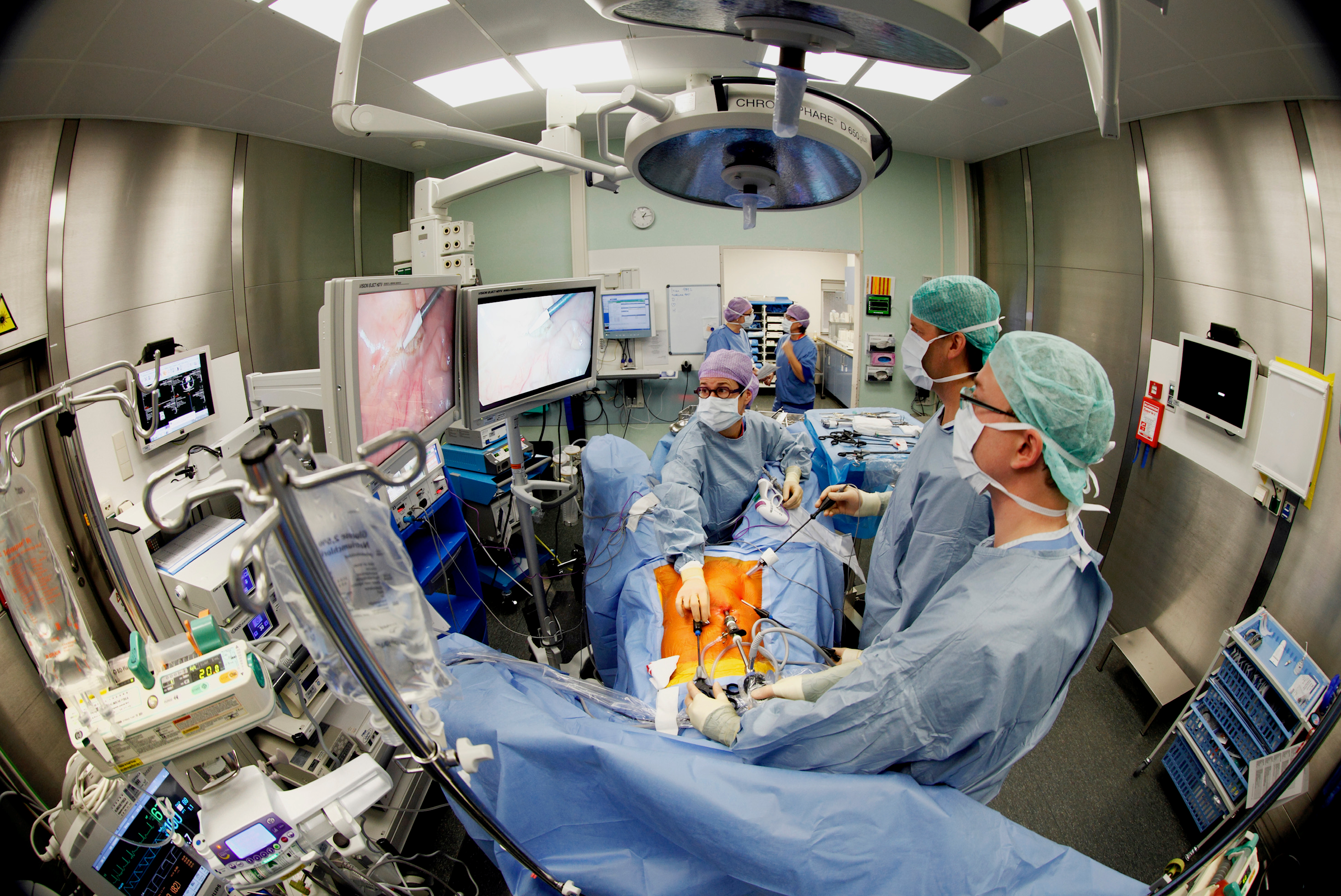
The development of minimally invasive surgery has strongly depended on the development of the endoscopic (= looking inwards) technique. Around 1805, the first methods were developed to examine body openings. In 1853, the first effective open-tube endoscope was developed. Laparoscopy or endoscopic examination of the abdominal cavity was first attempted in 1901. Only after 1986, following the development of a video computer chip, which allowed projection of images on a screen, was laparoscopic surgery truly integrated into the discipline of general surgery. The first laparoscopic gallbladder removal in the Netherlands was performed in 1992. The rapid acceptance of the technique of minimally invasive surgery is unparalleled in surgical history.
Our challenge is to develop a new generation of instruments with highly advanced functionality at the tip. We are developing both robotic and manually controlled instruments that facilitate tissue manipulation and instruments with optical fibres to characterise tumour tissue, for example. To address the situation that currently 5 billion people in the world do not have access to safe surgery, we started the Surgery-for-all project to develop high-quality, safe and affordable surgical instruments for developing countries. Indeed, minimally-invasive procedures have many benefits such as reduced risk of infection and faster recovery.
Information about the speaker
Jenny Dankelman is professor of Minimally Invasive Surgery and Interventional Techniques at the Delft University of Technology(www.MISIT.nl). She obtained her degree in Mathematics, with a specialisation in System and Control Engineering at the University of Groningen in 1984 and her PhD at the Delft University of Technology (DUT) in 1989. In 2001 she was awarded the Antoni van Leeuwenhoek chair and shortly after she became head of the Minimally Invasive Surgery and Interventional Techniques group(www.MISIT.nl). Between 2010 and 2014 she was head of the Department of BioMechanical Engineering and in 2013 she became Medical Delta professor. Her research focuses on minimally invasive surgery and other interventions through tiny openings or incisions in the skin. She cooperates with several hospitals such as Leiden UMC where she holds a part time professorship position, Erasmus MC Rotterdam and the University Medical Centre Amsterdam.
Her interests and research projects are in the fields of designing novel medical instruments, training and simulation systems, and new methods to improve patient safety. A few years ago she started a number of projects to develop affordable multi-functional surgical instruments with a focus on low-resource settings. For her activities she was awarded the Royal award of Knight in the Order of the Netherlands Lion. In 2019 she became Professor of Excellence of the Delft University of Technology and in the same year she became a member of the Royal Netherlands Academy of Arts and Sciences (KNAW).
Upcoming activities at Science Centre Delft:
- Saturday 25 June 2022 at 11:00am lecture by Prof J.A.E.F. van Dongen "Albert Einstein and the Black Hole"
- Saturday 22 October 2022 at 11:00 a.m. lecture by Prof D. van Delft"Fissile material: ultracentrifuges, Abdul Khan and the Pakistani bomb"
- Saturday 26 November 2022 at 11:00 a.m. lecture by Prof E. Homburg "A century of chemical technology"
- Saturday 17 December 2022 at 11:00 a.m. lecture by Prof Dr H.J. Sips "The great acceleration"
Study trip:
- Study trip Bologna and Turin will take place from 18 - 24 September 2022