
The development of the Scanning Electron Microscope (SEM)
The Boards of the Histechnica Association and the KIVI Department of the Historyof Engineering are pleased to invite you to attend a lecture to be delivered by Mr Dr K.D. van der Mast on the topic:
"The development of the Scanning Electron Microscope (SEM)"
on Saturday 24 February 2024
Programme
10.30 hrs: Walk-in with coffee and tea
11:00: Welcome and introduction
11.05:00: Lecture by Mr Karel van der Mast
12:00: Break
12:15: Continuation of lecture and closing discussion
12:45: End of the meeting
Summary of lecture
The Transmission Electron Microscope (TEM) was invented by Ernst Ruska, and the first model saw the light of day in a laboratory in Berlin in 1933. He was awarded the Nobel Prize for this in 1986(!). In its further development, TU-Delft, through Professor Le Poole and those he trained, played a major role. Dutch TEM activity has become a leader in this field. Important world players are now Jeol (Japan), Hitachi (Japan) and ThermoFischer (activity in the Netherlands).

The Scanning Electron Microscope (SEM) did not become a success until much later. Invented or rather first proposed by Manfred von Ardenne in 1937, the SEM was not delivered as a commercial product until 1965: the "Stereoscan", by Cambridge Instruments. (See photo). Philips did not start using it until 10 years later.
Questions addressed include: Why did the commercial SEM come so much later? How does an SEM actually work and what role do SEMs play in industrial developments.
Information about the speaker
Dr Karel van der Mast (1948) has been involved in electron optics for almost his entire career. He did his final research and PhD at the department of Applied Physics in Delft, under the leadership of one of the founders of electron microscopy: Professor J.B. Le Poole. In 1975, Karel obtained his PhD on a new type of electron source and received his first patent on it. Some 70 more patents were to follow. After his PhD, he joined Philips Elektronenoptiek, became professor in Delft in 1983, but returned to industry in 1989, again at Philips Elektronenoptiek.
In 2000, Karel van der Mast moved to ASML. However Elektronenoptics continued to attract and in 2010 he started working as a strategic and technical consultant in a small spin-off, which became very successful in a short time. In November 2021, Karel founded the company Phe-nx. Currently, sales of the developed tabletop SEM Nanos are in the early stages.
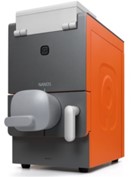
Photo: tabletop SEM Nanos
To attend this talk, please register:
- KIVI members should register via the KIVI website
- Members of Histechnica should register via the secretary hotzeboonstra@gmail.com.
- Interested parties who are not members can also register through the above channels. There will then be a charge of €5.00.
The lecture will be broadcast live; you should also register for this via the above means. The link will be sent in advance by e-mail.
Upcoming activities in Science Center Delft
- Saturday 23 March 2024 at 11:00 lecture by Prof Dr F.A. (Sander) Bias: "Quantessence: the Quintessence of Quantum "
- Saturday 11 May 2024 at 11:00 am lecture by Prof Dr F.J. (Fokko Jan) Dijksterhuis: "The Ingenious Thinking of Christiaan Huygens".
On Saturday 20 April 2024, Histechnica will celebrate its 10th anniversary at Gebouw X, Mekelweg 8, 2628 CD Delft. It will be a day-filling programme with the theme: "Getting progress out of failure".
Study trip Basque Country 2024: It will be a seven-day trip, therefore 6 nights within the programme and excluding the round trip. Start around the end of September.
On the occasion of the 175th anniversary of KIVI in 2022, the History of Engineering Department has published a book highlighting the three founders of KIVI in the times in which they lived. The book will be available for free to members of Histechnica and members of the KIVI History of Engineering department during the lecture.