

ENERGY DRIVERS AND ENERGY RANSITIONS FROM 1750 TO 2050 - Part IIIa
MODIFIED SCHEDULE!
KIVI Department of Risk Management and Engineering has the honour to invite you to a symposium
ENERGIEDRAGERS AND ENERGIETRANSITIES FROM 1750 TO 2050 - Part IIIa
RBT presents top international speakers
Topics:
- ENERGY EDGERS AND ENERGY RANSITIONS FROM 1750 - TO 2050 - PART IIIa by Ir. Drs. Fred van Iddekinge
- The port of Rotterdam - Organisational tensions hamper necessary decisive policy changes - A Port always causes hassle by Prof. Dr. Harry Geerlings
- The process industry upside down - Electrification of chemical processes through energy transition - sustainability, inherent safety and circularity by Prof Dr Ir Hans Pasman.
- Discussions
Chairman of the day: Arie Quik
Speakers and topics
1. Energy carriers and energy transition from 1750 TO 2050 - Part IIIa
The lecture is the third of a triptych on the subject of Energy Carriers and Energy Transitions. Following this Part IIIa, a subsequent symposium in 2023 or early 2024 will deal with the conclusion in Part IIIb. Hopefully, a full risk analysis will then be presented.
Fred van Iddekinge takes us through the future developments of various carriers and further experts. What will their possible contribution to the goals of the Paris Agreement mean? There, it was internationally agreed that atmospheric warming should not exceed 2 o Celsius compared to the reference year 1990 and the aim is not to exceed 1.5 o Celsius. Fred illustrates how far away the Netherlands is from this target. He will discuss a possible mix of carriers. He will explain in detail why a responsible risk analysis of the target is not yet possible now and further express the hope that this will soon be possible.
2. The Port of Rotterdam and Rijnmond region
On 10 February, port professor Harry Geerlings gave his impressive farewell speech entitled A Port Always Gives Hassle. In it, he gave a sharp analysis of the conflict of interests between the main stakeholders in the port. All of them have a lot of influence. But the port faces the enormous challenge of transforming from a CO2 hotspot to a zero-emission port. Companies currently running on oil, gas or coal need to be radically transformed. That will not be easy. Harry comes up with possible solutions. His suggestions have already been adopted at lightning speed by others in recent weeks. The challenges come with numerous new uncertainties and hitherto unknown risks. We are not yet very well prepared for these.
3. The process industry upside down
Prof Dr Ir Hans Pasman argues how wide and how deep the process industry has penetrated technology. The manufacturing industry of metals, plastics, paints, yarns, food industry, drinking water, packaging, waste treatment, waste water, you name it, depends on chemical processes. HansHans outlines the challenges of converting to electrification and meeting sustainability, inherent safety and circularity. Hans speaks on a video recording. Hans participates in the discussions by video link.
Timetable
|
1 |
Walk-in coffee and tea |
13.30 - 14.00 |
|
2 |
Introduction to third part of the triptych Energy Carriers and Energy Transitions from 1750 - 2050 |
14.00 - 14.15 |
|
3 |
Short break |
14.15 - 14.20 |
|
4 |
Energy carriers and Energy Transitions from 17 50 - 2050, Part IIIA |
14.20 - 15.30 |
|
5 |
Short break |
15.30 - 15.35 |
|
6 |
A port always gives hassle - Challenges of the Port of Rotterdam |
15.35 - 16.35 |
|
7 |
Break with coffee, tea and soft drinks |
16.35 - 16.50 |
|
8 |
The immense impact of energy transitions on process engineering-related industries |
16.50 - 17.15 |
|
9 |
Short break |
17.15 - 17.20 |
|
10 |
Discussions with video link to Houston |
17.20 - 18.10 |
|
11 |
Afterglow and networking with refreshments |
18.10 - 18.45 |
The speakers
Frederik Willem van Iddekinge
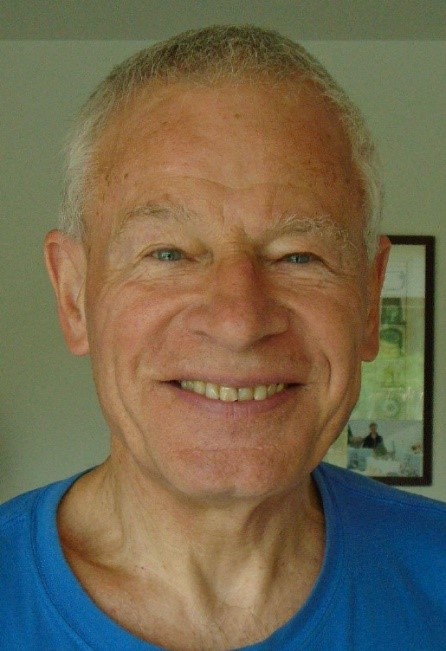
Fred van Iddekinge is a board member and member of the Programme Committee of the KIVI-RBT division. He studied chemistry and nuclear technology at TU Delft. At EUR, he obtained an MBA 10 years later.
He worked in education and research and as a chemical engineer in the process industry. He then worked for over 25 years as a coordinating nuclear safety inspector of the Nuclear Physics Department (KFD, now ANVS: Nuclear Safety and Radiation Protection Authority) at, successively, SZW, VROM and ILT. He has 20 years of experience at the IAEA (International Atomic Energy Agency), in recent years as a board member of various working groups, worked for six years as a risk and safety specialist, held numerous ancillary positions, such as rapporteur on incidents and safety to the Dutch parliament, member of the KIVI Members' Council, board member of the Nuclear Technology Department (KIVI-NT). He lived in the United States for 3 years and worked in England for 2 years.
In short: Fred van Iddekinge brings in a lot of knowledge.
Prof Dr Harry Geelings
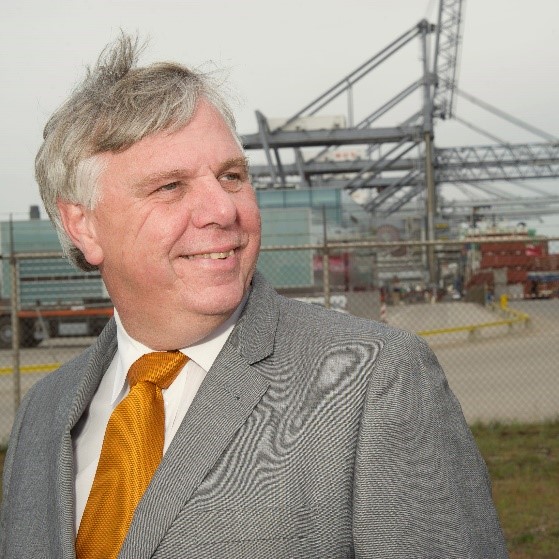
Harry Geerlings (1956) worked at Erasmus University Rotterdam from 1988 to 2023, the last 14 years of which as (port) Professor of Public Administration. His chair was entitled the Governance of Sustainable Mobility, but in his work he has mainly focused on making the port of Rotterdam sustainable and the question of what the future of ports is in this period when we have to accelerate our departure from fossil fuels. He is also a member of several collaborative groups including the PhD research school TRAIL and SmartPort.
Besides his teaching activities and his scientific research/scientific publications, Geerlings is mainly focused on generating impact: promoting and realising the necessary changes, focusing on results in practice. Geerlings writes a widely read column in the Nieuwsblad Transport.
Prof Dr Hans Pasman
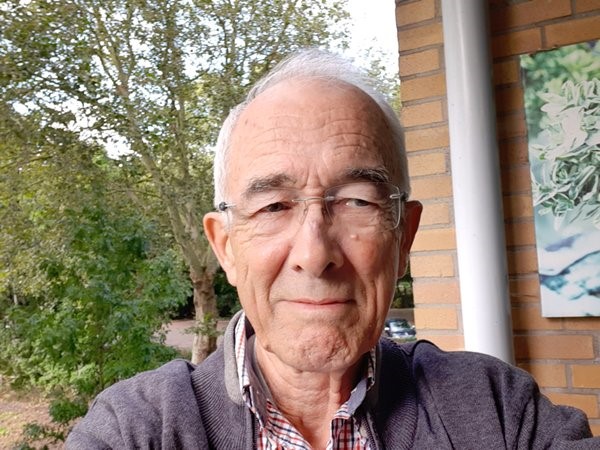
Chemical technologist graduate 1961, and PhD at TU Delft 1964 employed by Shell, seconded to TNO in military service, defence research but also in-depth investigation several major accidents in the process industry in the years 1965-70. 1970-71 NATO Fellow in Canada. From 1974 director of technological research/defence research TNO. Building international relations with defence partners and development of Dutch knowledge on weapons effectiveness and protection; also in 1980s chairman European Risk Analysis Group, OECD Unstable Substances Group, and chairman NATO Explosive Substances Group.
From 1985 chairman Loss Prevention Working Group European Federation of Chemical Engineering and co-founder European Centre for Process Safety. In the 1990s programme steering Dutch defence research and coordinating TNO Industrial Safety research. 1998-2007 part-time professor TU Delft Chemical Risk Management. In 2004-2012 member Advisory Council on Hazardous Substances. From early 2008 Research Professor Mary Kay O'Connor Process Safety Center, Texas A&M University. Hans has been a member of KIVI for many years. He is a Member of Merit of the Defence and Security Section.
Chairman of the day Ir. Arie Quik
Studied Applied Physics at TUDelft. He worked in the chemical and food industries as project manager, process manager, interim manager and incident manager. He set up and calamity plan for a grid manager, designed quality systems and incident systems. A lot of experience abroad. His style is characterised by allowing people in all layers of the hierarchy to decide for themselves how to fit their tasks into the procedures. Soundness and consistency of procedures, but also flexibility and adaptation to constant changes. Arie is secretary and co-founded the Risk Management and Engineering Department.
The Risk Management and Engineering Programme Committee looks forward to seeing you!