

THE RISKS in opinion formation: How sensible people still come to the wrong opinion
The sheets of the presentations can be found under 'Documents' (bottom right of the page)
The recording can be watched back via this link (unfortunately, the first half hour cannot be watched back due to technical problems)
THE RISKS in opinion formation - How sensible people still come to the wrong opinion
The role of social media and the internet
SEVEN POINTS of a SAFE WORKPLACE
The KIVI Risk Management and Engineering Department has the honour to invite you to a series of lectures.
Topics:
- The Trias Intelligentia. A model to better understand thinking and decision-making in our brain by ir, Arie Quik
- Why does illogical behaviour arise, even in smart people? Opinion formation in the brain by drs Natasha Dodonova
- Social media and the internet. Ten pillars of a safe workplace by Mark van Horik and Caty Hooijsma
- Trais Intelligentia, illogical behaviour and the Pillars are elements of the mission of KIVI-RBT department by John van der Puil
The Risks in Opinion Formation
How sensible people can still arrive at the wrong opinion.
Human behaviour is hard to predict and where we can predict it, we have no "logical" explanation for that behaviour. Arie Quik tries to reduce that lack of "logical explanation" with his model "Trias Intelligentia". That model assumes, that humans use three different intelligences interchangeably, which in practice have a certain hierarchy. Using this model, it is easier to understand why people easily believe conspiracy theories, for example.
Natasha Dodonova shares psychological insights in her presentation as an answer to the question, "Why does such illogical behaviour occur, even in smart people?"
Uncertainties around opinion formation
Risk management is dealing with your uncertainties. When you get new information, you don't know whether that information is correct or not. That is an annoying uncertainty. Some theories and informations you immediately reject as an intelligent engineer. For instance, it doesn't generally go down in KIVI that transmitter masts with 5G cause male infertility. Even the fabrication that Covid-19 would be a manipulation of the pharmaceutical industry, allegedly colluding with Bill Gates is not believed by sensible people. But, there are stories wrapped in a scientific foil, where it is not so easy to work out whether it is true or not and why not?
The role of social media and the internet
In spreading conspiracy theories and fake news, social media plays a crucial role. Groups are formed, sometimes far across national borders, of people who share a particular view on a single aspect. Many people get their news feed from social media. Facebook, LinkedIn, Instagram, TikTok. There, one sees texts from 'friends' confirming previous claims. That is easier reading than newspapers or magazines or watching the News on NPO. There is too much information in the world. That easily leads to a flight into social media. Scientific research has already found that it affects more than 10 per cent of the population in western countries. Then there is also an aggressive group that penetrates people's private domain by penetrating their message boxes. But something can be done about that.
The ten pillars of a secure workplace by Mark van Horik and Caty Hooijsma are a solution to that end. It is about prevention against hacking by individual internet users.
Timetable
|
14:30 - 15:00 |
Walk-in with coffee and tea |
|
15:00 - 15:05 hrs |
Opening by the chairman of the day Prof Dr Ir John Stoop |
|
15:05 - 15:30 hrs |
Trias Intelligentia (Arie Quik) |
|
15:30 - 16:00 hrs |
Illogical behaviour of smart people (Natasha Dodonova) |
|
16:00 - 16:10 |
Short break with coffee, tea, soft drinks |
|
16:10 - 17:00 |
10 pillars of a safe workplace (Mark v Horik, Caty Hooijsma) |
|
17:00 - 17:15 hrs |
Trias Intelligentia, illogical behaviour, the pillars and mission of the KIVI Risk Management and Engineering Department (John van der Puil) |
|
17:15 - 17:45 |
Networking with refreshments catching up on time at run-down discussions |
The speakers

Arie Quik is secretary of the Risk Management and Engineering Department. He studied physics at TUDelft. He worked in the chemical process industry, became an expert in measurement and control technology. He started as an independent consultant and guided companies in their mission, vision, strategy and implementation for many years.

Natasha Dodonova studied clinical psychology at St Petersburg University. In the Netherlands, she worked at a large offshore technical company; currently at the Ministry of Defence in the equipment supply and procurement department. There, her areas of focus are knowledge transfer and innovation. Natasha is a member of the departmental board and a member of RBT's Programme Committee.
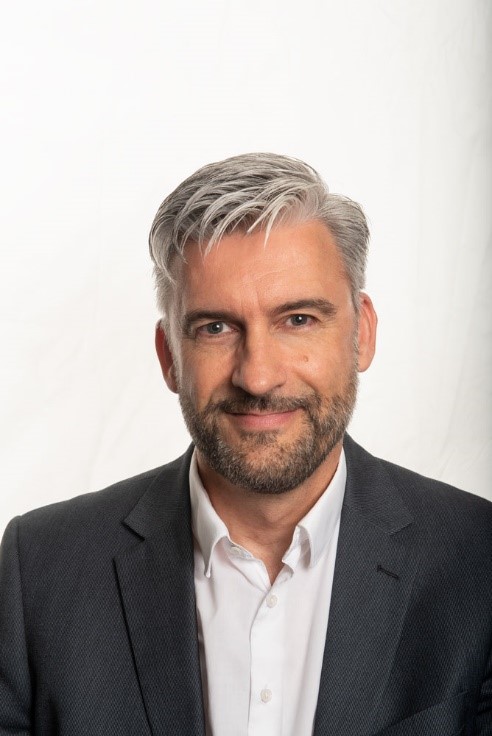
Mark van Horik is Managing Partner and Co-Founder of ProteQtor IT Security. ProteQtor delivers and manages secure workplaces through the use of smart cybersecurity products and security awareness training. Besides marketing ProteQtor, Mark also hosts the podcast Cybersecurity Story's. He also writes on LinkedIn about #cybersecurity #securityawareness #privacy and #martech.

Caty Hooijsma is managing director of Intellfence bv, whose IT training programmes focus on cyber security, technical and non-technical. These training programmes help you solve the challenges you face in your daily work.

Day chairman John Stoop is a board member of the KIVI RBT department and a member of the Programme Committee. He specialises in transport safety, especially in aerospace. His latest book is called Enhancing Safety, the Challange of Foresight under the auspices of the European Commission, to which he made important contributions.
Floor manager Anton Arnoldus will monitor the process and assist the programme committee where useful, necessary and desirable.
Admission: Free for both members and non-members
Registration: Via the website.When registering, you can indicate whether you wish to participate in the room or via livestream.
You can participate via livestream via the links below:
LinkedIn https://www.linkedin.com/video/live/urn:li:ugcPost:6950806747108286464/
YouTube https://www.youtube.com/watch?v=DT32VhdqnG8
Twitter https://twitter.com/i/broadcasts/1OwGWzzmPbjKQ
The Risk Management and Engineering Programme Committee looks forward to seeing you!