Dwingeloo radio telescope
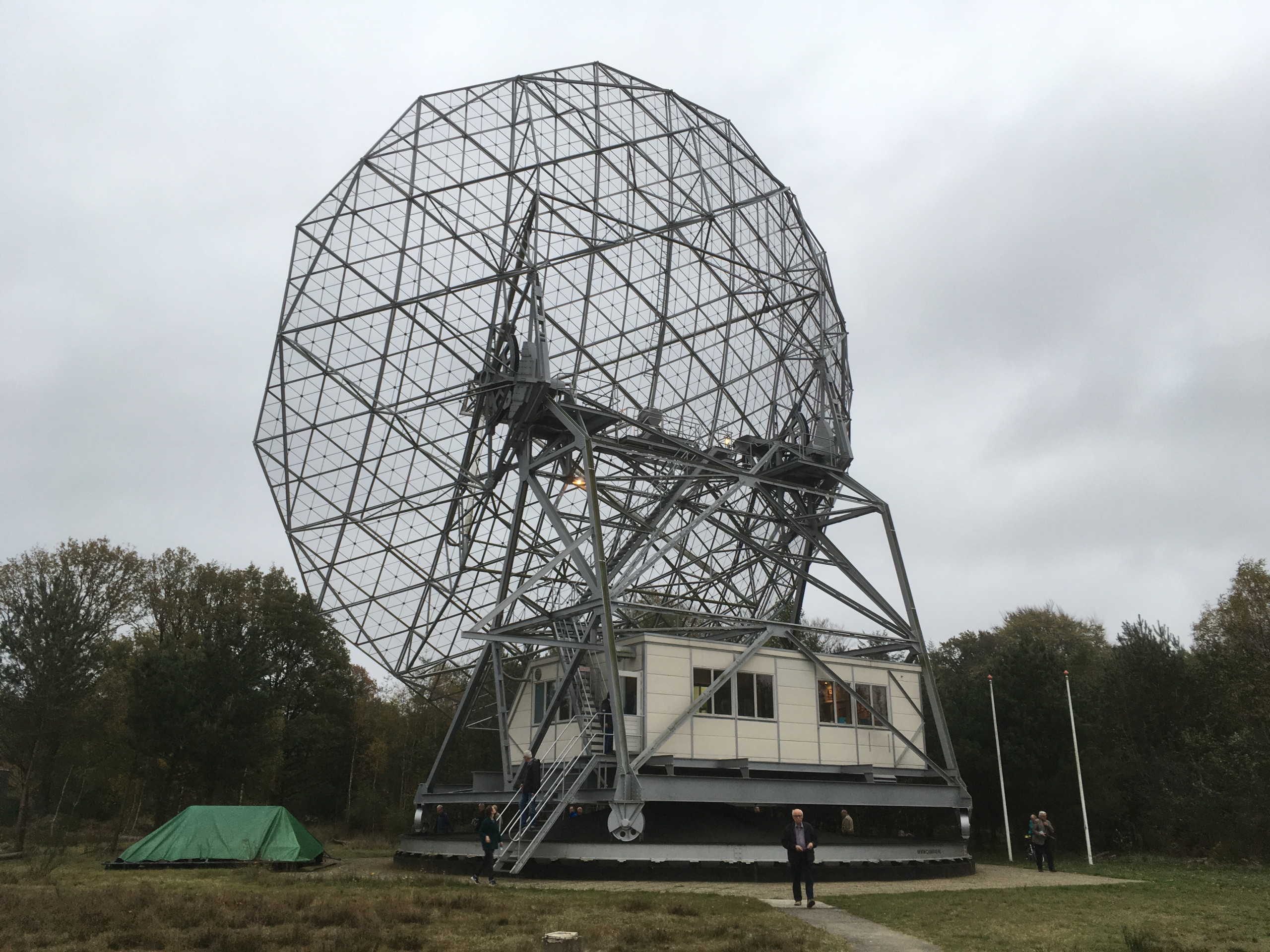
The Dwingeloo telescope was once the most important telescope in the world. In the 1970s, it was superseded by the WSRT and other larger single dish and interferometric instruments.
The end of the Telescope was insight in 2000, but with the formation of CAMRAS (foundation of volunteer radio amateurs), the renovation and restoration of the Dwingeloo Radio Telescope was taken up again and it is now the best maintained telescope in the world, as explained by Mark.
Now the Radiotelescope has been completely renovated and put back into operation by its owner ASTRON. It is now used for all kinds of applications by the tenant CAMRAS.
By Frans, the objectives of the use by CAMRAS, as follows, were made clear with:
-
Making the Dwingeloo radio telescope available to the community of (amateur) astronomers and radio transmitting amateurs CAMRAS
-
Increasing youth interest in engineering and science by offering educational groups the opportunity to use the Dwingeloo telescope.
-
Increasing young people's interest in engineering and science by giving educational groups the opportunity to use the Dwingeloo telescope.
-
Preserving the Dwingeloo radio telescope as an industrial monument Preserving the Dwingeloo radio telescope as an industrial monument
The aforementioned objectives have been amply achieved in the period 2007 to date, as outlined by Frans and the 10th anniversary celebrated this year.
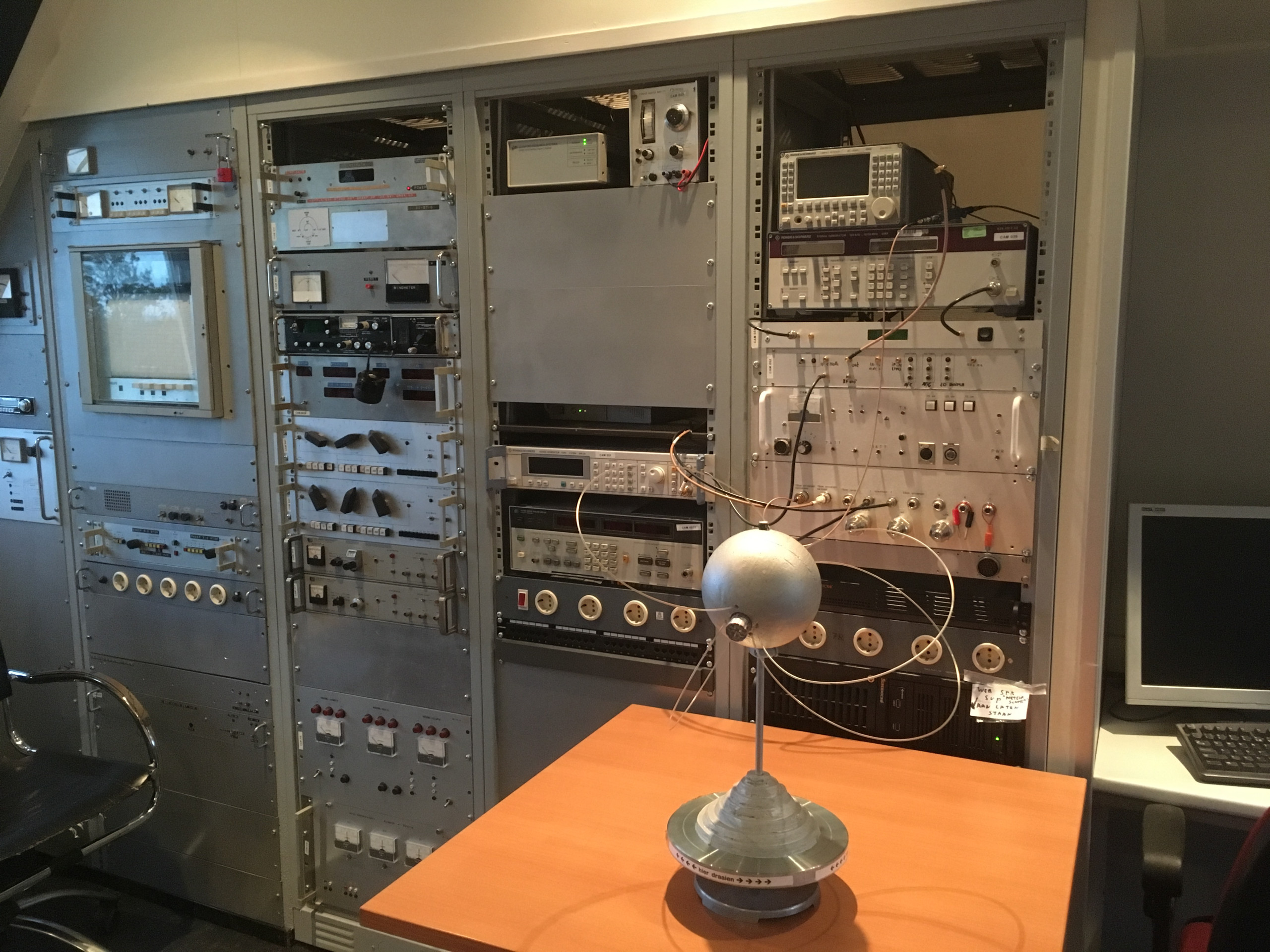
It was indicated by Paul how the frontend project (with a grant from NERG) will take shape. He also gave a good impression of all the work, which has been done to get and keep the radio telescope in the right condition and operational.
Last Saturday's excursion (28 October 2017) was perfectly organised, the programme was balanced with background, use, and technology.
Consequently, the participants were very positive. There were 23 participants in the end, which made it worthwhile for Michel and the speakers (Paul and Frans from CAMRAS) and perhaps Paul and Frans will get additional volunteers for CAMRAS as a result.
You can see more about the Dwingeloo telescope and further developments at: Introduction to LOFAR (Part 1 The Low Frequency Array)
Description
The Telecommunications Division of KIVI cordially invites you to an excursion to the Dwingeloo Radio Telescope.
This telescope was commissioned for scientific research in the late 1950s and in its early days was the largest radio telescope in the world with a single dish 25 metres in diameter. Among other things, this telescope was used to discover two small galaxies near the Milky Way, which were given the names Dwingeloo I and Dwingeloo II. From 1998, the telescope was no longer in use for scientific purposes.
In 2009, the radio telescope was designated a national monument.
In 2012, the telescope was completely restored and has been available to radio amateurs, amateur astronomers and educational institutes since 2014.
The famous radio telescope in Dwingeloo, the oldest rotating 25-metre radio telescope in the world, was renovated 3 years ago and has now been used, maintained, and made accessible by the CAMRAS foundation for 10 years.
Recently, the NERG in its liquidation phase granted another subsidy that will also enable CAMRAS to realise the modernisation of the front-end equipment.
An earlier excursion from KIVI and NERG could not process all the registrations, which - besides the subsidy - is part of the reason for this excursion.
As the radio telescope is located in a interference-free zone, you should also provide the registration number of your car when registering if you are coming by car.
The license plates will be passed on to ASTRON.
Cars whose license plates are not known to ASTRON may not enter the interference-free zone.
ASTRON is the Netherlands Institute for Radio Astronomy. Its mission is to make discoveries in radio astronomy happen, via the development of novel and innovative technologies, the operation of world-class radio astronomy facilities, and the pursuit of fundamental astronomical research.
N.B. This activity is primarily intended for KIVI members of the Telecommunications Department with a maximum total of 35.
Speaker(s)
Subject to reservation:
Mark Bentum CAMRAS (CAMRAS' past and restoration)
Frans de Jong CAMRAS (current use of the Dwingeloo radio telescope)
Paul Boven CAMRAS (the front-end project)
Location
from ASTRON building to Dwingeloo Radiotelescope
Oude Hoogeveensedijk 4, 7991 PD Dwingeloo
Organiser
Telecommunications
Name and contact details for information
Anne van Otterlo KIVI board member Telecommunications department
Dwingeloo radio telescope P19CAM
Wikipedea Dwingeloo Radio Telescope