

Annual Meeting with Theme Transition and New Year's Drinks
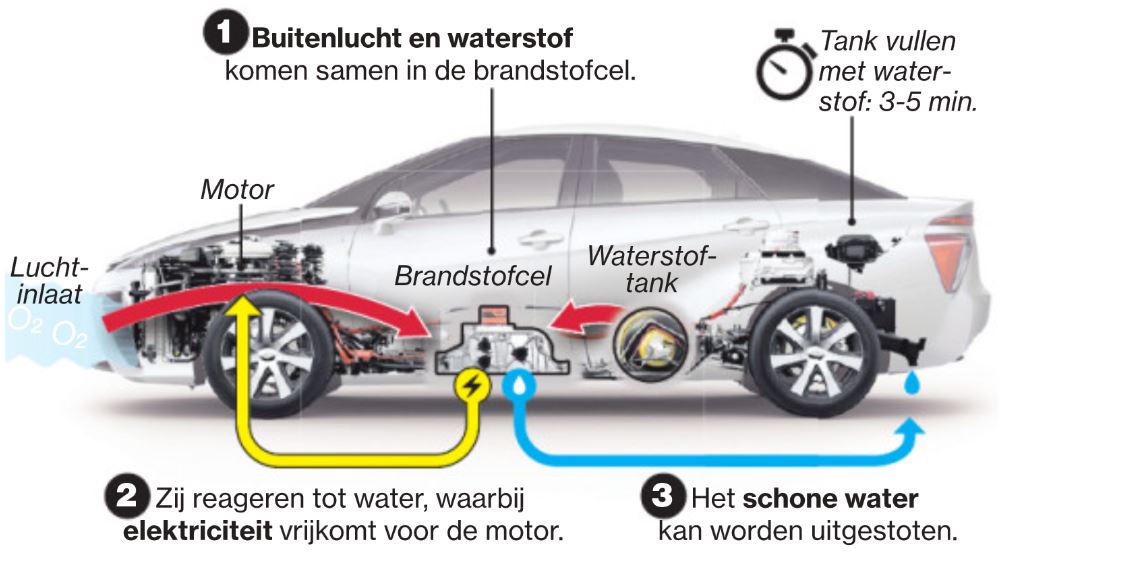
Transition to renewable energy with Hydrogen Economy.
Compiled by Theo Nohlmans
Summary
- A transition is a structural change resulting from interacting
interacting and mutually reinforcing developments in the areas of
e.g. economy, culture, technology, institutions and nature and environment
- The common factor is Health and Life expectancy. - History
- The Agrarian Revolution are the changes that took place in European
Agriculture and Society from 1750 onwards
- Industrialisation (1860) is the process of changes in the production process through
mechanisation and subsequent changes in the organisation of production, such as the
introduction of the factory system.
- History Transition From Horsepower to PK - on environmental and health issues
caused by the horse in the 19th century.
- History of the automobile (1885-1904) and exponential increase in CO2 Technology.
- Demographic transition. A demographic transition or demographic revolution is
the transition from a high mortality and birth rate to a low mortality and
birth rate within a given population group.
In Western Europe, this transition was made between 1750 and 1960, i.e. from the second
half of the 18th century, in the climate of industrialisation that germinated in Europe in the 18th century
germinated. One consequence was the sharp increase in Europe's population during that period. In the
southern continents, the demographic transition started much later and was initiated by
an improvement in health care. Mortality there fell faster than fertility,
so population growth there was also stronger. In much of Africa, the
transition is still ongoing.
The transition proceeds differently from country to country, with national history (wars etc.)
can distort the standard picture. The demographic transition in the Netherlands is characterised
itself, for example, by only gradually lowering birth and
death rates, with a birth wave in 1945 and 1946 due to the end of the Second
World War. In China, the demographic transition is again strongly influenced by the
one-child policy of the government.
- Present.
- How do we replace natural gas with a renewable energy carrier? That is the big question
of the coming years. A lot is happening in the field of hydrogen. Sustainable
Business lists some promising applications: Transport, Public
Transport, Hydrogen heating, Hydrogen for Industry. List projects.
- Although hydrogen is increasingly seen as the energy carrier of the future, it is
certainly not the holy grail.
- Hydrogen: key energy carrier of the future. Hydrogen can play a major role
play in the huge societal task of drastically reducing CO2 emissions
reduction. Jörg Gigler, director TKI New Gas, and Marcel Weeda, senior researcher
at TNO, tell more.
- Not a word about it in the coalition agreement, but Ed Nijpels' Climate Tables are tumbling
over each other to applaud hydrogen. Energy companies are also eager to
start using the energy carrier, but this will require a major system change.
The question is who will pay for it all.
- Future
- Background Hydrogen . Types of hydrogen.
Why is hydrogen so badly needed?
In principle, switching an economy to renewable energy is a breeze:
you electrify all energy use, including for heating and for transport. That
power is generated by sustainable means, i.e. windmills, solar panels and
biofuels such as biogas and wood chips. Done.
But there are two problems. First, some processes, especially in heavy
industry, cannot be electrified, or only at very high cost. Making
steel, glass, cement and bricks, for example: the required temperature is
hardly achievable with heat pumps or electric furnaces. With hydrogen it can
it can. Swedish steel group SSAB has already started building a
pilot plant for this process.
The other problem is that solar and wind are not always available on demand. Think
windless or cloudy days. There are many sleeves to adjust for that. For instance, you can
interconnect electricity grids; it's always windy somewhere in Europe. You can
match the use of power to the supply of power. For example, charge the
battery of the electric car at night; then there is more wind power and little
demand.
-
- Because hydrogen is the smallest molecule on earth, it passes right through
some materials. This can be tricky when transported in pipelines, but
is not a big problem: industrial areas already have perfectly functioning
pipeline networks for hydrogen.
- Hydrogen is indispensable. According to professor Ad van Wijk, wind and solar energy are
are not enough, See Ad van Wijk.
Even if you want to transport energy, it is better to move hydrogen than electricity.
Admittedly, 60 per cent of energy is lost when you convert electricity
into hydrogen and back into electricity. But moving 'electrons' via new
cables is 100 to 200 times more expensive than moving hydrogen via converted
natural gas pipelines, says Van Wijk. That advantage is going to weigh more heavily as the
wind turbines get further out to sea. And even more so when you want to bring solar energy
from the Sahara to Europe; a real possibility, he says. The Netherlands
has the advantage of already having a large gas infrastructure. Even residential areas can
residential areas can also be supplied with hydrogen relatively easily as a result, according to him.
-
- Potential options for the Netherlands
- hydrogen Hub in Delfzijl.
- Germany heading for 100 hydrogen filling stations by 2019, Netherlands 9 *
https://opwegmetwaterstof.nl/2018/06/01/duitsland-op-weg-naar-100-
hydrogen refuelling stations-in-2019/ H2 mobility
- Belgium,Flanders, hydrogen network roadmap Interreg hydrogen region 2.0 Belgium and
Netherlands , https://www.waterstofnet.eu/nl/roadmaps/roadmap-voorwaterstofinfrastructuur-
in-belgium-h2mobility
- Innovation and Science is busy at it
Pre-transition where mortality and birth rates are roughly equal;
stage 1 where mortality rate falls and birth rate remains the same resulting in a large
population increase as a result;
phase 2 where birth rate also starts to fall;
post-transition where mortality and birth rates are more or less balanced again.
During transition, a population explosion takes place. For example, the world population grew
from 1610 million in 1900 to 2509 million in 1950 and 6100 million in 2000. The
population is expected to reach 9500 million by 2050.
The four stages of demographic transition depicted in the form of
population pyramids
World population grows from about 200 mln in 0005 through 791 mln in 1700 to
6515 mln in 2005
Doubling every 50 years over the last 300 years due to health and food.
See:
https://www.duurzaambedrijfsleven.nl/energietransitie-business
https://www.topsectorenergie.nl/nieuws/experimenteren-met-alle-vormen-van-waterstof
https://www.dwv-info.de
https://www.duurzaambedrijfsleven.nl/download/handreiking-waterstof-coalitie.pdf
http://technotheek.utwente.nl/wiki/Fuel_cells_/_Brandstofcellen
http://profadvanwijk.com/tag/groene-waterstofeconomie/
http://profadvanwijk.com/nederland-waterstofland-2/
https://www.vno-ncw.nl/forum/iedereen-aan-de-waterstof-auto-dat-dichterbij-dan-je-denkt
https://www.vno-ncw.nl/column/nederland-aan-de-waterstof-iedereen-doet-mee
https://www.waterstofnet.eu/nl/roadmaps/roadmap-voor-waterstofinfrastructuur-in-belgie-h2mobility
https://opwegmetwaterstof.nl/2018/06/01/duitsland-op-weg-naar-100-waterstoftankstations-in-2019/
https://nl.m.wikipedia.org/wiki/Demografische_transitie
General Members' Meeting
on 2 February, lecture on Energy Transition and networking drinks.
The year 2018 was an eventful one for the KIVI South Limburg Board. After being without a board at the beginning of 2018, our team is now back at full strength and ready to start deepening and broadening our knowledge with you again!
On 2 February, we would like to cordially invite you to our general membership meeting. During this meeting, we will take you through what was organised last year and what else happened. Furthermore, we would like to discuss with you any interest in a board position.
We will conclude with a lecture and drinks. The lecture will be given by Theo Nohlmans and will outline a new future view on the possible Transition to Sustainable Energy and its future vision. See also CO2 development over 250 years
Agenda
- Discussion and approval of annual report
- Discuss and approve balance sheet
- (Re)election of (future) board members
- Review progress of main board
- Activities 2019
- Lecture Scenario Transition in Renewable Energy
Location
't Kaar
Stationsstraat 126
6191BG Beek
Speaker
Theo Nohlmans
Times:
1 pm Reception
2 pm Meeting
15 h Lecture
16-17 hours Networking drinks