

Hydrogen energy storage
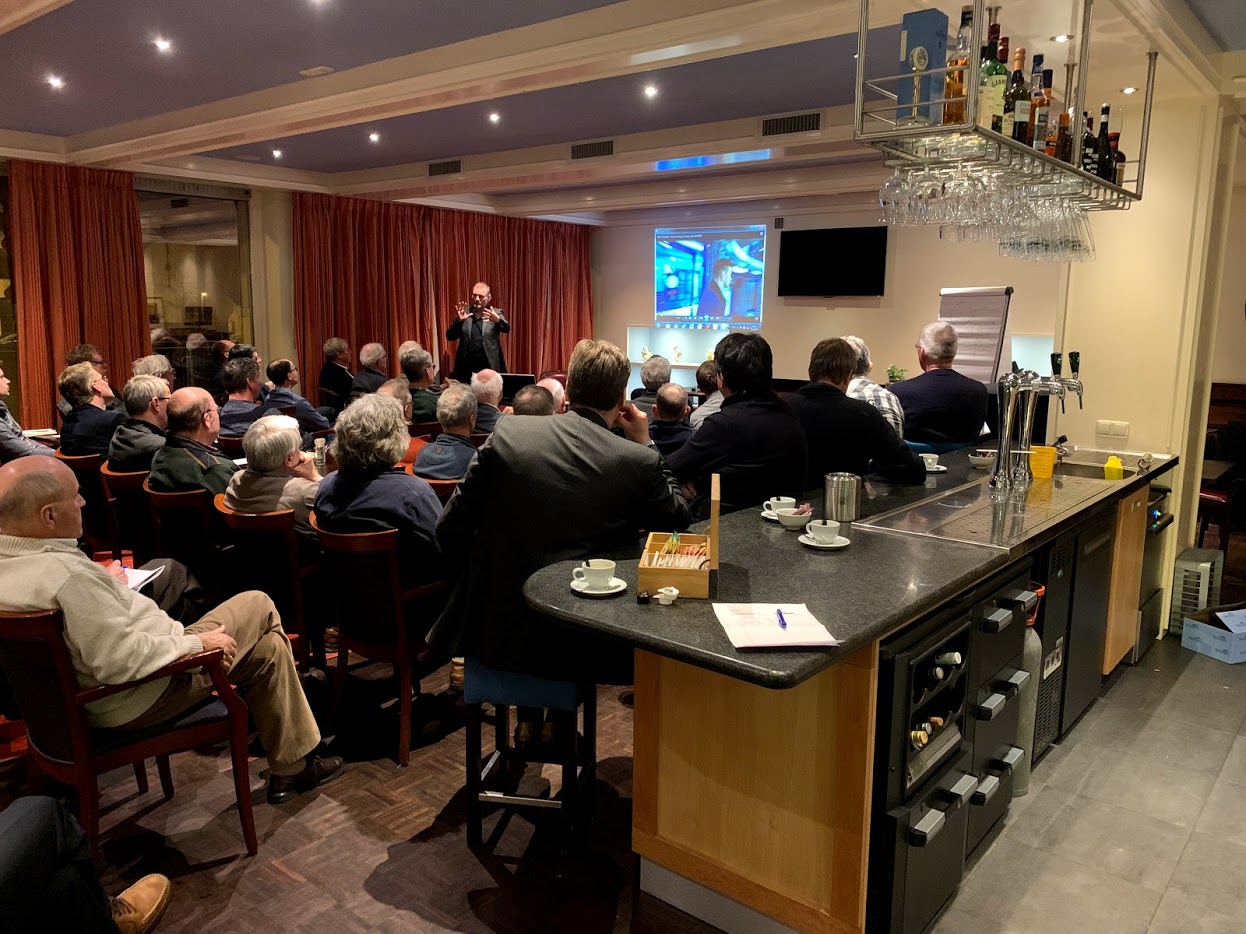
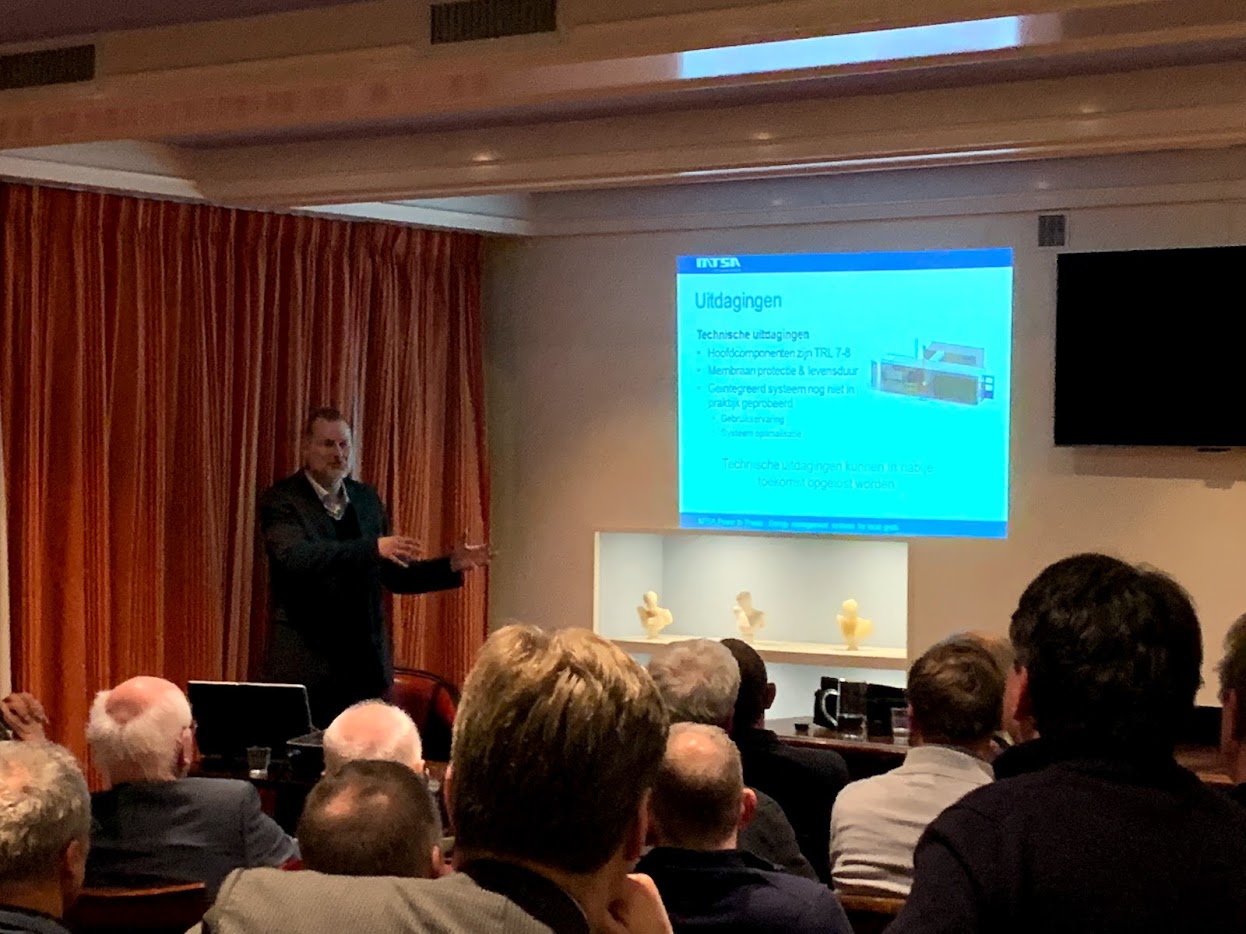
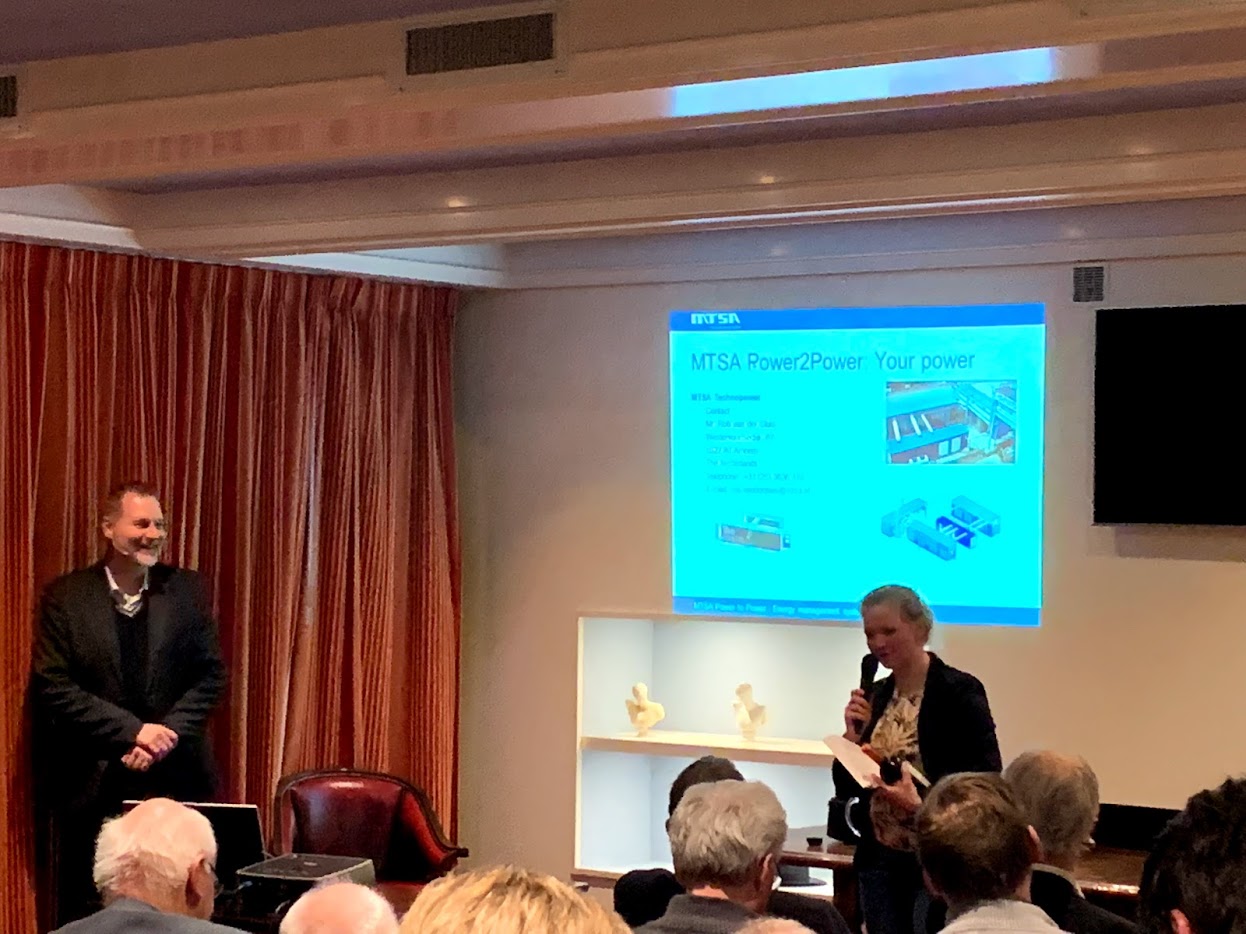
This year's first networking cafe was a great success! Over 45 visitors attended.
Rob van der Sluis, Manager Marketing & Sales at MTSA Technopower BV talked a bit about energy storage using hydrogen. For me, not being familiar in this field, this was also a very interesting lecture. The presentation can be downloaded via the link to the right.
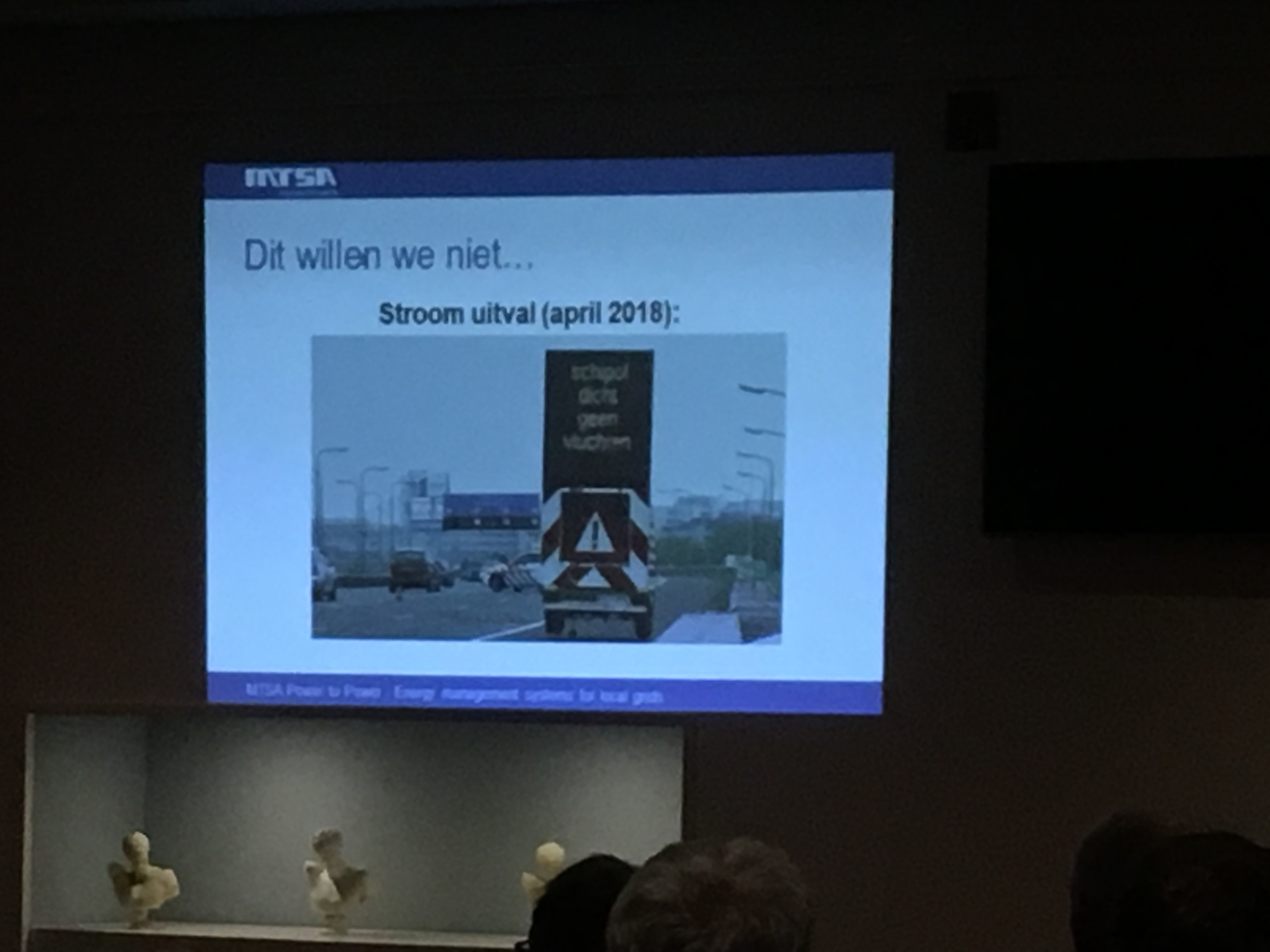
- During the presentation, a map of the Netherlands was shown with red dots, which are locations where it is not possible to connect energy from solar parks and wind turbines due to overproduction. There will probably be 10 times as many in the next 10 years as people start installing solar panels and other energy-producing sources on a large scale. This will increase the local overload on the grid. These are therefore ideal locations to install Power2Power systems.
- A Power2Power system consists of a large number of electrolysers (for splitting water into oxygen and hydrogen), hydrogen storage tanks and a large number of fuel cells (for producing electricity). Both electrolysers and fuel cells contain a membrane coated with platinum.
- The production costs of electrolysers and fuel cells are mainly determined by (manual) labour costs. The cost of platinum on the membranes is marginal. Automation of production can save as much as 70-90% of costs.
- Grid reinforcement has disadvantages; underground is 5 times more expensive and more lines in high-voltage pylons are also almost not an option; in addition, it takes about 8 years for permit for new high-voltage pylons to be issued and another 2 years to build them. As a result, the target of getting rid of gas by 2030 will not be met.
- Solar panels and wind turbines generate power mainly during the day; they thus put peak loads on the grid.
- A 1MWh wind turbine has filled a 40feet container of batteries within 15 minutes. If you converted that energy into hydrogen, you could store 40 times more.
- By storing the energy in the form of hydrogen, the Power2Power system can also handle fluctuations well.
- To demonstrate that a Power2Power system works well, it is being installed at the IPKW. They need a lot of green energy as well as hot water there.
- An electrolyser and a fuel cell are silent sources; no noise is generated. So this is a viable option in the urban environment.
- The government's decision to close Slochteren in 10 years' time is a good one, according to Rob; in the past, for instance, government decisions have led to lead-free petrol and quieter aircraft. However, we must prevent government policy from destroying jobs; we like to keep our 'BV Nederland', and 'BV Gelderland' for instance, going.
- Applying hydrogen technology in our country would create 500 direct jobs and thus 3500 indirect jobs.
Afterwards, everyone enjoyed a drink and the successful evening came to an end a little after 22:00.
Report by Marian Buitenhuis, secretary and hostess network café.
Large-scale energy storage is so far, with batteries not possible. Yet electricity storage is indispensable when using solar and wind energy. Therefore, MTSA has developed a package unit that "converts" electricity into hydrogen and then stores it under high pressure. When needed, this hydrogen is used to generate electricity again. This is called Power2Power, or an energy management system to match the supply and demand of wind and solar energy and smooth out peaks to help stabilise the grid without the need for grid reinforcement. Rob van der Sluis explains how this works.
Speaker: Rob van der Sluis, MTSA(www.mtsa.nl)
More information: https: //www.deingenieur.nl/artikel/pleidooi-voor-grootschalige-energieopslag