

Unique opportunity: attending trial in Deltares' Delta flume
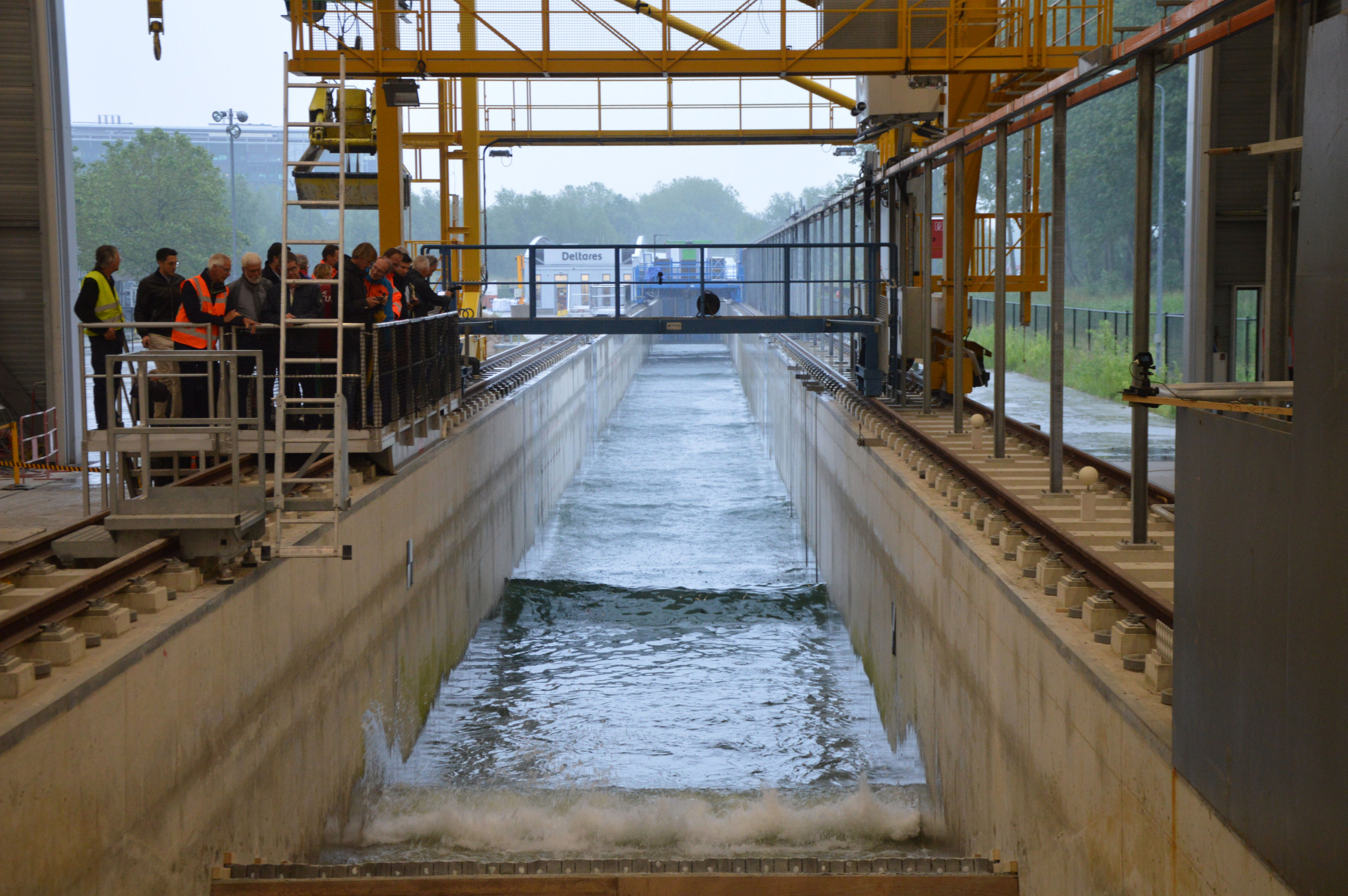
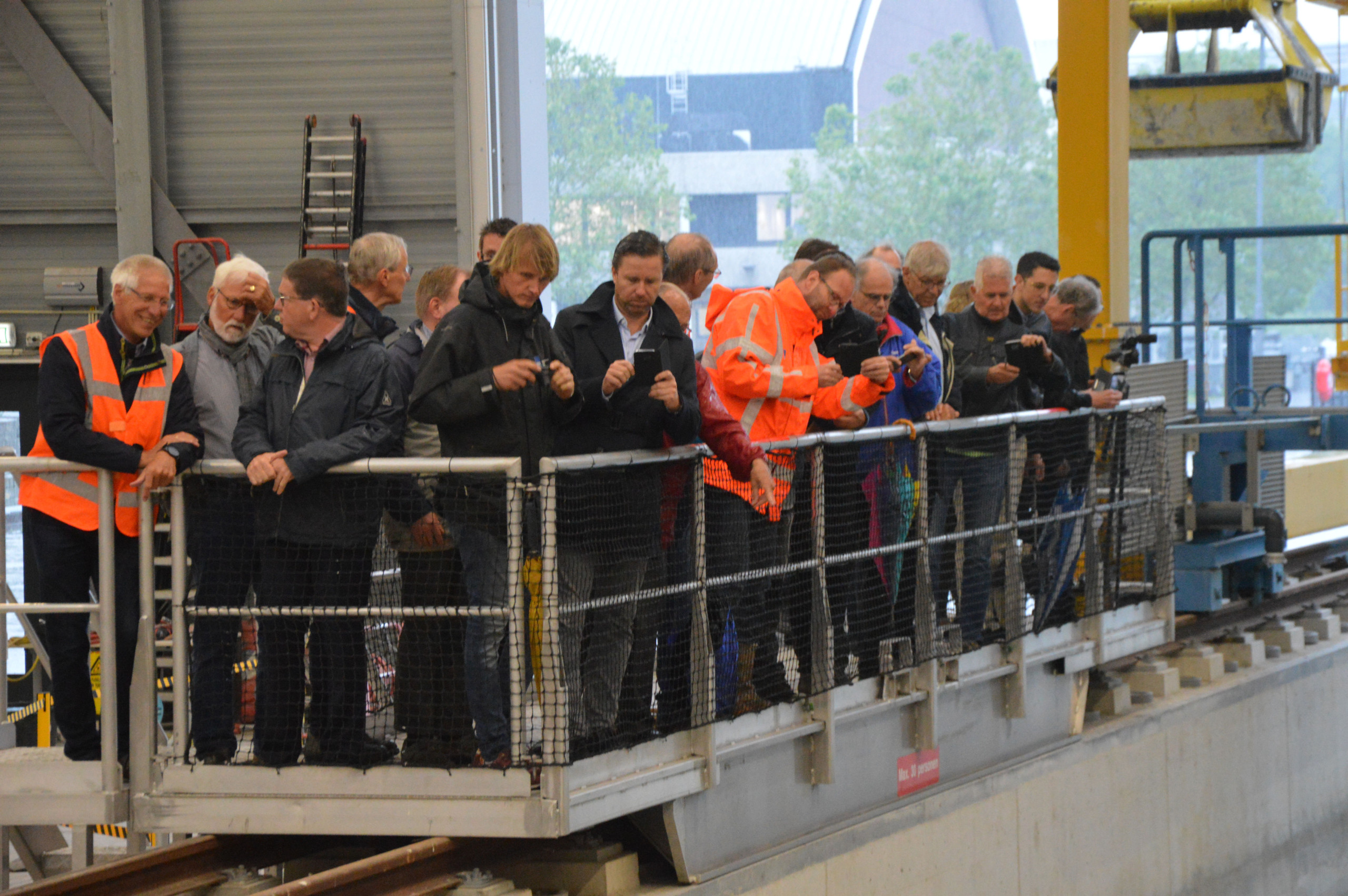
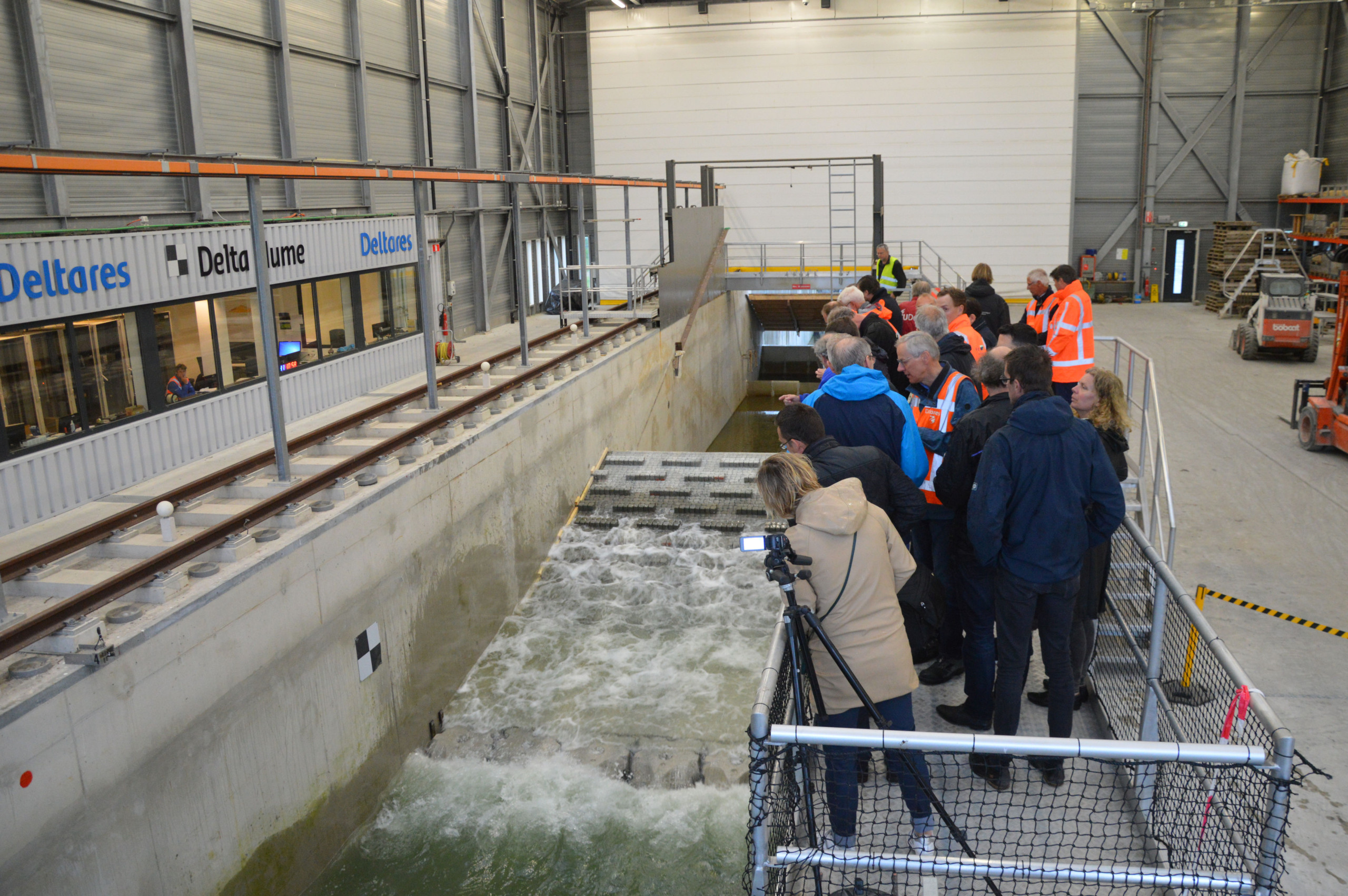
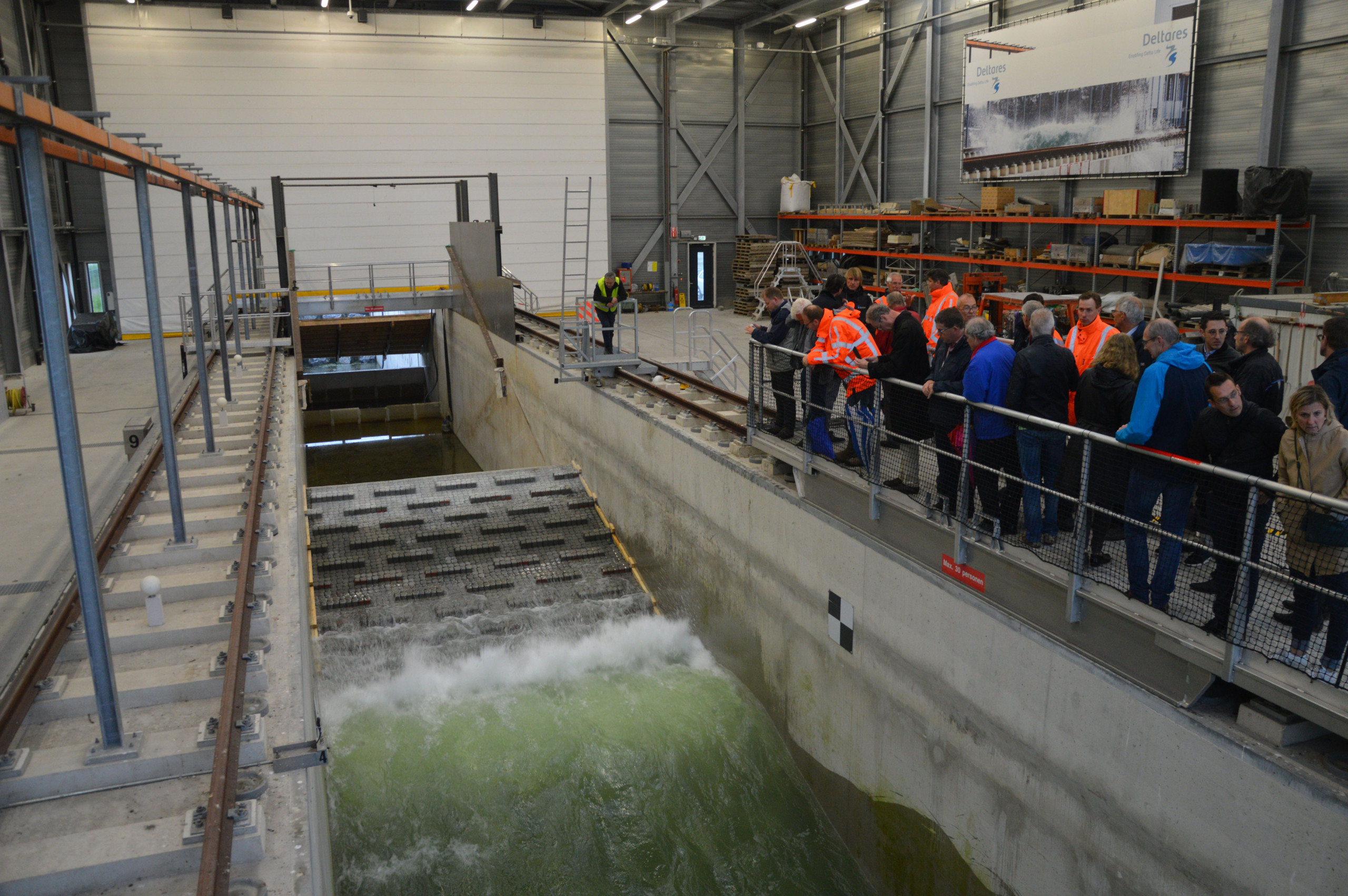
Date is known: Wednesday 12 June
Retrieved from wednesday 12 June the time has come, Deltares will open its doors to you for a unique behind-the-scenes look at the Delta flume! From 09.15 to 11.15, the trial in the Delta flume at Deltares will (in all likelihood) take place. The trial will take a total of about a 30-60 minutes and will be supervised by two Deltares staff members. In case of unexpected developments during the trials, the attendance may be cancelled shortly beforehand (even on the same day). Please take this uncertainty into account. You will be informed by e-mail if the meeting is cancelled.
The location of the trial is: Deltares, Boussinesqweg 1, 2629 HV Delft. Upon arrival, please follow the 'Visitors' signs and report to the reception, they will refer you. You should come to the venue on your own, no transport is organised from the project.
How is your visit arranged?
09.15 - 09.45 Walk-in with coffee and tea
09.45 - 10.15 am Short presentations from: RWS, Deltares and Levvel
10.15 - 10.30 a.m. Walk to the Delta flume (this is outside so please bring a jacket if it is raining)
10.30 - 11.15 a.m. Start of the test at the Delta flume
11.15 o'clock end
REGISTER via the website (red button on the right)
BACKGROUND INFORMATION
See also: https://www.youtube.com/watch?v=N38hZsmHvcM
Delta flume Deltares
True-to-nature testing
Worldwide, there is a great need to test hydraulic structures, such as dikes, dunes and breakwaters, true to nature. This is important because many innovative solutions lack knowledge and experience. Deltares' Delta Flume, an independent institute for applied research, makes it possible to build up that knowledge and experience. It is a unique laboratory where dikes are tested to scale or even full-scale. In controlled practice, it examines the effect of extremely high water levels and waves breaking on the embankment of a dike.
Highest 'artificial' waves in the world
At 300 metres long, the Delta flume is the largest flume in the world. This length is needed to mimic wave formation in gradually shallowing coastal waters. The depth of 9.5 metres makes it possible to generate waves of up to 4.5 metres (single wave); the highest 'artificial' waves in the world. The Delta flume lends itself perfectly to research into the effects of, for example, wave heights, wave forces, flow velocities and wave overtopping on structures. Although gigantic, the Delta flume is not big enough to use it to test the outer embankment of the Afsluitdijk at full scale. The various sections of dike being tested are therefore recreated to scale (1:3).
Complete storm
During testing, the conditions of a complete storm are unleashed on the scale model. The waves and associated water levels slowly build up to a peak and then level off again. The most extreme situation tested involves a water level of +5.5 metres NAP and waves over 4 m high in reality (significant wave height). With a 1:3 scale dike, the waves in the Delta flume become about 1.5 metres high. These are the so-called normative conditions; the situation for which the dike is built and which the dike must be able to withstand.
External slope revetment
The research in the Delta flume focuses in particular on whether the dike revetment on the outer slope with the specially developed concrete elements, the so-called Levvel-blocks and Quattroblocks, remains stable. It also examines whether the toe of the dike - the lower part of the outer slope - remains intact. In addition, the amount of water overtopping the dike must be limited to 10 litres per second per metre. If the research in the Delta flume has a positive result, the design can also be built in real life.
Afsluitdijk project
The Afsluitdijk has protected the Netherlands from floods for almost 90 years. But the dyke no longer meets current water safety standards. That is why construction consortium Levvel (BAM, Van Oord and Rebel) is working on the Afsluitdijk's renewal until 2022 on behalf of Rijkswaterstaat. Today's engineers are building robustly and sustainably on Lely's legacy: the Afsluitdijk is entering the 21st century as a renewed paragon of Dutch hydraulic engineering.
The dyke body and lock complexes will be reinforced and there will be floodgates that can be closed in extreme weather conditions to protect the floodgates and the hinterland. Additional sluices and large pumps will be built at Den Oever to discharge more water from the IJsselmeer to the Wadden Sea under all conditions. Levvel is increasing the discharge capacity with as little energy consumption as possible based on the principle: "Drain when possible, pump when necessary." The energy used by the new pumps will be compensated by generating sustainable energy on the Afsluitdijk itself through solar power.
To improve road safety, national road A7 is also being addressed. And on behalf of the regional partnership The New Afsluitdijk, the passage for the Fish Migration Gate will be constructed, the dyke on the Wadden Sea side will get a cycling and walking path along its entire length and the area around the Dudok Monument will be refurbished. This will allow visitors to enjoy the Afsluitdijk to the full.