

Total innovation: Doubling returns
Total Innovation uses all available sources when developing products. This means that knowledge from all departments as well as external sources is used to create value.
In this lecture, you will get an insight into:
- the most important failure factors
- how do you get good market information and how do you deal with it?
- why is the cooperation between technicians and commercial staff often difficult and how can you improve it.
- For example, how can project calculations help you make the right decision?
- how do you come up with a well-considered assortment structure?
Develop better products with total innovation
In the manufacturing industry, developing new products is the most important but also the riskiest business process. After all, in a world with open borders, you have to develop the best product in the world. Unfortunately, this often fails.
Many of the products we bring to market have disappointing sales or revenues. Thus, a significant proportion of these products, sometimes almost half, do not contribute to profits for the company.
Much research has already been done into why products fail. The results can be found in numerous scientific publications. Leo Haffmans has collated these results and translated them into recommendations.
A technically advanced product requires technical knowledge in many different areas. Even a large company cannot have all this specialised and practical knowledge in-house.
Suppliers have a lot of knowledge, skills and experience, gained from supplying parts to numerous customers. How do you make use of this knowledge? Here, we can learn a lot from the automotive industry. There, it does involve large series and large suppliers who are responsible for a large part of the innovations. Think Bosch for the fuel injection system, Bosal for exhausts, Inalfa for sunroofs, SKF for ball bearings and AkzoNobel for paint. Then the buyers, who also rarely meet a customer, need to know how to create value for the customer.
The purchasing director of BMW, for example, has understood this and knows how to challenge suppliers. BMW does not make cheap cars but cars that can compete globally.
Speaker
Ir. Leo Haffmans (1949) gained extensive experience in product development at a large organisation after studying at TU/.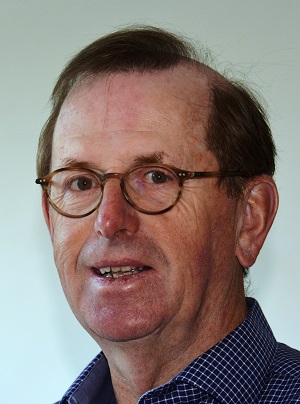
Organiser
Business Administration
Name and contact details for information
ir. Lon J.M. van der Zon; tel 0650 641 845