

E Lunch Webinar: "Ready for 2030?": Intelligent data help sustainable building
Title 'Sustainable Built seminar Data and Digitisation'
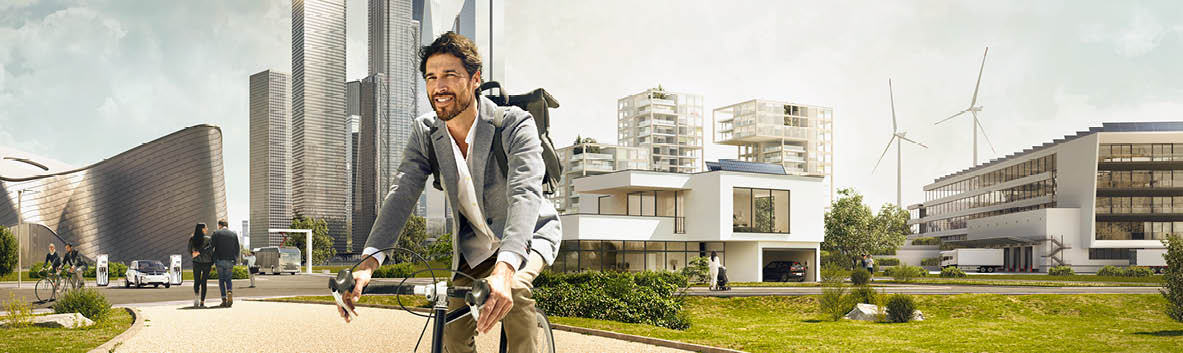
Looking back: Ready for 2030: Intelligent data helps to develop a sustainable building and make production sites more sustainable
The energy transition is in full swing. The call for electrification is increasing. This is reinforced by all recent developments, including global unrest and the huge price increase of fossil fuels.
Sustainability is therefore receiving more and more attention. How do you tackle sustainability smartly? Our speaker Kees-Jan 't Mannetje talks to you about this.
The energy transition is in full swing, sustainability and awareness are becoming increasingly important. It is essential that we follow the right path in this respect. Kees-Jan 't Mannetje says:
"The earlier phase of the energy transition has already shown that matching supply and demand is very relevant. Now, when this energy transition accelerates, this matching becomes even more important."
The ideal situation vs reality
In the ideal situation, first the infrastructure would be in place and then electrification should take place. "The reality is that the infrastructure is not yet ready for this electrification everywhere. We need to think carefully about issues around connectivity and digitalisation.
It is important to be more proactive in matching supply and demand. Predicting supply is becoming more erratic as we become increasingly dependent on wind and solar energy.
Based on historical data, it is still possible to work out models, but the time to act is shorter. That requires the right connectivity and digitalisation."
Engineering plant design
So with this in mind, there is greater responsibility in designing the technical installation, for example.
Consider the use of charging infrastructure, which is going to play a big part in more and more places.
We need to anticipate this now, even if not all electrical equipment and not all vehicles are yet suitable for smart control or bi-directional use.
Connectivity and digitalisation
With these insights and knowledge, you get a grip on your energy management, consume less and see immediately what is and what is not possible.
Importance of the design phase
But if one is going to optimise energy digitally, the installation must be set up accordingly.
When it comes to energy transition, the earlier you think about it, the better. Kees-Jan 't Mannetje concludes: "Think about the technical installation and the energy issue as early as the design phase of buildings.
That prevents extra costs afterwards - especially now that skilled workers are becoming increasingly scarce.
By not underestimating the speed of electrification, together we will ensure that the energy transition does not get stuck."

Speaker:

Kees-Jan 't Mannetje, Business Development @ ABB BV
Bio:
Kees-Jan 't Mannetje has worked at ABB since 2004.
In his Business Development role, he closely follows developments in the field of energy transition. His expertise: digitalisation combined with social innovation where his interest lies in new technologies.
In practice, this means he works on new business concepts and models around Smart Energy Management, Digitalisation and Connectivity. Setting up and guiding Ecosystems plays an important role.
He was also involved in developing the energy performance monitoring standard and a living lab for setting up a local energy market, bringing together technology, digitalisation and social innovation.
As a speaker, he knows how to inspire people on topics, such as the new energy landscape, the role of digitalisation in it and what impact social innovation has.
Links