
The Future of Driving
The serie of videos made on 25-11-2016, is to be seen at the site of the Faculty of Electrical Engineering of TU-Delft.
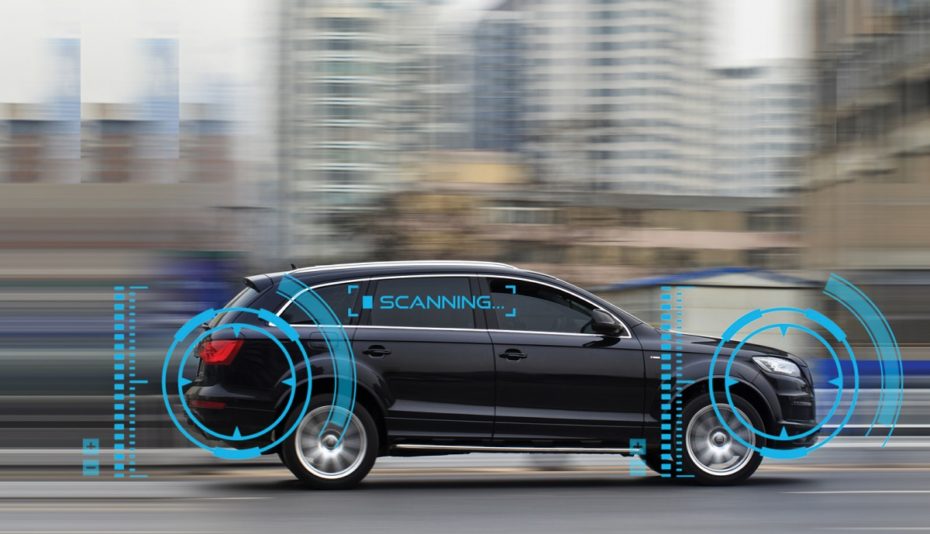
In 1908 Ford heralded the start of a new era with the Model T. It took just 12 years before people tried to create the first concept automated vehicle. Only now, in the early 21st century, the first automated vehicles are starting to see the light of day. However there are still a number of hurdles in the way before the automated vehicle will be a common sight.
Safety, of paramount importance to automated driving, has garnered a peak in interest in 2016, since the first fatal accidents involving an automated vehicle is a fact. As such the automated driving community has increased its focus on the fields of sensing, computer vision and machine learning to provide answers to the question: "Can these accidents be prevented with better technology?"
Automated driving brings along a lot of other social challenges. If an accident is not preventable, what should an automated vehicle do? Should the driver be protected at all cost? Is that ethically responsible? And is the current infrastructure suitable for automated vehicles? Can we mix automated vehicles and normal traffic?

A serie of videos made on 25-11-2016, is to be seen at the site of
the Faculty of Electrical Engineering of TU-Delft
Description
In 1908, Ford ushered in a new era with the Model T.
The automobile was a reality and new technological developments were sought.
After 12 years of research, the concept of autonomous driving was born.
In the early 21st century, the first autonomous driving car was tested. It is beginning to look like the future image is becoming a reality. At least that is what the media tells us.
This year, the first fatal accident caused by an autonomous car is a fact.
So, despite the major developments, there are still a number of challenges to be overcome in the practical field, but also the ethical field.
The Electrotechnische Vereeniging (ETV) Study Association at TU-Delft is therefore organising this symposium:
The Future of Driving, which will show what has been achieved and which hurdles still need to be overcome.
As a KIVI member, you are most welcome to attend this symposium The Future of Driving.
The speakers are of exceptional calibre from the Netherlands and abroad.
If you buy tickets through the KIVI website www.KIVI.nl/EL, you will receive a 25 euro discount.
Admission for KIVI members will then be 50 euro (including lunch and drinks afterwards).
The lectures at the symposium will be held in English.
We look forward to seeing you.
Speaker(s)
Prof. Dr. Theun Baller Dean TU-Delft
Philip van den Heuvel President ETV
Electrotechnische Vereeniging TU-Delft
Prof. Dr. Dariu Gavrila (chairman)
Intelligent Verhicles TU-Delft
Faculty of Science, University of Amsterdam
Maarten Sierhuis
Director - Nissan Research Center
Filippo Santoni De Sio
Robot Ethics Researcher - TU Delft
Carlo van de Weijer
Smart Mobility - TU Eindhoven
Serge Lambermont
Technical Director Automated Driving - Delphi
Edwin Nas
Self Driving Vehicles - Ministry of Infrastructure
Cicero Vaucher
Senior Principal - NXP Semiconductors
Location
Auditorium of the Aulla TU-Delft
Mekelweg 5, 2628 CC Delft
Organiser
Electrical Engineering
ETV study association TU-Delft
Name and contact details for information
ir. Evert-Jan Bouvy
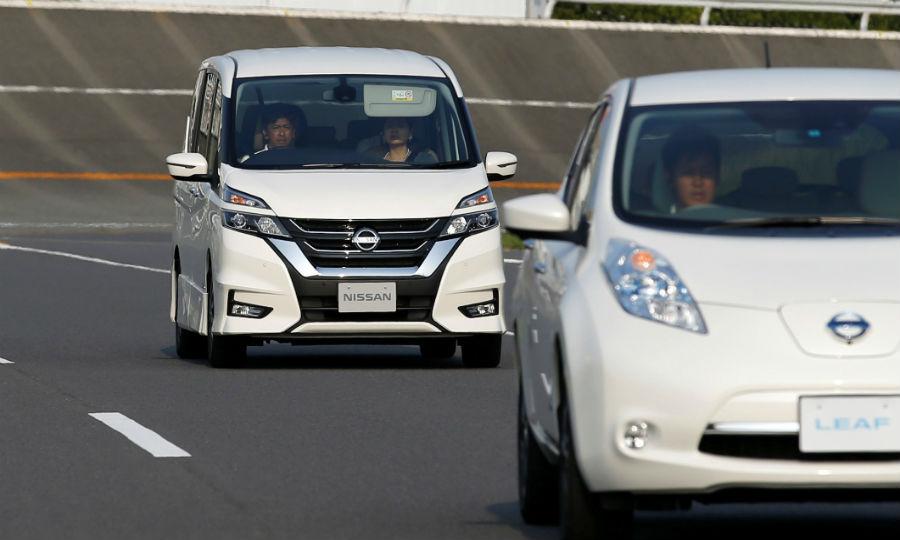
Nissan debuts ProPILOT auto drive system