

ENERGY DRIVERS AND ENERGY RANSITIONS FROM 1750 TO 2050 - Part II
The report of the presentations can be found under 'Documents' (bottom right)
The KIVI Department of Risk Management and Engineering has the honour to invite you to a symposium on:
ENERGIEDRAGERS AND ENERGIETRANSITIES FROM 1750 TO 2050 - Part II and Social Discussions and Societal Repercussions in Engineering Applications
Topics:
1. ENEGIEDRAGERS AND ENERGY RANSITIONS FROM 1750 - TO 2050 - PART II by Ir. Drs. Fred van Iddekinge
2. Capita selecta of social discussions characteristic in social discussions by Prof Dr Coen van Gulijk, TNO, University of Huddersfield and TU Delft.
The chairman of the day will give an introductory presentation.
Catchy title: Begin before you think.
What is an energy carrier? Examples include raw materials such as peat, coal, oil, gas, wood, uranium, thorium, the sun. But also man-made systems and substances, such as electricity, steam, reservoir, charged battery. Then there are substances and products like petrol, diesel oil, LPG, solar collectors, petroleum, butane, paraffin.
The use of energy, of energy carriers and their technical applications are beneficial to humans. However, possible risks and drawbacks are not always correctly assessed. These generate social debates. The introduction of the train generated a lot of emotionality. The social debate on the application of nuclear energy in the 1970s was intense.
As a direct result of those discussions, thinking about safety developed into a new branch of science: safety science. In recent decades, safety science has undergone tremendous development.
Speakers and topics
1. ENERGIEDRAGERS AND ENERGIETRANSITIES FROM 1750 TO 2050 - PART II by Ir. Drs. Fred van Iddekinge
The lecture is the second of a triptych on the subject of Energy Carriers and Energy Transitions. Part three will be covered at a subsequent symposium in September or October 2022.
Fred van Iddekinge takes us through the energy transitions, which mankind - so far opportunistically and disorganised - has experienced. What went right and what went wrong? What can we learn to make the coming energy transition successful?
Fundamentals of energy carriers and energy transitions - definitions and concepts - physical and chemical laws - were covered in Part I in November 2021. Part II is a direct sequel.
The human mindset towards risk management in any transition over time.
In Part II, Fred will distinguish between various periods.
- The period up to 1800
- From 1800 to 1880
- From 1880 to 1935
- From 1935 to 1965
- From 1965 to 1990
- From 1990 to 2010
- From 2010 to the present
Each period has its own characteristics and peculiarities.
2. Energy transitions involve social changes that lead to social debates about the desirability of the technology. Energy has brought mankind much prosperity, but also many aspects of applications, of transitions, of exploration of energy carriers and their side effects have been highly controversial. The opening of a steam train route, for instance, saw the death of a member of parliament, which brought steam trains into question. In the 1970s, the debate over the use of nuclear power flared up, a debate that is resurfacing. Mining for oil did not always go smoothly. The Piper Alpha accident led to tightening of regulations on the Continental Shelf and changes in insurance techniques in the offshore industry. The Deepwater Horizon ended up at the bottom of the Gulf of Mexico; the well was open for 78 days. Pollution of beaches, destruction of fish farms, destruction of fish stocks and other flora and fauna were consequences, which the poor risk management techniques in this case were not able to withstand.
Continuation and conclusion of the triptych
Part III of the triptych Energy Carriers and Energy Transitions will take place in autumn 2022. Fred will then discuss the following topics:
- From present to the middle of this century
- (Inter)national agreements made by the Netherlands
- Opportunities and risks of choices made and to be made
- The best options according to KIVI-RBT
- Summary and conclusions
Timetable
|
13:30 - 14:00 |
Walk-in with coffee and tea |
|
14:00 - 14:30 hrs |
Opening and presentation by chairman of the day Prof. Dr. Ir. John Stoop Begin before you reflect. |
|
14:30 - 14:45 hrs |
Introduction Triptych and PART II of ENERGIEDRAGERS AND ENERGY RANSITIONS FROM 1750 TO 2050 |
|
14:45 - 15:30 |
ENERGY CARRIERS AND ENERGY TRANSITIONS FROM 1750 TO 2050 - PART II |
|
15:30 - 15:45 |
Short break with coffee, tea, soft drinks |
|
15:45 - 16:00 |
Questions, comments, discussions, possible catch-up time |
|
16:00 - 16:45 hrs |
Societal repercussions of Energy carriers and transitions |
|
16:45 - 17:00 hrs |
Attendees in discussion with the presenter |
|
17:00 - 17:45 hrs |
Networking with refreshments catching up time in the event of run-down discussions |
The speakers
Drs. Frederik Willem van Iddekinge
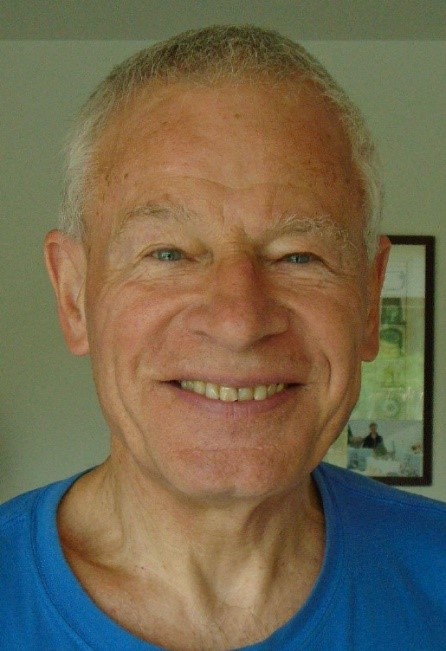
Fred van Iddekinge is a board member and member of the Programme Committee of the KIVI-RBT department. He studied chemistry and nuclear technology at TU Delft. At EUR, he obtained an MBA 10 years later. He worked in education and research and as a chemical engineer in the process industry. He then worked for over 25 years as a coordinating nuclear safety inspector of the Nuclear Physics Department (KFD, now ANVS: Nuclear Safety and Radiation Protection Authority) at, successively, SZW, VROM and ILT.
He has 20 years of experience at the IAEA (International Atomic Energy Agency), in recent years as a board member of various working groups, worked for six years as a risk and safety specialist, held numerous ancillary positions, such as rapporteur on incidents and safety to the Dutch parliament, member of the KIVI Members' Council, board member of the Nuclear Engineering Department (KIVI-KE). He lived in the United States for 3 years and worked in England for 2 years.
In short: Fred van Iddekinge brings in a lot of knowledge.
Prof Dr Coen van Gulijk
Prof Dr Ir Coen van Gulijk works at TNO Healthy Living as senior researcher digitisation of Safety Management Systems and Risk Analyses. His work finds applications in business in the field of modern IT business systems to support risky decision-making processes. This also delivers cost reductions, performance improvements and process optimisation. Interactive software, meta-security models, control structures and system architecture are part of this. For specific applications, mathematical models and programmes are unavoidable.
Coen van Gulijk is Visiting Professor at the University of Huddersfield, Department of IRR, the Institute of Railway Research. Coen co-authored the book From Safety to Safety Science, which traces the history of developments in thinking about and dealing with safety in engineering and society. The first author of that comprehensive work, Paul Swuste, was a speaker at the KIVI-RBT mini-symposium Energy Carriers and Energy Transitions Part I, held in November last year.
In short, Coen van Gulijk has fascinating insights to share with us.
Prof Dr Ir John Stoop - Chairman of the day

John Stoop is a board member of the RBT department of KIVI. He specialises in transport safety, especially in aerospace. As a researcher, he has a wonderful track record with numerous leading publications. He recently published the book Enhancing Safety, the Challange of Foresight under the auspices of the European Commission, to which he made important contributions.
In short, chaired by John Stoop, this promises to be another refreshing and lively symposium that no member of RBT should miss out on.
Ing. Anton Arnoldus - Floor manager
The floor manager monitors the process and assists the programme committee wherever useful, necessary and desirable.
The Risk Management and Engineering Programme Committee looks forward to seeing you.