

RF Technology event 2020

|
From 1 to 3 December, the RF Technology event digital took place. We can look back on a successful event, where the technical knowledge transfer from the exhibitors and keynote speakers was highly appreciated by viewers. This enthusiasm was reflected in the number of questions and thanks from viewers afterwards. |
During the RF Technology event, 14 lectures took place across the three event days. Of these, the 11 exhibitors delivered 10 presentations. These were complemented by about four plenary speakers. |
 |
|
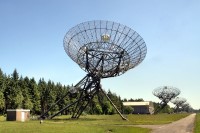
On Tuesday, Faisal Mubarak of VSL gave his lecture on Arbitrary waveform generation of Microwave Pulse Sequences for Quantum Technologies. Wednesday afternoon ended with a presentation by Tim Claeys of KU Leuven on Electromagnetic compatibility for Radio- and combined equipment. The programme and thus the entire event was concluded on Thursday by two plenary lectures: Susanne van Dijk from Sorama talked about Sound visualisation: how to optimise vibrations on my electronics product and Michiel Brentjens from Astron talked about Man-made noise and radio astronomy in his presentation. |
|
Over the three days, almost 400 viewers visited the event, spread across the various sessions. Some of the webinars were streamed 'live' from the studio at FHI, but speakers from Germany, Belgium, England and Spain also participated. |
|
Want to watch the presentations back? All presentations were recorded during the event and can be watched back via the button below. Do you have questions about the presentation while watching? Then you can put your question to the speaker.
|
 |
|
|
Did you attend one or more webinars?
To have the best possible picture of your experience, we ask you to share your findings regarding the RF Technology event 2020 with us.
You can do this via our short online survey form.
The RF Technology event has been moved to 1 December 2020 at QuTech on the TU Delft campus. The host of this event will present an overview of RF equipment and techniques used in quantum computing research. At the end of the day, visitors will experience the qualities of the scientific projects in specific trips.
The aim of this event is to showcase the diversity of applications, innovations and knowledge in the field of radio frequency technology, there will be a special focus on the more complex RF projects and tests, with Mixed Signal Variants. The event is organised by FHI and exhibitors.
Participants will showcase available RF technologies, strong RF-based applications and upcoming new RF technologies. Knowledge and practical developments will play an important role in both the plenary and parallel sessions of the event.
The full breadth of the market: appliers, developers, suppliers and institutes will be brought together at the RF Technology event. Vision, experience and opportunities will be shared in the RF community.
nsure while maintaining simplicity and transparency.
Experiencing Quantum Computing at the RF Technology event
17 February 2020 by FHI
The host of the RF Technology event on 7 April 2020 is QuTech. This collaboration between TU Delft and TNO tackles scientific challenges in a joint knowledge centre with industrial partners. QuTech has three scientific roadmaps, which focus on, quantum internet + network computing, fault-tolerant and topological quantum computing.
After the opening by Freeke Heijman (director Quantum Delft), keynote speaker Fabio Sebastiano (EWI/QuTech) will discuss cryogenic CMOS microwave drivers for large-scale quantum computing. At the end of the day, there will be an opportunity to take one of four guided tours.
Quantum computers rely on processing information stored in quantum bits (qubits), which typically need to be cooled below 1 K for proper operation. Performing operations on qubits requires a classical electronic interface, which is currently implemented at room temperature for the few qubits available.
Future quantum computers will include thousands or millions of qubits. To avoid the impractical requirement of thousands of cables from the cryogenic refrigerator to the electronics at room temperature, the electronic interface must operate at cryogenic temperatures as close to the qubits as possible. To address these challenges, the use of standard CMOS technology will be shown in Fabio Sebastiano's presentation.
De spreker gaat in op de bouw van een âÂÂÂÂÂÂÂÂÂÂÂÂÂÂÂÂÂÂâÂÂÂÂÂÂÂÂÂÂÂÂÂÂÂÂÂÂcomplexe System-on-Chip, die op 4 K werkt en qubits met microgolfimpuls in het frequentiebereik van 6 tot 20 GHz kan aansturen. As the most complex cryogenic CMOS system ever demonstrated, this is a fundamental stepping stone to future cryogenic electronic interfaces: The way forward for practical and large-scale quantum computing.
You can view the full programme of the RF Technology eventhere. On the site, you can also register for a free visit.