
Satellite communication with optical waves for earth observation

The Telecommunications Department invited you to the lecture evening on the theme: "Satellite Communication with optical waves for earth observation" In previous lectures by KIVI Telecom, speakers have discussed the history of satellite communication and new and recent developments in satellite communication.
The world of satellite communications keeps on moving, however, the market is consolidated, customer demand is changing, rapid developments are creating new opportunities. In addition to specific solutions in communications for aviation and military organisations, we now take a deeper look at Earth observation and satellite communications.
How special will it remain, that in the most inhospitable parts, on land or on water, you can have contact with the home front, send images and locate machines, and what else will become possible? Earlier, it became clear, that keeping up with changing market demands requires"on the edge innovation".
Review "Satellite communication with optical waves for earth observation"
Title: A starry sky on earth - how microwave observations from space give us unparalleled insightsLooking back
Abstract: By looking at the Earth's surface with microwaves using a radar aboard a satellite, we can see whether our dykes are safe, whether underground gas storage is filled, which quays in the centre of Amsterdam are about to collapse, and whether we can start meeting our CO2 targets. How is it that geodetic space technology allows us to provide all these insights, and how can we make the best use of the information?
In this presentation, we will discuss the interferometric technology used and look at how innovation has led to unexpected applications.
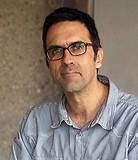 About the speaker: Prof.dr.ir. Ramon Hanssen is Antoni van Leeuwenhoek Professor at
TU Delft, in the field of geodesy and satellite earth observation.
He conducts research at the interface of satellite missions and data analytics to extract reliable
information from measurement data, and seeks new innovative applications.
Title: Satellite Communication with Optical Waves - potential and challenges Looking back
Abstract: Optical Wireless Communication is a promising technology to achieve very high data throughput and secure communication links. Compared to radio-frequency based links, the use of much higher frequencies offers various strong advantages, such as improved channel capacity, higher power efficiency, reduced-size communication terminals, lower cost and inherent security.
The presentation will discuss the challenges to overcome in order to realise the strong potential of long-range optical waves in satellite communication. Technological solutions will be discussed and various prototype systems - both on ground station and satellite level - will be presented.
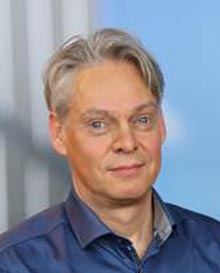 About the speaker: Prof. Dr. Niek Doelman is a senior scientist at TNO Industry, in the
Department of Opto-Mechatronics. He is also a professor (by special appointment) at the Leiden
University with a research chair on the Control of Optical Waves.
His main expertise is on Control, Optics, Mechatronics and Signal Processing. His main focus in
on innovative technologies for Optical Wireless Communication and also for Ground-based
Astronomy, Space Science and Semicon Equipment. In the NWO programme on Optical Wireless
Superhighways he is workpackage-leader on Free Space Optical Channels.
The lectures were given in the main hall of the KIVI building.
There was a free bread meal for KIVI members from 18:00.
The seminar could also be followed online and the lectures can be watched back:
Links:
- AtbACKGROUND: A starry sky on Earth by R.F. Hanssen TU Delft
- Looking back Satellite Communication with Optical Waves - potential and challenges by Niek Doelman
- SkyGeo
- Launching satellites with exploding hydrogen (The Engineer)
- TU Delft Space Institute
- Recent advances in optical communications, November 30, 2021
- Satellite Communications, global dated 21 May 2017:
- TU Delft Space Institute
- TNO Information & Communication Technology