
Climate adaptation
Themes: Flooding - Flooding - Heat - Drought
- Flooding; We have seen a marked increase in recent years of streets flooded, flooded basements and houses/shops completely ruined due to water and mud. Hail and thunderstorms also cause significant property damage.
- Flooding; Due to climate change, sea levels are rising and peak discharges in rivers cause higher water levels, increasing the likelihood of flooding. Flood risks have been taken into account in the Netherlands, being Waterland, for years.
- Heat; Climate change is making summers warmer and winters milder. This overall warming creates several health risks. It has been proven that heat waves increase the risk of mortality (12%). In addition, the quality of our surface water decreases with increases in heat (less oxygen, greater risk of botulism, blue-green algae and other pathogens).
- Drought; Last summer we faced the driest period in 40 years in the Netherlands. A summer in which our entire drinking water supply had to be tapped to water all gardens and fill swimming pools. More problematic was the drying up of peat dykes, impoverished crops, salinisation of shallow groundwater and subsidence of soil layers due to low groundwater levels.
Programme
Time Subject
16:30 Reception with coffee/tea
17:00 Opening by the chairman of the day Arnold Groot, KIVI region Gelderland
17:15 Introduction by Prof. Mascha Smit, Lecturer Sustainable Energy HAN *
17:30 Presentation Flooding, Katheleen Poels - Head of Water Management Advisory Group Royal HaskoningDHV *
18:00 Presentation Flooding, Frans Klijn - Freshwater systems / Risk analysis for water management, Deltares *
18:30 PAUSE with a sandwich
19:00 Presentation Heat, Sanne Huisman - Project employee Tauw *
19:30 Presentation Drought, Peter Schrijver - Heemraad Waterschap Rijn IJssel *
20:00 Start of discussion based on questions and final conclusion
20:30 Closure of seminar and drinks afterward
* Prof Mascha Smit studied physics at the University of Amsterdam with a final project on fuel cells at ECN. She then received her PhD from Oxford University on corrosion. She then worked in Mexico for 12 years as a researcher at a government research institute and was one of the founders of the Department of Renewable Energy there, as well as the associated master's and doctoral programme. In 2012, she joined the Arnhem-based company Nedstack Fuel Cell Technology B.V., where she became R&D manager. Since 1 February 2016, she has been working as a lecturer in Sustainable Energy at HAN.
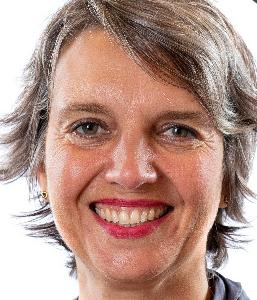
* Katheleen Poels is head of the Water Management Advisory Group; Water Management touches everything. Together we face the challenge of giving concrete form to safety, sustainability and future-proofing of the water system and the water chain. Together with our customers and partners, we develop solutions to the world's problems in this field.
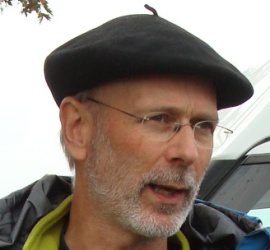
* Prof Frans Klijn is senior specialist at the Flood Risk Management department of Deltares in Delft, where he has worked for over 20 years, and part-time professor of Adaptive Delta Planning at TU Delft's Faculty of Engineering, Governance & Management. He studied physical geography and environmental science in Amsterdam and Uppsala (Sweden). He then spent 10 years at the Centre for Environmental Studies at Leiden University.
In recent years, he has mainly been doing policy-related research on flood risks and how to manage them, also in the long term with a changing climate. He coordinated the Knowledge for Climate research on this topic, which involved six universities, and is closely involved in the Delta Programme as an advisor.
He is a member of the Rivers Working Group of the Water Safety Expertise Network (ENW), is an editor on several journals and chairs the Scientific Committee of the European FLOODrisk2020 conference.
https://www.deltares.nl/nl/expertise/overstromingsrisico/
https://www.deltares.nl/nl/issues/handelingsperspectieven/
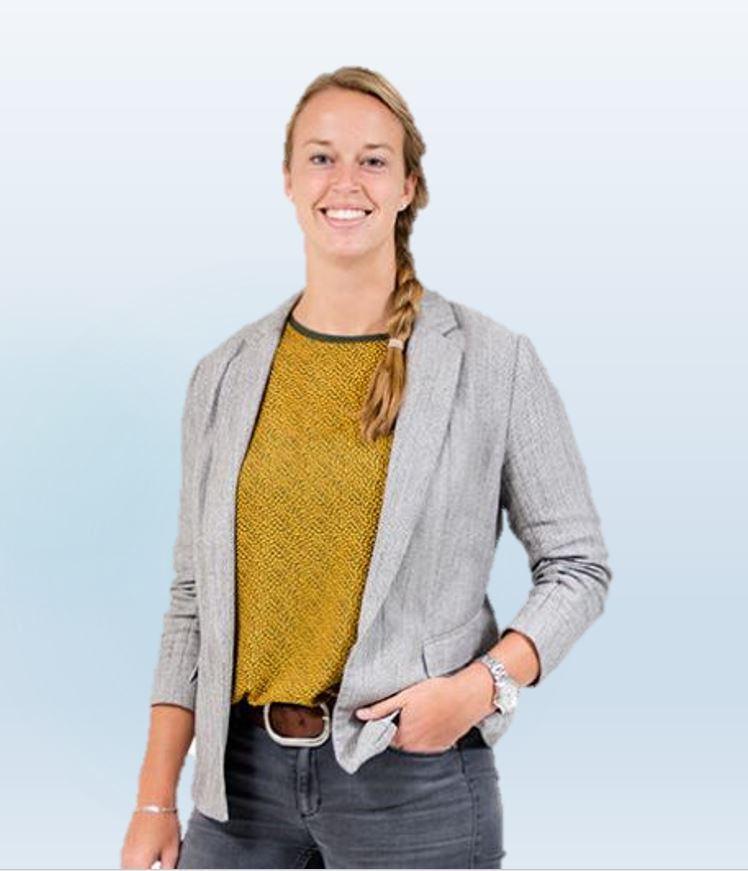
* Sanne Huisman joined Tauw's Climate team as a project officer in 2017.She studied Transnational ecosystem-based water management at Radboud University Nijmegen and the Universität Duisburg-Essen. At Tauw, her work on heat is mainly concerned with mapping heat bottlenecks in urban areas. She does this by making heat stress maps for, among other things, the wind chill temperature on a hot day, the temperature during the night, but also distance-to-cool maps. She is also involved in the RAAK research project 'the Heat-resistant City' in a consortium with the Hogeschool van Amsterdam, Hanzehogeschool Groiningen, WEnR and various municipalities.
https://www.tauw.nl/op-welk-gebied/klimaat-actieve-stad/hittestresskaart.html
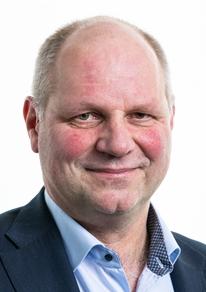
* Heemraad Peter Schrijver is part of the executive committee of the Rijn and IJssel Water Board. This water board takes care of the water in East Gelderland, the south of Overijssel and the southeast of the Veluwe. So that everyone can do business, live and recreate in it safely. Safe, clean, not too dry and not too wet. We do this by managing the (ground) water level, purifying sewage water and ensuring clean water in streams, ditches and rivers.