

E Lunch webinar How does the Energy Transition in the Built Environment work?
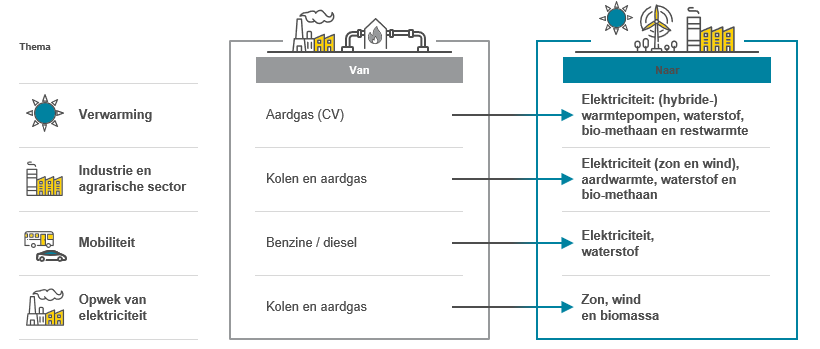
Looking back: How is the energy transition in the Built Environment progressing? Challenges galore, and not just in technology
That the energy system in the Netherlands will change violently will no longer be a surprise to anyone. What it will eventually look like, however, is still largely uncertain.
The urgency for this transition is far from being felt everywhere. In addition, there are more and more bottlenecks in the electricity grids. Technological developments are continuously affecting availability, accessibility, reliability and affordability.
Energy systems, such as heat, green gas and hydrogen, are very different and far from stable and predictable. It is therefore difficult to make the right choices in them. And that applies to residents and businesses, policymakers and planners, technology developers and researchers, as well as grid operators.
Yet it is important to speed up this energy transition. And so it is also important to take joint, coordinated, supported and well-founded steps at the various levels.
The Transition Vision Heat as a Workhorse in the Built Environment
Zooming in on the Built Environment sector (say housing and utilities), abandoning fossil natural gas is the big challenge. Alternatives are electrification, heat networks, renewable gases, each with their potential and complexities. Availability, affordability and individuality are important aspects here.
How to make socially responsible choices in these? For the Netherlands, the Heat Transition Vision was devised for this purpose: each municipality has to indicate per district which district will remain habitable without natural gas.
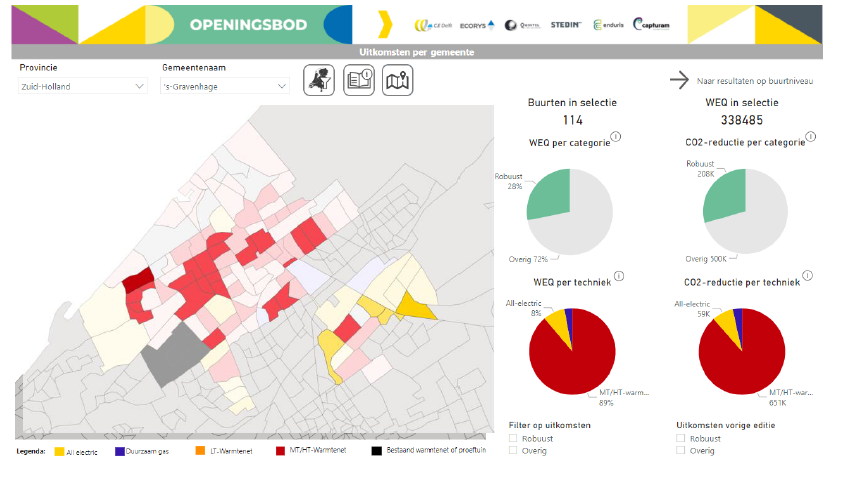
A few years ago, Stedin developed the Opening Offer for this purpose. Based on the idea of the lowest social costs, taking into account the availability of energy carriers and the conditions of networks and buildings, the "ideal" energy carrier has been mapped out for each district.
Meanwhile, this picture is used, among other things, in our investment plans (this way we know what to expect), and at the same time we use these analyses with the municipalities to support them in completing the Heat Transition Vision.
Technology is not just blissful
Making those choices is complicated AND complex: complicated because you have to assume forecasts and developments in the future; complex because it affects everyone and many people (certainly engineers) have their own opinions about it.
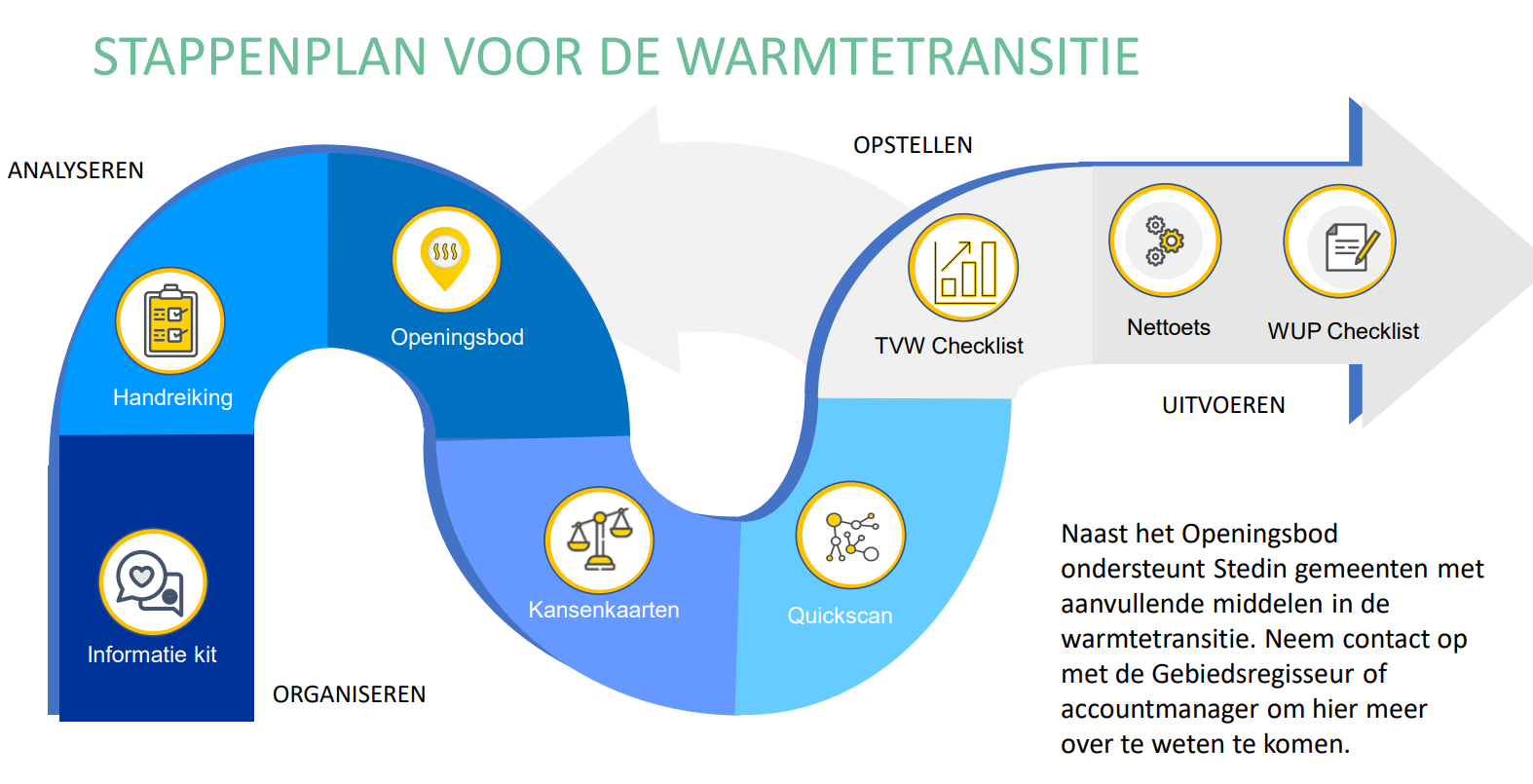
It is therefore clear, that many more aspects play a role than just techno-economic ones. Consider the policies of housing corporations, sewer renovations, permits for heat networks and biogas plants, for example, and the question of whether hydrogen gas for the built environment will become available at all. The year 2030 is therefore fast approaching.
There is also the question of how mobility in particular will develop. Coherence with other plans and processes must also be ensured.
To steer this in the right direction, there is a multitude of National Programmes and sector plans.
Stedin keeps track of this in its investment plans, with various tooling, such as opportunity maps and scenarios. Together with the other grid managers, we make scenario analyses, drawn up on the basis of the energy system, such as the II3050 report (Toekomstscenario's Netbeheer Nederland 2021).
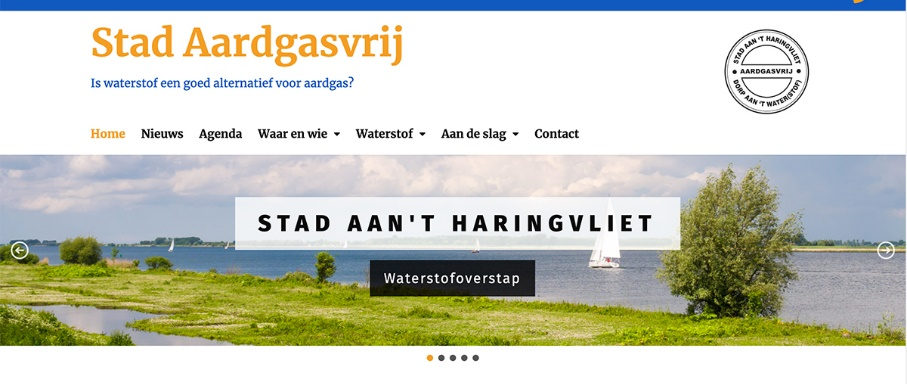
Based on experiences with Stad aan 't Haringvliet, among others, which aims to distribute sustainable hydrogen gas throughout the village by 2025, we will outline which aspects are involved in such a coordinated transition.
In short:
"Off the gas" is easy to say.
This webinar will explain what the challenges are and how Stedin is facilitating the Energy Transition to the maximum extent. The environment in which Stedin has to work will be outlined, as well as which other actors, stakeholders and bodies are important.
This will make (more) clear who is in charge, and which action perspective residents themselves have.
Speaker
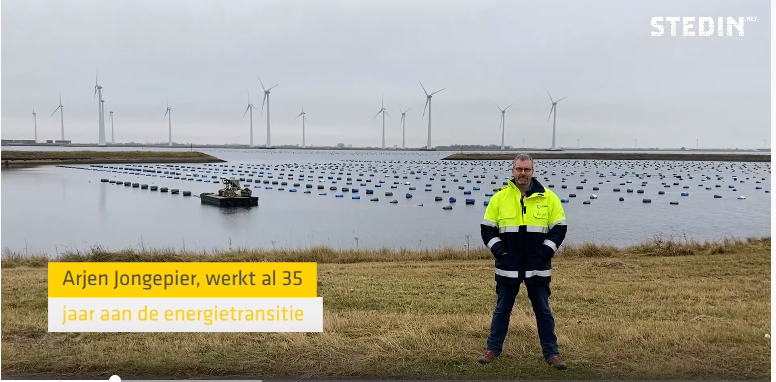
Dr Arjen Jongepier, Innovation and System Integration at Stedin
Speakers bio
Arjen Jongepier graduated from T.U. Delft in 1989, in Energy Supply Systems. He later obtained his PhD on the application of Artificial Intelligence in the energy sector. He worked at KEMA as a scientific researcher, then at the Samenwerkende Elektriciteits- Productiebedrijven, participated in the set-up and organisation of TenneT, later at KEMA as a consultant in liberalisation, energy trading and Asset Management.
Since 2008, he has been working at the regional grid manager Stedin (and its legal predecessors) as an innovator, shaping the Energy System of the Future. In this capacity, Arjen has personally experienced various energy transitions.
Arjen's main motivation is to use the energy system to make society function responsibly. In doing so, he particularly seeks coherence and cooperation between all actors, stakeholders and energy carriers.
Links
- Looking back: How is the energy transition in the Built Environment progressing? Challenges galore, and not just in technology
- Existing grids report:
- Minister Jetten sent 4 documents to the House of Representatives on 13 April due to a 20 April committee debate on 'beyond 2030'.
Of course the ETES2050 Outlook, but also an interim version 'on the way' to the2nd version II3050 and the TenneT report also reported in the media
- The source of the letter is the following webpage where the pdfs of the various reports can also be downloaded is:
https://www.tweedekamer.nl/kamerstukken/brieven_regering/detail?id=2023Z06636&did=2023D15638