

How Nuclear can contribute to a sustainable world

'Nuclear power is needed for lowCO2 emissions'
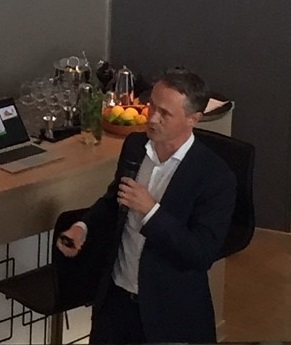
ENSCHEDE, 10 May 2019 - Nuclear power can play a crucial role in the transition to a fossil-free future. To absorb the peaks and troughs in the unpredictable production of power from solar and wind, nuclear power plants can provideCO2-free energy. This was stated by Ad Louter, chairman of Nuclear Netherlands, during a debate at the University of Twente on 9 May. "In France, nuclear power plants have been used for decades to switch on or off quickly."
One of the biggest challenges in the planned expansion of wind farms and solar meadows, experts acknowledge, is where the power will come from when the wind and sun fail. For now, these are mainly natural gas-fired power plants, leading toCO2 emissions. Any solution to capture the excess green power, for example with hydrogen or batteries, "has technical and financial challenges", Olof van der Gaag, director of the Dutch Sustainable Energy Association, also acknowledged. Louter's assessment was harsher: "Too expensive, too complex."
However, Van der Gaag did point out the tendency in society to be outspoken about everything. "To be or not to be windmills, heat pumps, nuclear power plants or biomass: everything leads to discussion." He draws his hopes from innovations such as electric aircraft and a shift to a demand-driven supply of energy. Louter pointed out, however, that 10 years after the Energiewende, Germany still emits about six times moreCO2 per quantity of energy generated than France with its nuclear power plants. "The countries with the lowestCO2 emissions have a combination of hydro and nuclear for base load, plus solar and wind."
From the room, well filled with about a hundred visitors, concerns about the high costs, among others, were raised. Those are there for renewable, but Van der Gaag tried to tone down the fuss about the costs of climate policy by comparing some government spending: if healthcare and social security both represent a melon, climate policy is just a blueberry. Nuclear power also requires high investment costs, but at 45 euros per megawatt hour, the Borssele nuclear power plant still provides the cheapest power in the Netherlands, Louter knew. Besides, he said, "Especially in countries like Germany and Denmark that are fully committed to solar and wind, energy bills are rising."
Other speakers at the symposium, organised by KIVI (Royal Institute of Engineers), were Ronald Schram, director of Strategic Alliances at NRG, and journalist Ralf Bodelier, associated with the Ecomodernism Foundation. Mario van der Borst, president of KIVI Nuclear Engineering, indicated beforehand that there is a "polarisation around climate policy that makes dialogue impossible". Afterwards, he noted that this meeting underlined "why we need to keep talking to each other".
Can nuclear power contribute to a sustainable world?
The Netherlands has high ambitions to reduce CO2 emissions. The government is coming up with concrete plans for everything from wind turbines and solar panels to heat pumps and electric cars. Although there is broad support for this in the Lower House, public support seems to be crumbling. Plans for wind farms and solar meadows are meeting resistance from local residents. There are concerns about how the landscape will be torn up for only a marginal contribution to global cooling. And uncertainty about the cost of the energy transition contributed to a monster victory for an openly climate sceptical party during recent elections.
Could nuclear power offer a solution? After all, countries with relatively low CO2 emissions, such as Sweden and France, make ample use of nuclear power. Proponents point out that nuclear power plants produce no CO2 or air pollution, that they use few resources and generate hardly any waste, that they run without depending on the weather, and that they cover only a small area to produce both power and heat. Critics point to the potential risks, high investment costs and uncertainties surrounding waste disposal.
Meanwhile, a survey by bureau Ipsos showed that a majority of Dutch people think we should invest in nuclear power. Even among parties like GroenLinks and D66, more voters are in favour than against. Perhaps nuclear energy can play a role in the transition to clean energy after all?
To contribute to the climate debate, KIVI (Royal Institute of Engineers) is co-hosting a spring symposium at the University of Twente (The Gallery, Hengelosestraat 500, Enschede) on Thursday 9 May, starting at 13.00.
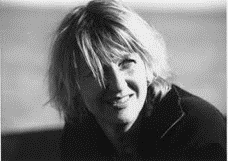
Chairman of the day: Olguita Oudendijk, debate leader
The programme is as follows:
13.00 hrs: Walk-in with coffee, tea and a sandwich
13.30 hrs: "Nuclear's contribution to a sustainable world" by Ronald Schram, Director SA, NRG
14.00 hrs: "Lost in the energy transition" by Ad Louter, Chairman Nucleair Nederland and Managing Director Urenco Nederland BV
14.30 hrs: Break with coffee, tea and soft drinks
15.00 hrs: "The challenge of a world with 10 billion people" by Ralf Bodelier, journalist & Curious Cosmopolitan
15.30 hrs: "Counter question: is Nuclear necessary for a sustainable world?" by Olof van der Gaag, Director Dutch Sustainable Energy Association
16.00 hrs: Debate with the four speakers
16.30 hrs: Drinks
17.30 hrs: End


Admission is free for members of KIVI, NNS and for students
Register via the website (red button)
