

The Binckhorst
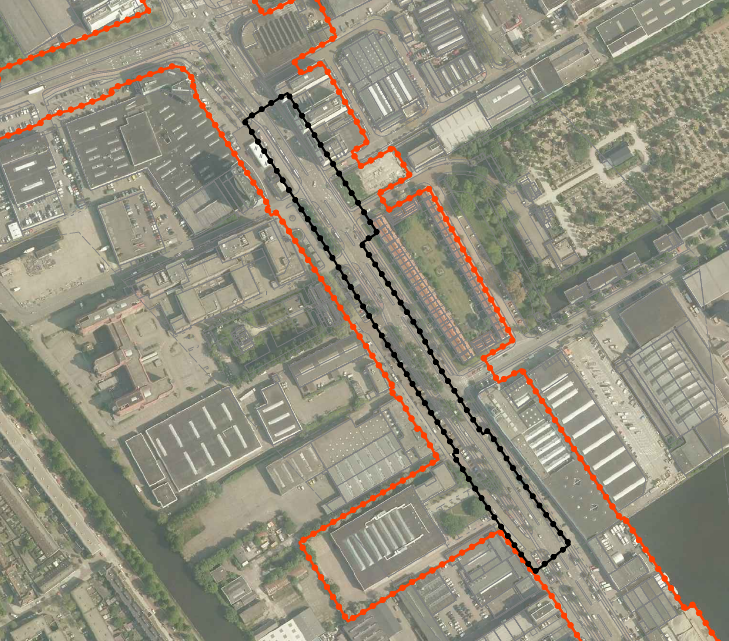


The excursion gave a nice insight into what is involved in the redevelopment of an obsolete business park, what opportunities this offers, but also what you encounter in practice. For those who want to learn more about this excursion: KIVI Bouw- en Waterbouwkunde https://www.kivi.nl/afdelingen/bouw-en-waterbouwkunde/activiteiten/activiteit/rotterdamsebaan is organising a lecture evening on the Rotterdamsebaan on 23 November. To (re)experience the Virtual reality tour: http://bit.ly/1Nh9VH4
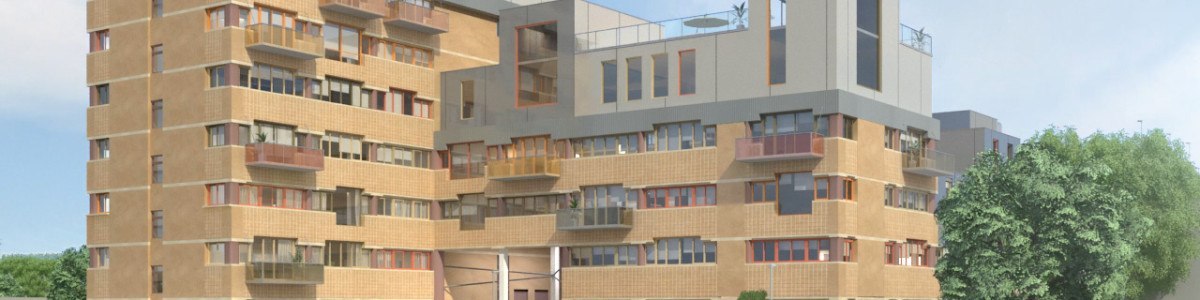
For the 3D animation of Juno https://www.youtube.com/watch?v=ADG-je_eNJ0
Description
De Binckhorst is a former inner-city business park in The Hague that is being developed into a mixed residential-working area. In 2011, the municipality abandoned the master-plan-based planning strategy and has since adopted a new, open approach to transformation, whereby investment in the new traffic structure (Rotterdamse Baan) anticipates the area's gradual and flexible transition. This mainly looks at bottom-up initiatives. During our visit, we will discuss these developments, the Rotterdamsebaan and, more specifically, the transformation of the Junoblok.
De Binckhorst
De Binckhorst is a unique inner-city business park in The Hague, where craft, creativity, culture and entrepreneurship blend seamlessly. Its strategic importance derives from its location close to the city centre and its important function for employment in the Hague region. The municipality expects the Binckhorst to have a positive impact on the surrounding area and is taking an active and facilitating role.
Rotterdamsebaan
The Hague is growing. Its population is growing and the city is welcoming more and more visitors and businesses. Accessibility plays an important role in this. An easily accessible city or region is attractive, will do well economically and have many jobs. The Rotterdamsebaan makes The Hague and the region more accessible by connecting the motorways (A4/A13) and The Hague's central ring road. This will better distribute traffic to and from the motorways and reduce the pressure on Utrechtsebaan. The city and region thus remain attractive to live and work in.
Junoblok
The Junoblok was commissioned by Interned Bouw B.V. and built in 1978 by Grabovsky and Poort, based on a design by Architectenbureau ZCZO&P. The building was used as an office for the first 10 years. In the late 1990s, it was temporarily used as an Asylum Seekers' Centre (AZC). After it lost this function, the building became vacant and was given very limited temporary management to students and artists. The building is located on the Junostraat, in a beautiful spot on the water of the Trekvliet.
Parking
For those coming by car: parking is available at Capriole, then it is still a short walk to the Trefpunt.
Directions Capriole
Capriole is a bit hidden in the Binckhorst in The Hague. It still doesn't go well with most navigation systems, except for
Google Maps: Fokkerkade 18 The Hague. Other navigation systems: Binckhorstlaan 249 The Hague (=Fokker Terminal) then you'll be reasonably close. You will find them at the back of the Fokker Terminal. To the right of the Fokker Terminal you can drive to the back and you will see Capriole Café at the Fokkerhaven.
Speaker(s)
Bart Kerner, area manager Binckhorst
Ineke Hulshof, architect
Tom Borst, Arcadis
Location
Binckhorstlaan 172-174, The Hague
Organiser
Construction
Name and contact details for information
ir. Terry van Ditmars