

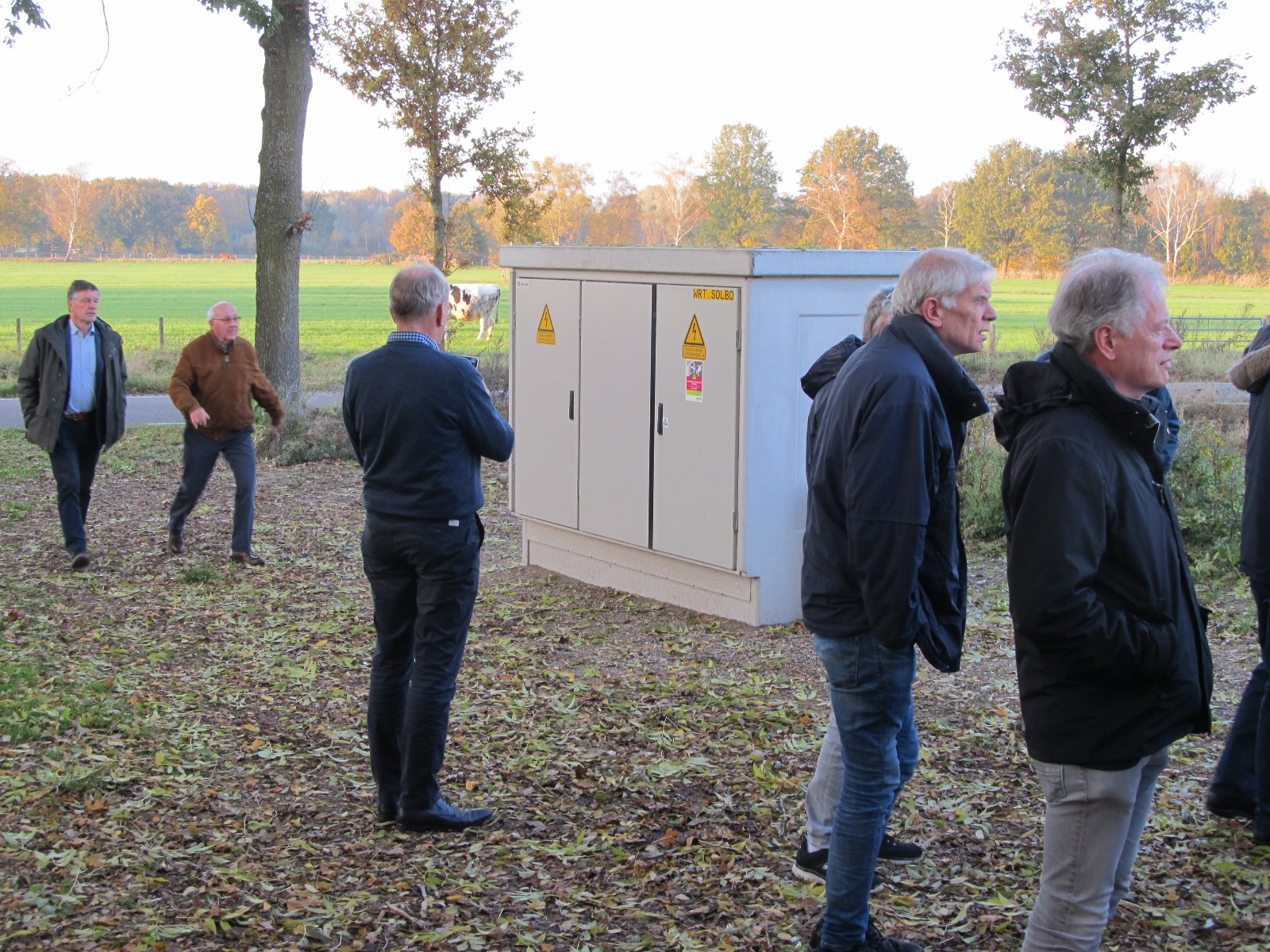
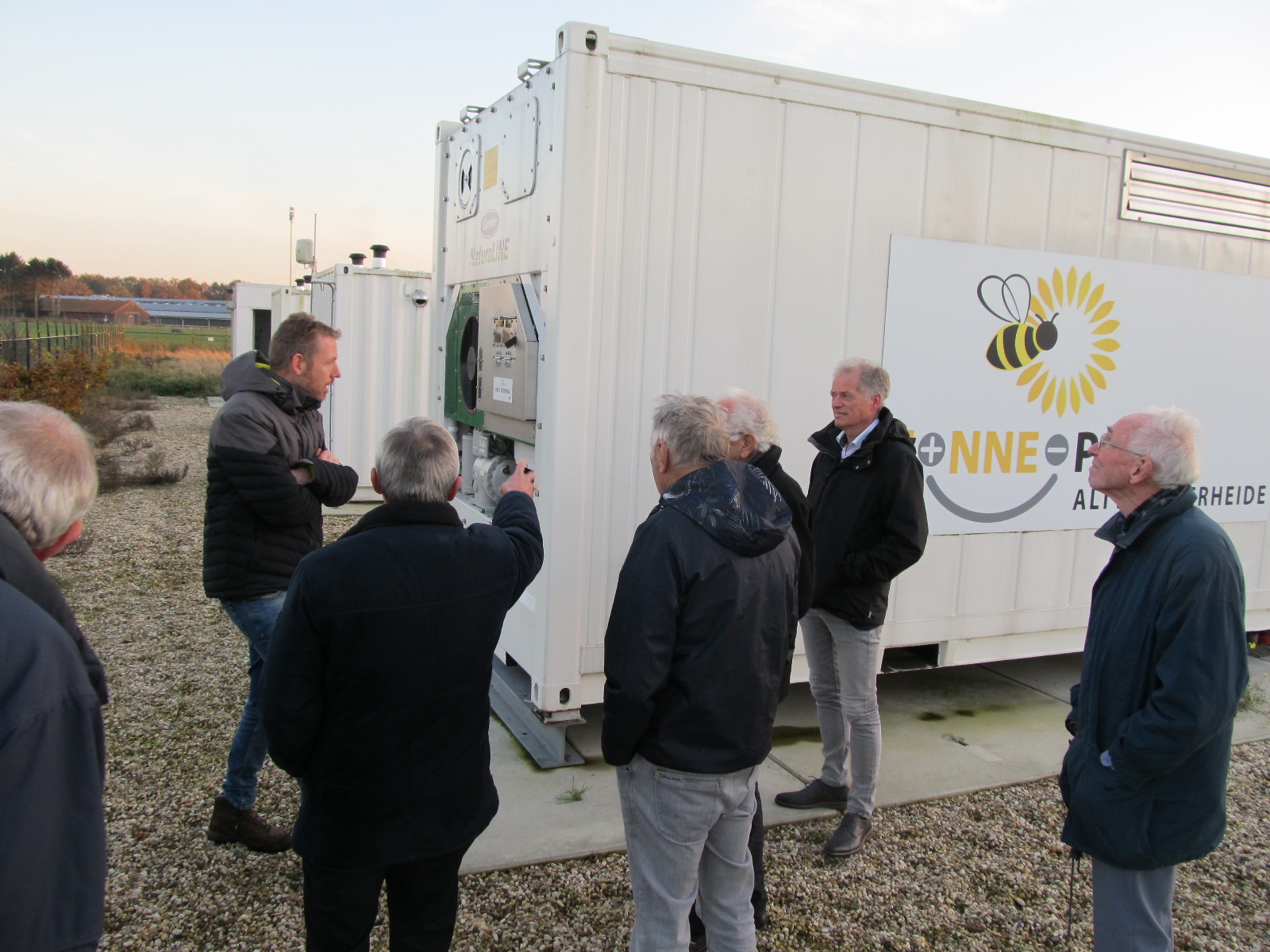
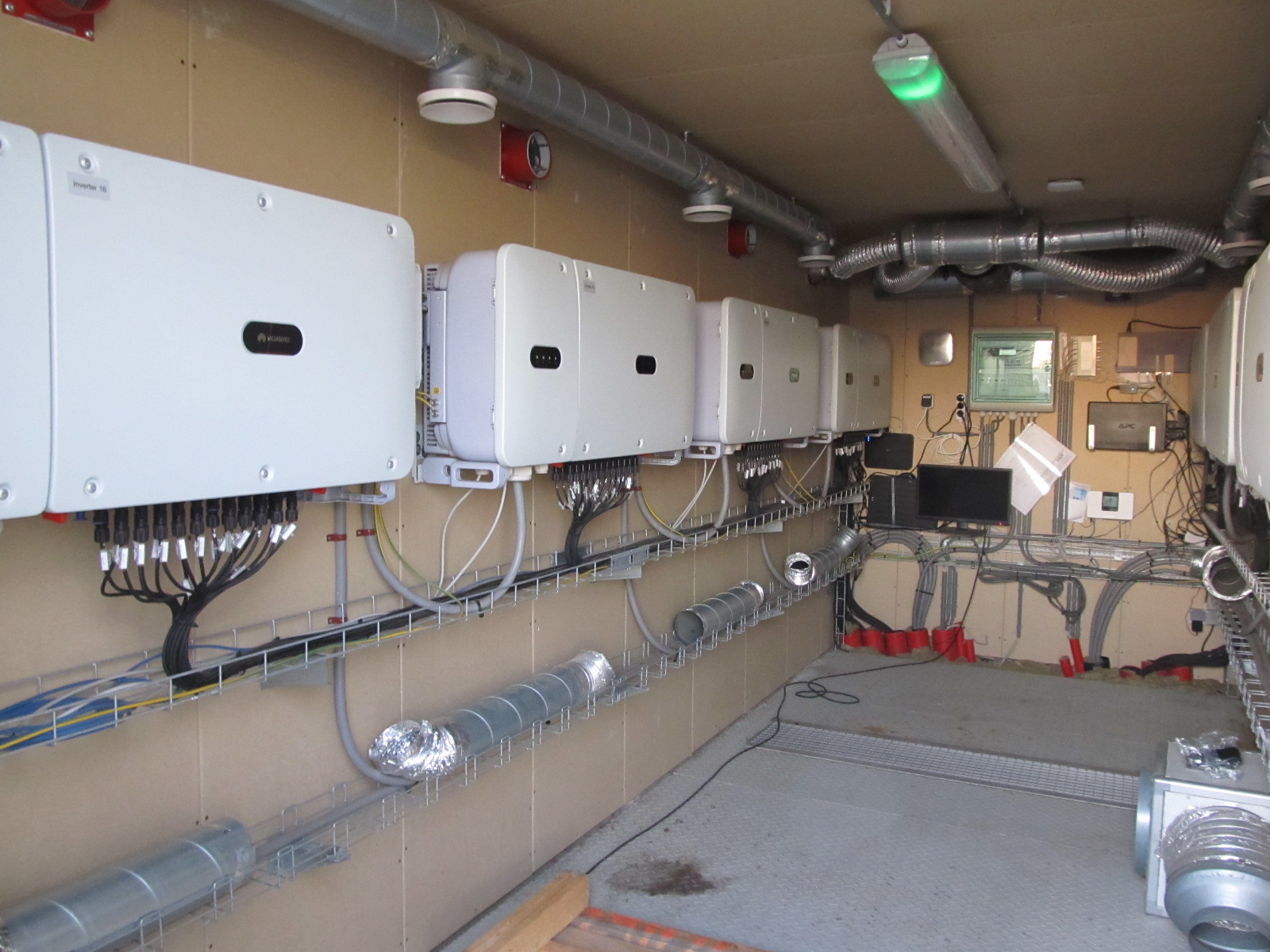
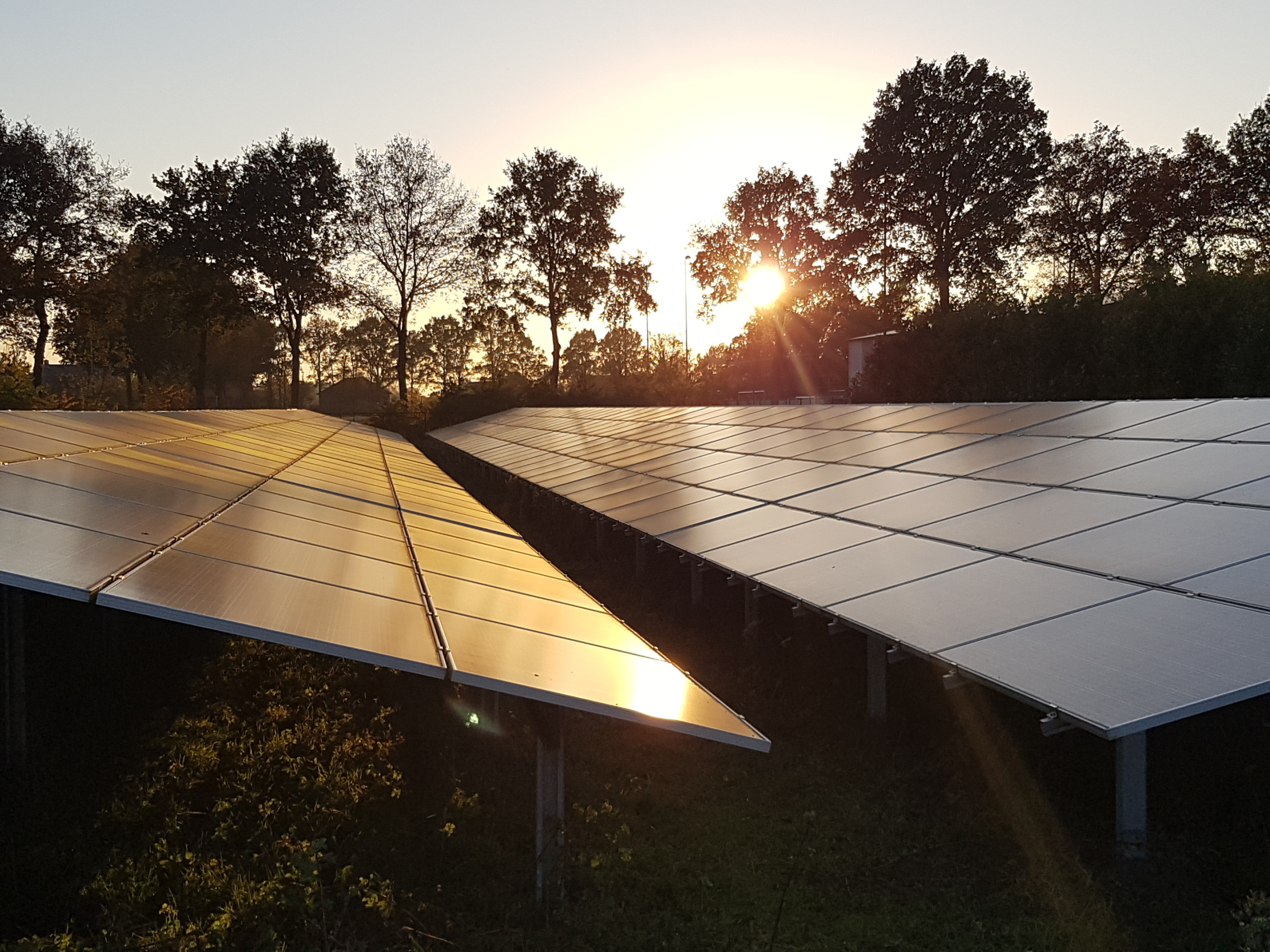
Excursion Solar farm Altweerterheide 1.8 MWpeak solar panels with 600kWh battery
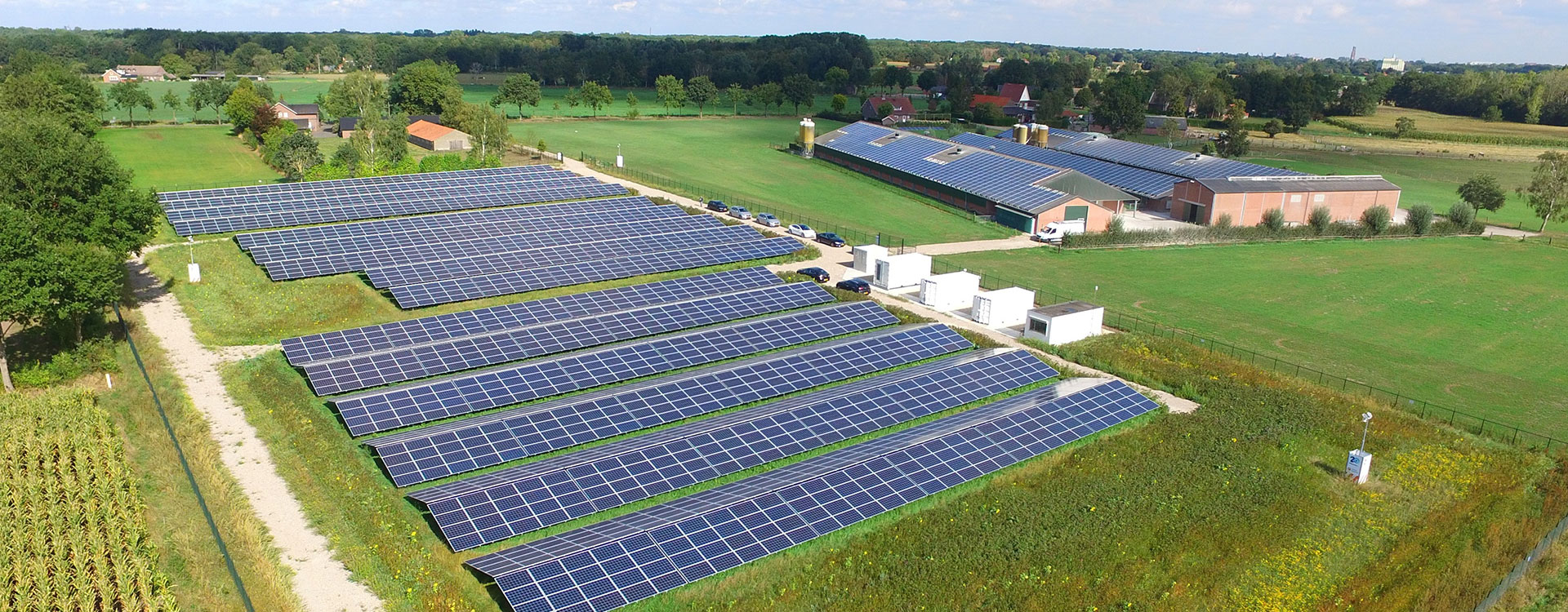
The steep growth of PV systems everywhere shows that grid operators are running up against the limits of the capacity of the Dutch energy grids. Since 2019, SDE subsidies are no longer enhanced for larger PV systems if a grid operator gives a transmission indication red indicating that the local grid has insufficient transmission capacity for capacities of 55 kilowatts to 2 megawatts. Recently, TenneT also reported that the high-voltage grid in Flevoland and Gelderland has almost no more capacity to connect solar or wind systems with powers of 2 megawatts or more. Storage systems are needed in a future of the Netherlands with only renewable energy from the sun and wind to match weather-dependent supply and the limited controllable energy use of industry and residents.
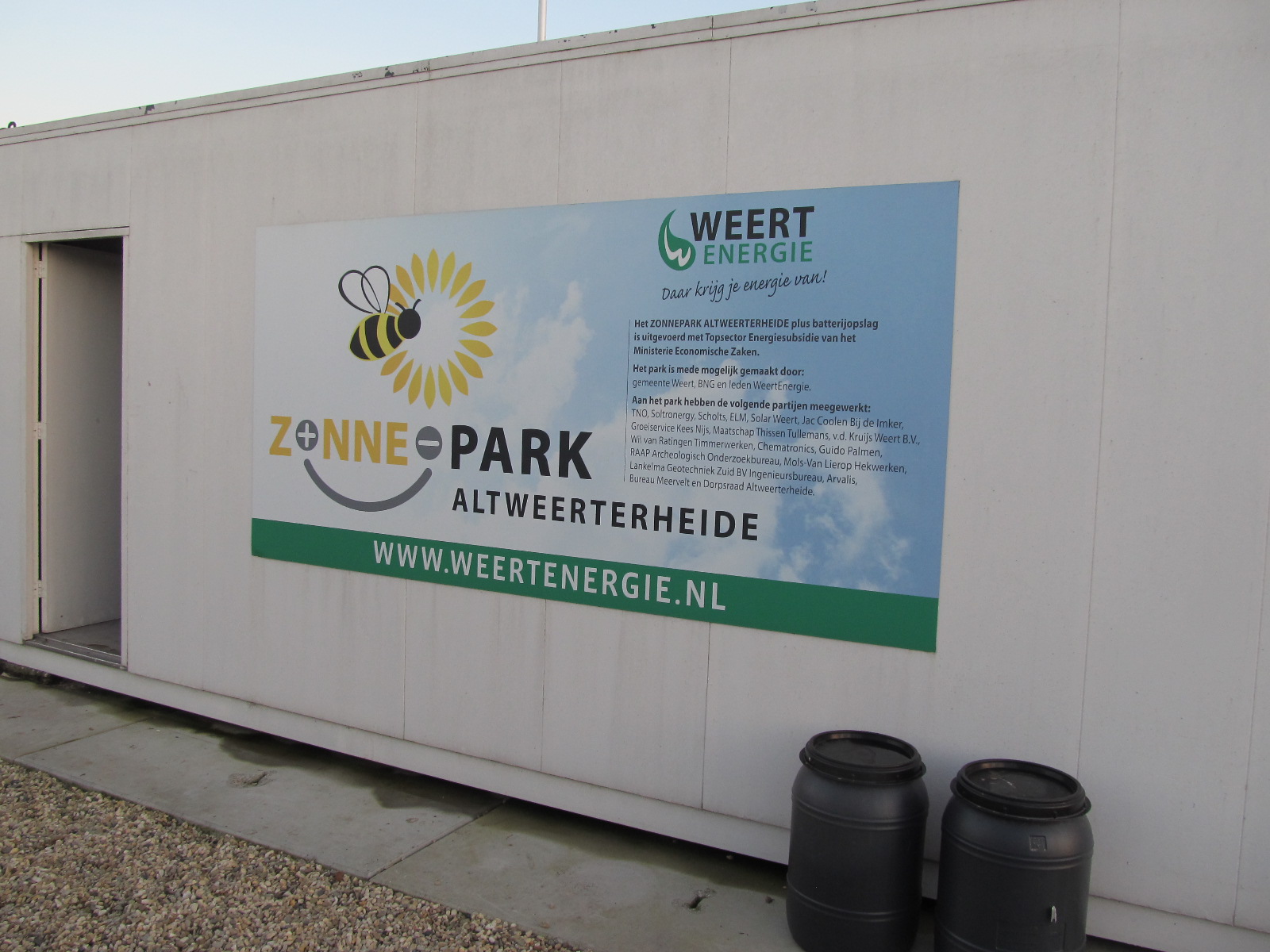
The cooperative Weert Energie realised two PV systems at Zonnepark Altweerterheide:
-
2,600 solar panels on three farm barns, together 600,000 watt peak (Wp)
-
3,900 solar panels on the ground embedded in flowery green strips, together 1,200,000 watt peak (Wp)
Weert Energie developed the solar park in two phases with various citizen participation and decided to install a battery system with a storage capacity of 600 kilowatt-hours (kWh) itself. Subsidies from the TKI Urban Energy programme, among others, helped make this system financially viable.
By combining three business models, a profitable energy storage concept is pursued:
-
Self-sufficiency: By consuming locally generated solar energy as much as possible locally, less power is purchased from the grid. As a result, the cost of supply goes down.
-
Energy trading: Using the battery for energy trading on the various energy exchanges generates revenue. Electricity is stored, when it is cheap and sold again at times when the price is high.
-
Balancing: Making the battery available to grid operators, who are responsible for balancing on the power grid, generates additional revenue. This is the power electronics equivalent called the rotating reserve for conventional power plants. The power electronics of energy storage can supply the grid instantaneously from zero or, on the contrary, take additional energy. (Conventional power plants also do this from low running power and need to be thermally 'brought up to steam' first, hence 'running reserve')
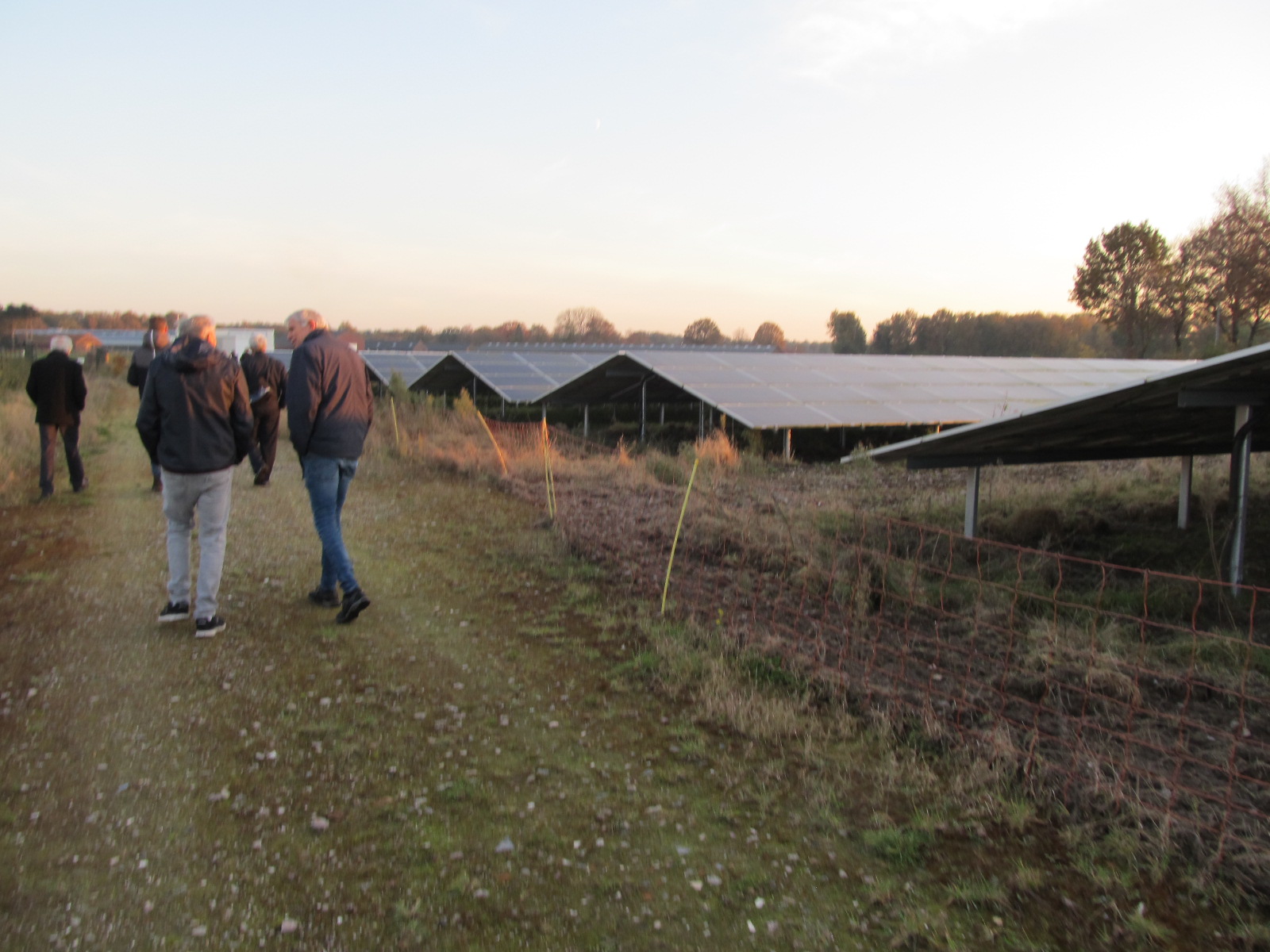
Only demonstrably vaccinated persons via the corona check-app can participate in the excursion, participants must also be able to show the received e-mail confirmation.
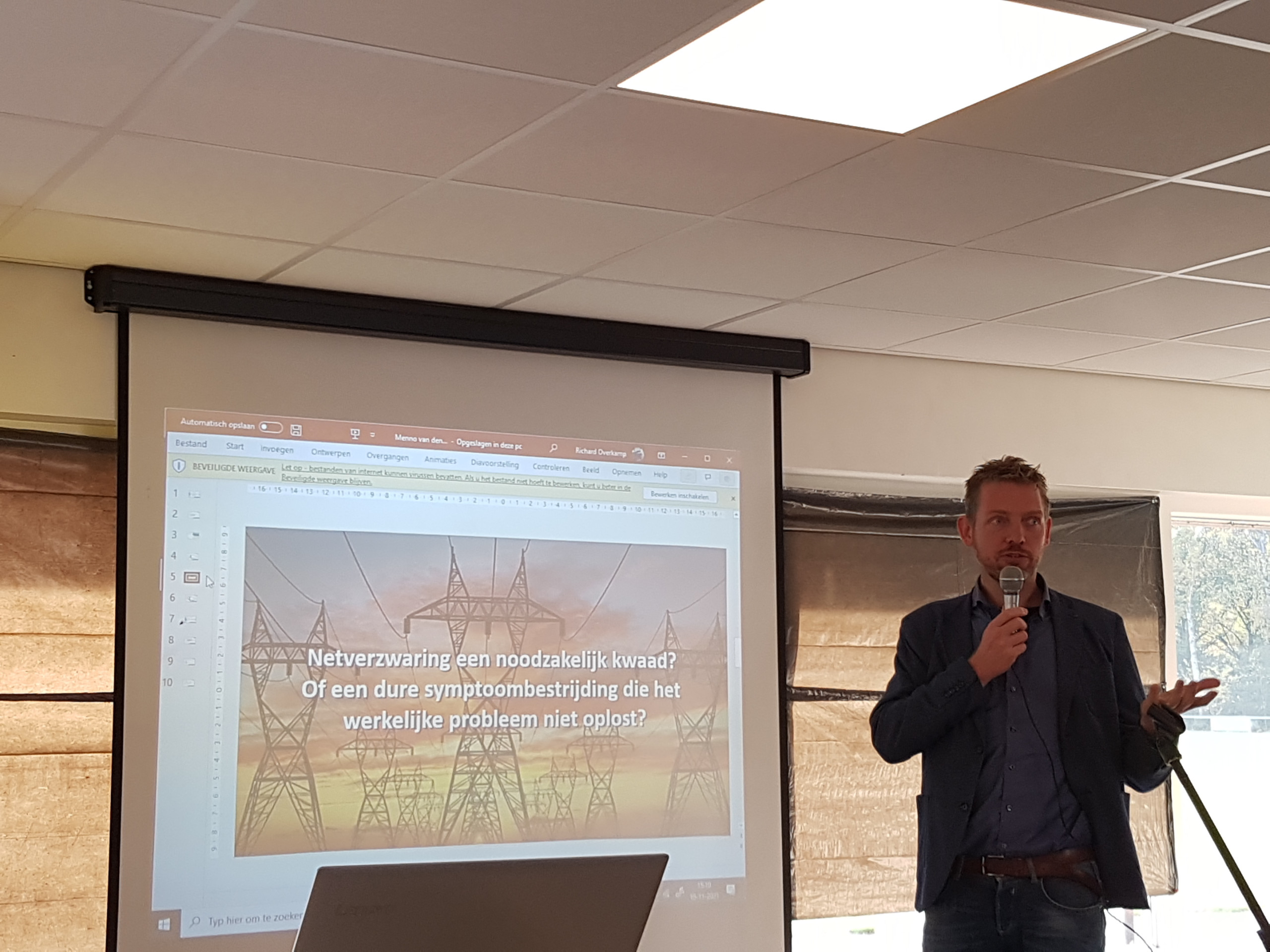
The presentations can be found under the "Documents". The recording of the lectures via the webinar can be viewed back here and are also under Webinar
Watch back Online look at the construction of Wind Farm Weert
Watch the livestream Online look at the construction of Windpark Weert on 7 January 2022 below. Owners of the Weert Wind Farm are WeertEnergie and Eneco. The enthusiasm for the livestream was high. Beforehand, 400 people had signed up and in the end 268 people watched.
Using videos, environment manager Henk Lambrichts led viewers around the wind farm construction site. In one film, councillors Wendy van Eijk and Henk van de Loo of the municipality of Weert were interviewed about the role of the wind farm in energy transition. The other films explained the different parts of the windmills.
During the livestream, participants could ask questions. Henk Lambrichts and project manager Ramon Jillings (Topwind) and Micky van der Wind (technical support Topwind) answered the questions asked.




Documents
- 0. intro KIVI -EL Excursie Zonnepark Alterweerterheide 10-11-2021
- 1. Koen Huizer EnergyNL2050 CO2 vrij NL in 2050 10-11-2021
- 2. Menno van den Donker Coöperatie Weertenergie 10-11-2021
- 3. Bert ten Haaf Slotronergy Ontwerp Altweerterheide 10-11-2021
- 4. Sander Drissen Energieleverancier ScholtEnergy 10-11-2021
- 5. Theo Jongeling Rol van Weert Energy 10-11-2021