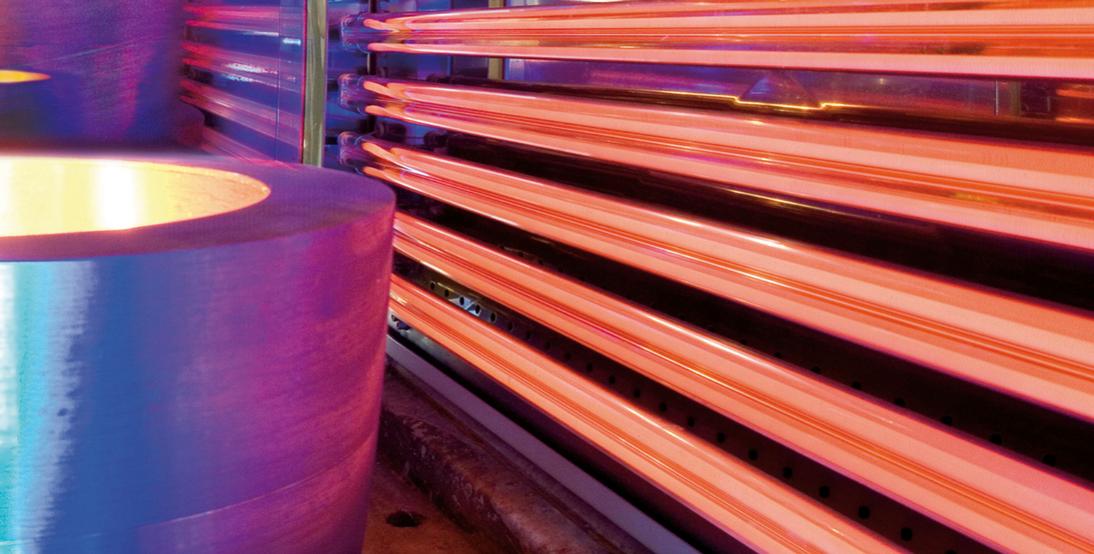
Infrared radiators for thermal processes in industry
Energy Transition (Thermal)
The reduction ofCO2 emissions from cars and buses is already in full swing with the switch to electric powertrains. To make the Netherlands' energy useCO2-free, thermal processes in industry will have to be adapted. Thermal processes in industry already partly use electricity but also still use a lot of natural gas, oil and coal. Switching to electric heating and heating is the main means for industry to make thermal processes more sustainable. Of course on the basis of purchasing green electricity or generating green electricity on one's own premises or buildings.
Making thermal processes in industry more sustainable
Many products require heating or heating during manufacturing. Heating or heating with infrared (IR) emitters is one of the possible solutions for preserving low and high-temperature thermal processes in industry. IR applications are possible in the metal industry, plastic industry, glass industry, electronics production and also in food production.
High Temperature Industry
Heating or heating with infrared (IR) emitters is one of the possible solutions for preserving low and high temperature thermal processes in industry.
Heraeus Noblelight of Germany has more than 50 years of experience in producing Ultraviolet emitters and IR emitters and their global application in industry.
Speaker
Jurgen van Oostrum of the Dutch representation Calmatech International will give an overview of the properties of IR light, such as wavelength, focusing and reflection/intensity,which are important in the many applications in paint and coating processes, in a presentation.
Examples of IR in industrial applications were presented.
Questions were answered at the end of the presentation, see under "Documents" 1.0 Hereasus Intro with Q&A.