

The life and works of Professor Richard Schoemaker
The boards of the KIVI SectionHistoryof Technology and the Histechnica Association are pleased to invite you to attend a lecture to be given by Dr C.J. van Dullemen entitled:
The life and works of Professor Richard Schoemaker
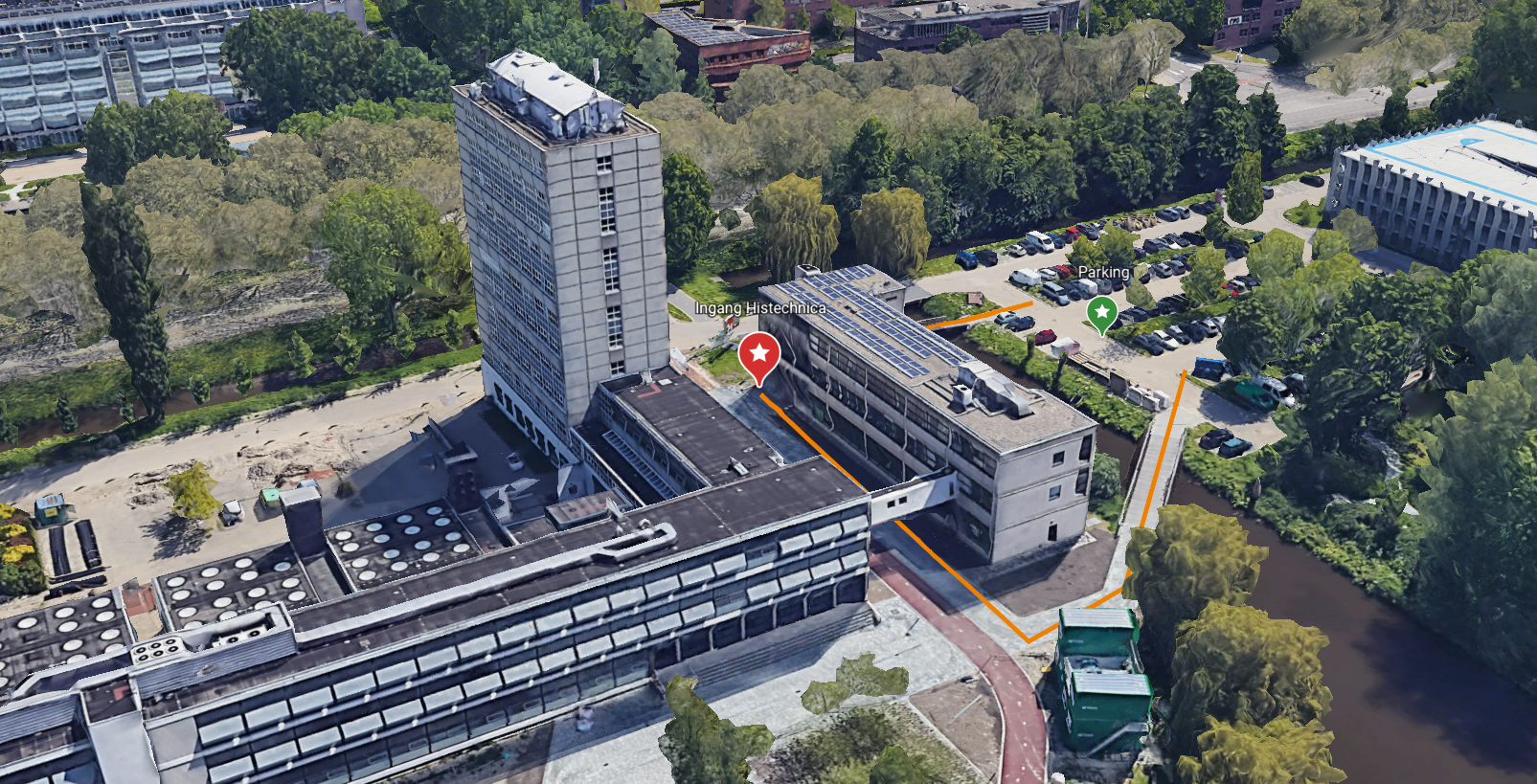
Entrance 'B' of the Science Centre
The programme is as follows:
10.30:00: Walk-in with coffee and tea
11:00: Welcome and introduction
11.05:00: Lecture by Dr C.J. van Dullemen
11:50 a.m.: Break
12:15: Continuation of lecture and concluding discussion
12:45: End of the meeting
Summary of the lecture
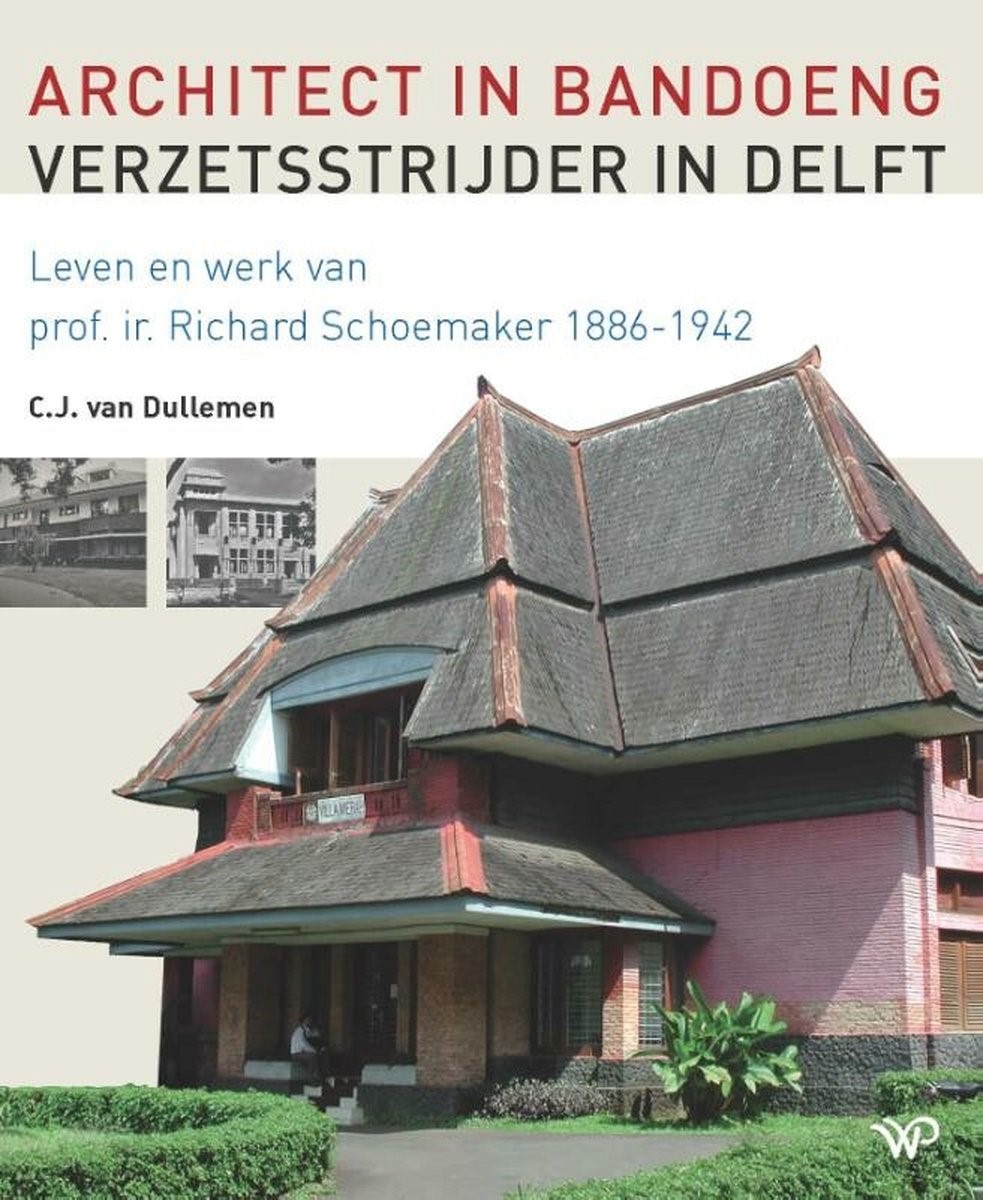
There has been a Schoemaker street in Delft for many years and now even a Schoemaker plantation. Yet few people know that Richard Schoemaker was more than a resistance hero. In my study of the Indian architect Charles Prosper Wolff Schoemaker, about whom I gave a lecture for Histechnica in 2011, his younger brother Richard already briefly came to mind. On further investigation, he too turned out to be a particularly interesting figure for the Dutch East Indies and the Netherlands.
An exemplary student at the KMA, Richard Schoemaker was sent to the 1908 London Olympics. After studying architecture at TH Delft, he left for Bandung where he became the architect of the Palace for the Army Commander. Richard worked extensively with brother Charles and together they built up a huge body of work. In 1919, Richard became the first professor at the newly founded Technical High School in Bandung. This made him a teacher of Sukarno, the first president of Indonesia, among others.
Richard was asked to teach in Delft in 1924, after which Charles took over his position at TH Bandung. In the Netherlands, Richard was active as an architect and in many walks of life, constructing many buildings including those for the KEMA in Arnhem. He also published many architectural articles.
In 1940, he soon became involved in the resistance. In early 1941, the resistance at TH Delft was rounded up by treachery and Richard was imprisoned together with other professors and students. After a year in the Oranjehotel and Camp Amersfoort, they were executed in May 1942.
Information about the speaker
In addition to his work in library, education and culture, Jan van Dullemen (1954) studied art history, classical archaeology and museology in Leiden and obtained his doctorate in Utrecht with the first dissertation on Dutch East Indies architecture on the work of C.P. Wolff Schoemaker: "In search of the Tropen style". In 1976, Jan van Dullemen married Maria Tan, born in Central Java. 35 years of self-financed research yielded unique material with many self-made photographs, drawings and personal documents. In this, Maria's role was decisive; her knowledge of the language and the country opened doors that remained closed to others.
That is the basis for this lecture in which the connection between the Netherlands and Indonesia is central and with a positive outlook leads to surprising outcomes, also for the present.
Register
To attend this lecture, please register:
- KIVI members should register via the KIVI website
- Members of Histechnica should register via the secretary hotzeboonstra@gmail.com
- Interested parties who are not members can also register through the above channels. There will then be a charge of €5.00.
The lecture will be broadcast live; you should also register for this through the above channels. There is no charge for this. The lecture will not be not recorded this time and will therefore not be available for replay.
Upcoming activities
- Saturday 22 April 2023 at 11:00 am lecture by Dr H. Heijmans: "Adriën Huët and the Water Locomotive"
- Note: The Histechnica AGM is scheduled prior to the lecture
- Study trip to Ghent and Brussels in May: distribution of programme booklets
- Saturday 27 May 2023 at 11:00 lecture by ir G van Ditshuijzen: History of our scale and its calculations"
- Saturday 24 June 2023 at 11:00 am lecture by Prof J.F. Abbink: Radar and Electronic Warfare in World War 2"
- 16/17 May 2023 Two-day study tour Ghent and Brussels
On the occasion of the 175th anniversary of KIVI, the History of Engineering Department has published a book highlighting the three founders of KIVI in the times in which they lived. The book will be available free of charge during the lecture for members of Histechnica and for members of the KIVI Department of History of Technology.