

FUJI from film rolls to membranes for Fuel cells; which BK/process/Electro engineers want to think along?
 FUJIfilm made its name as a film reel manufacturer. The green boxes were in shops everywhere. Around 2000, the market began to shrink rapidly as digital technology was on the rise. The film rolls factory closed in 2006. Fujifilm rose to the challenge with a remarkable business conversion to include: membranes for fuel cells.
WIN-WIN
FUJI is eager to explain how this turnaround happened; then FUJI would like feedback from practical experiences with membrane applications from our engineers.
12 core technologies have been defined with which new business areas have been set up including
- Digital cameras
- High-quality photo printing paper
- Medical systems with diagnostic imaging
- Optical systems: lens projectors and viewers
- Graphic systems: offset printing
- Digital storage media for audio and video
- Industrial products; including membranes
In Tilburg, FUJI opened its new production line for membranes in September 2014.
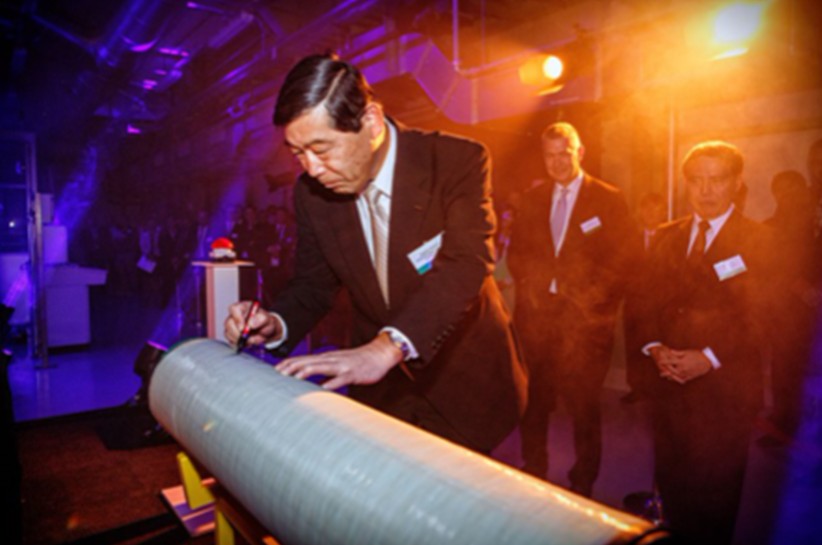
A membrane is a fine filter that can purify gas or water, for example. The new production line produces membranes suitable for gas separation, among other things. The coated membranes are rolled up and processed into modules. The customer uses the gas separation modules in gas fields to separate gases. An example of the application of Fujifilm modules is to purify natural gas fromCO2.
The presentation will address:
- how risky was this transition?
- how did the product become profitable?
- what did this business case look like?
- why was membrane technology chosen, what relation to existing knowledge?
- what difficult choices did Fuji have to make?
- in retrospect, what were the learning moments?
Technology case:
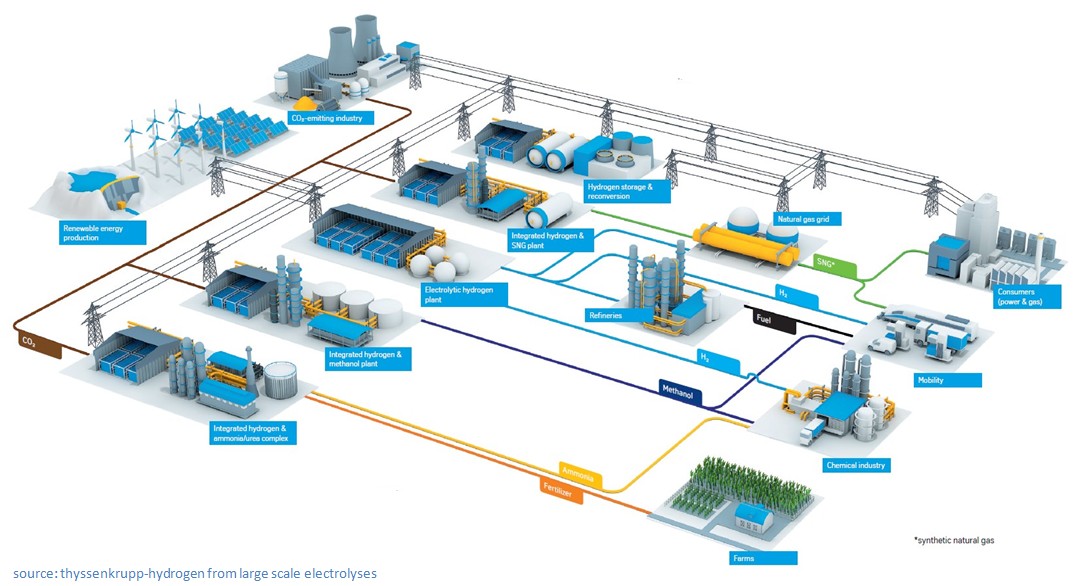
Question: in the future of fuel cells, among other things, high demands are made on energy storage capacity. In the above diagram, separation processes use membranes in many places.
Looking at the content, there are 3 topics FUJI is interested in:
- Hydrogen generation where membranes are used in hydrogen production (PEM electrolysers for example) or related technology.
- Energy storage by means of Redox Flow Batteries, for example .
- Splitting water or salts into acids and bases through Bipolar membranes
It would be nice if there are people in the KIVI network who have practical experience with these applications. If so, these are engineers who have developed these kinds of systems/processes, bottlenecks they have encountered in doing so in practice. Learning points and advice from their experience. FUJI has the real chemical knowledge in-house; practical experience about the processes and applications less so.
More info:
- https://www.fujifilmmembranes.com/
- https://www.fujifilm.eu/eu/products/industrial-products/membrane-technology
- https://www.fujifilm.com/innovation/
Video explanation of Electro Dialysis: https://www.youtube.com/watch?v=wNCcpx9leG4
Our host this afternoon is: Michiel de Hair (Open Innovation Hub Manager)
Participants (if necessary) priority for participants with membrane technology knowledge
Park to the right of the porter's lodge in the main car park, only then report in.
Legitimation driving licence/passport
------------------------------------------
Programme:
14.00 - 14.30 walk-in with coffee
14.30 - 15.30 presentation
15.30 - 16.30 visit Open Innovation Hub; explanation and examples of core technologies (no usual factory visit)
15.30 - 16.30 discussion of technology case
16.30 - 17.00 closing drinks.
Information and last minute registration/deregistration: ir. Lon J.M. van der Zon; tel 0650 641 845, e-mail: zon.ljm.vander@tiscali.nl