

EnergyNL2050-1 Exploration Energy Demand
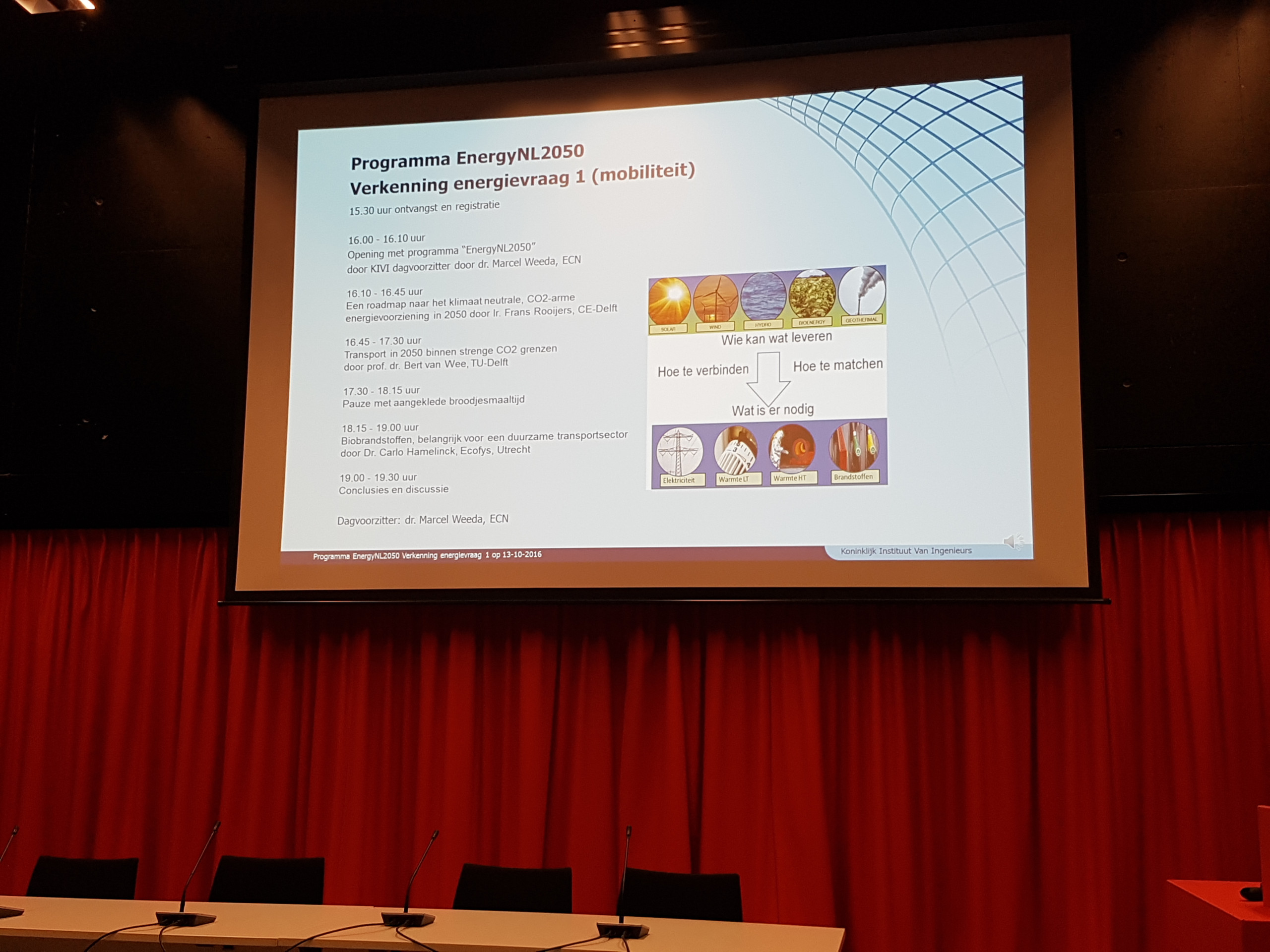
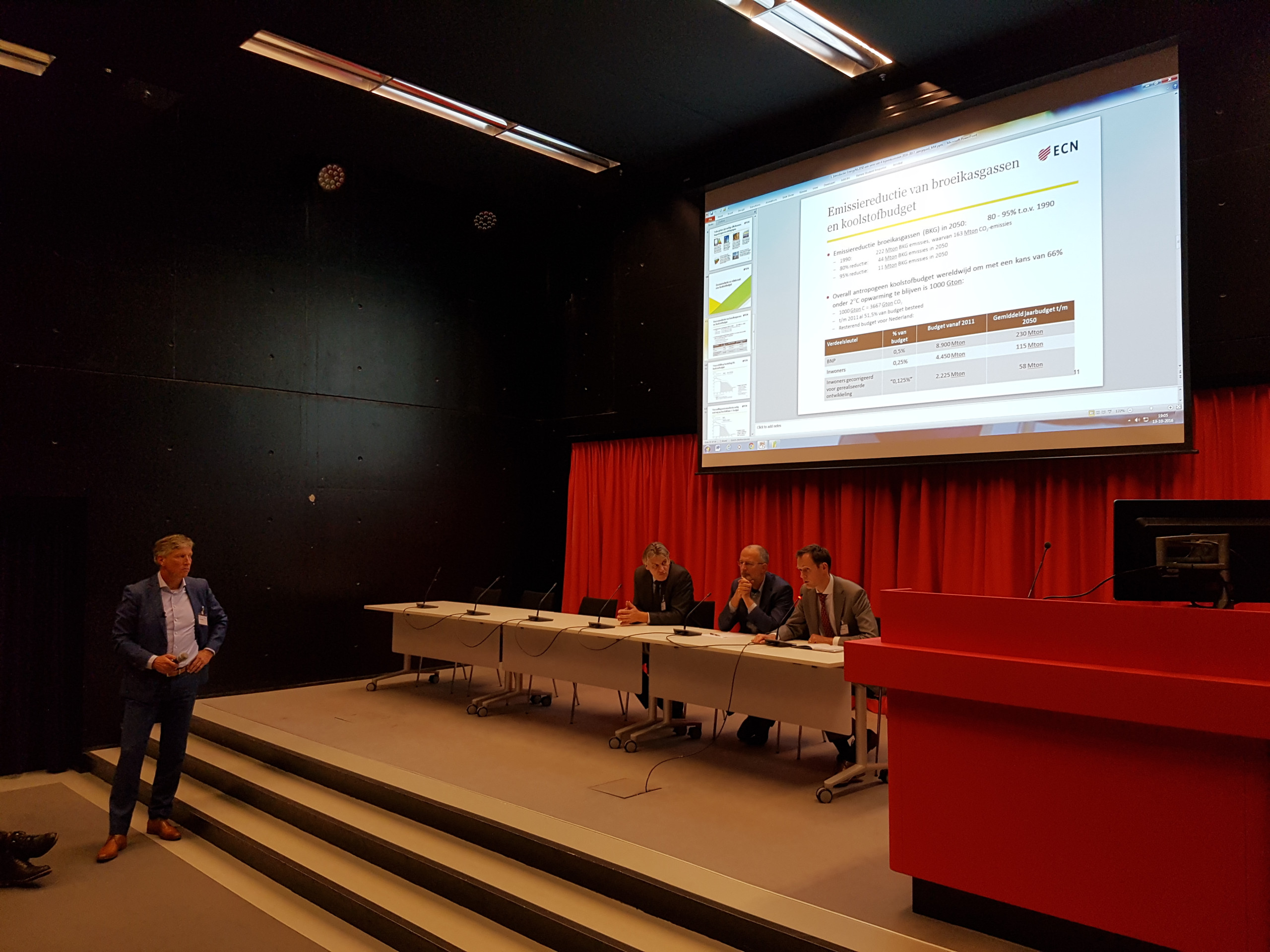
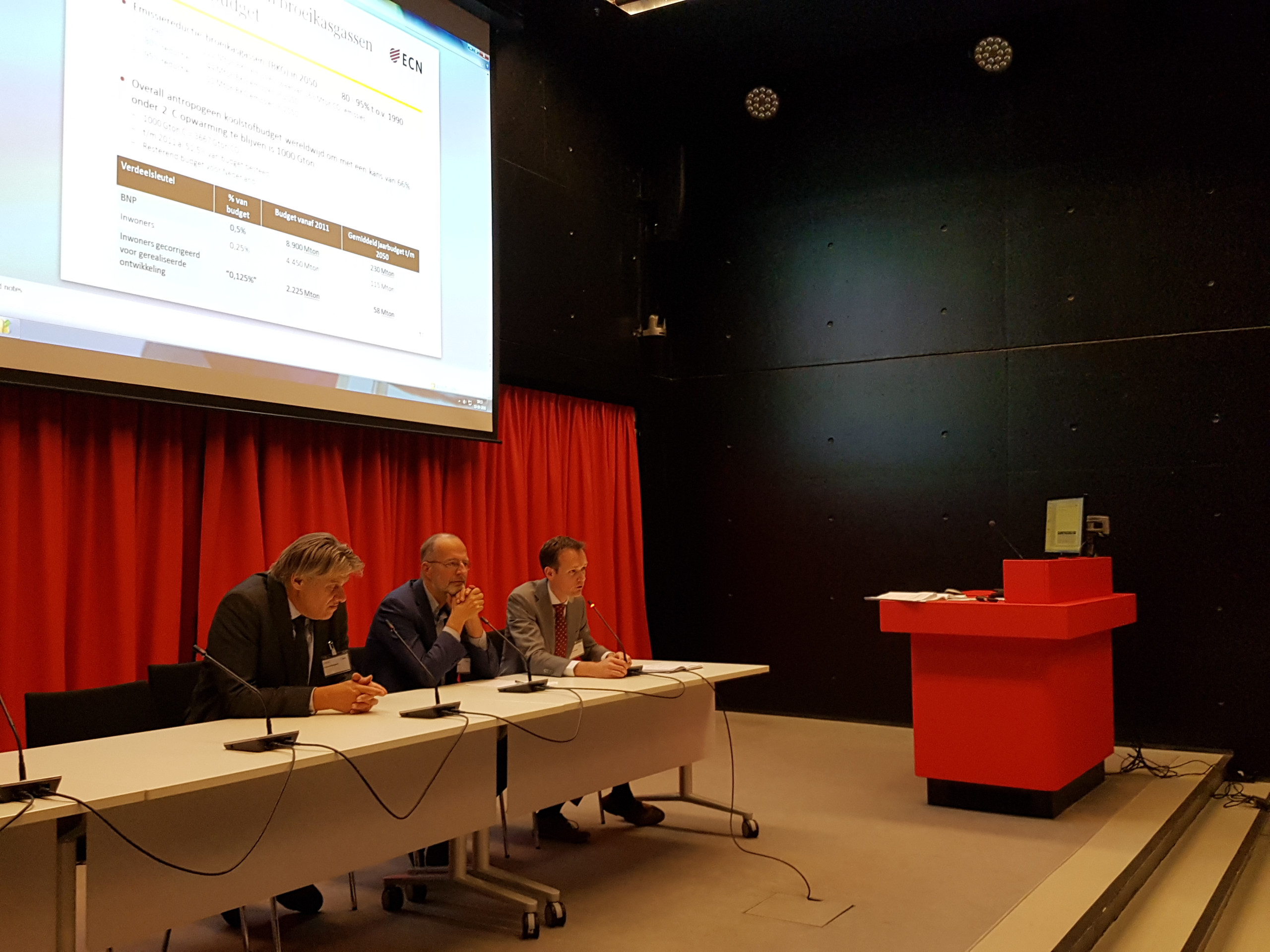
Chaired by Marcel Weeda (ECN), the problem of making choices for the energy transition was outlined and an initial exploration was made.
Frans Rooijers (CE-Delft) gave a clear presentation on the possibilities and feasibility of obtaining a Climate Neutral Energy System in 2050. The expected energy use in 2050 and the associated consequences were discussed.
He made it clear that we really need to move towards zero or smaller CO2 emissions in the energy system because non-energy activities also emit CO2 (e.g. agriculture).
For the transport and mobility sector, the possibilities and impossibilities within the strict CO2 limits for 2050 were sharply outlined by Bert van Wee (TU-Delft). He particularly brought up how society will look at making (international) aviation and shipping more sustainable. Adaptation will play a crucial role in meeting the CO2 target and will be paired with likely social dilemmas.
One of them is making choices to achieve CO2 reduction. For example: Flying a lot with overcompensation in other areas or flying less?
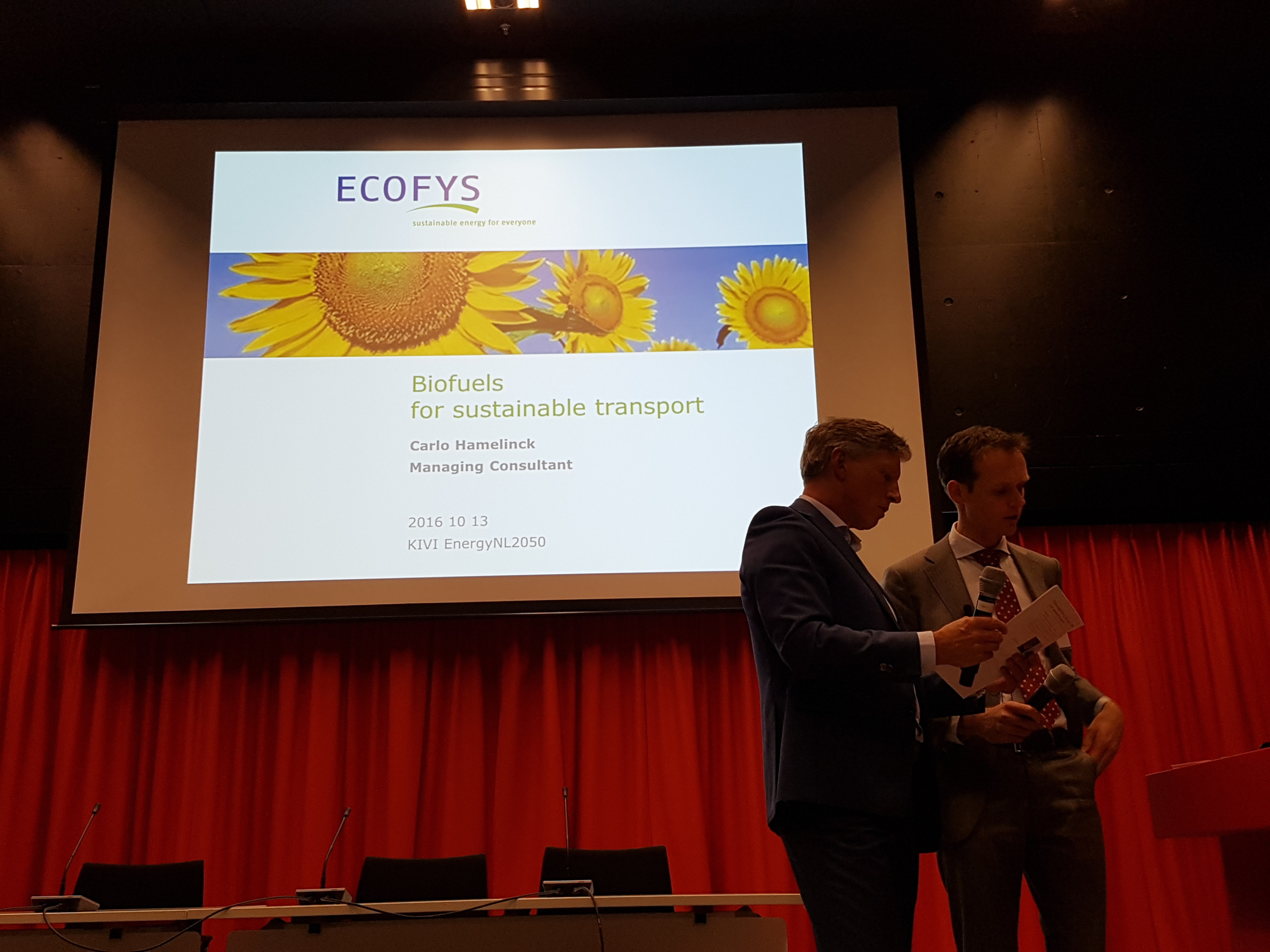
The possibilities for using biofuels for sustainable transport were explored by Carlo Hamelinck (Ecofys) with many angles and combinations, again, making choices will be a challenge, the possibilities of achieving the goal of a reduction in CO2 emissions are certainly there.
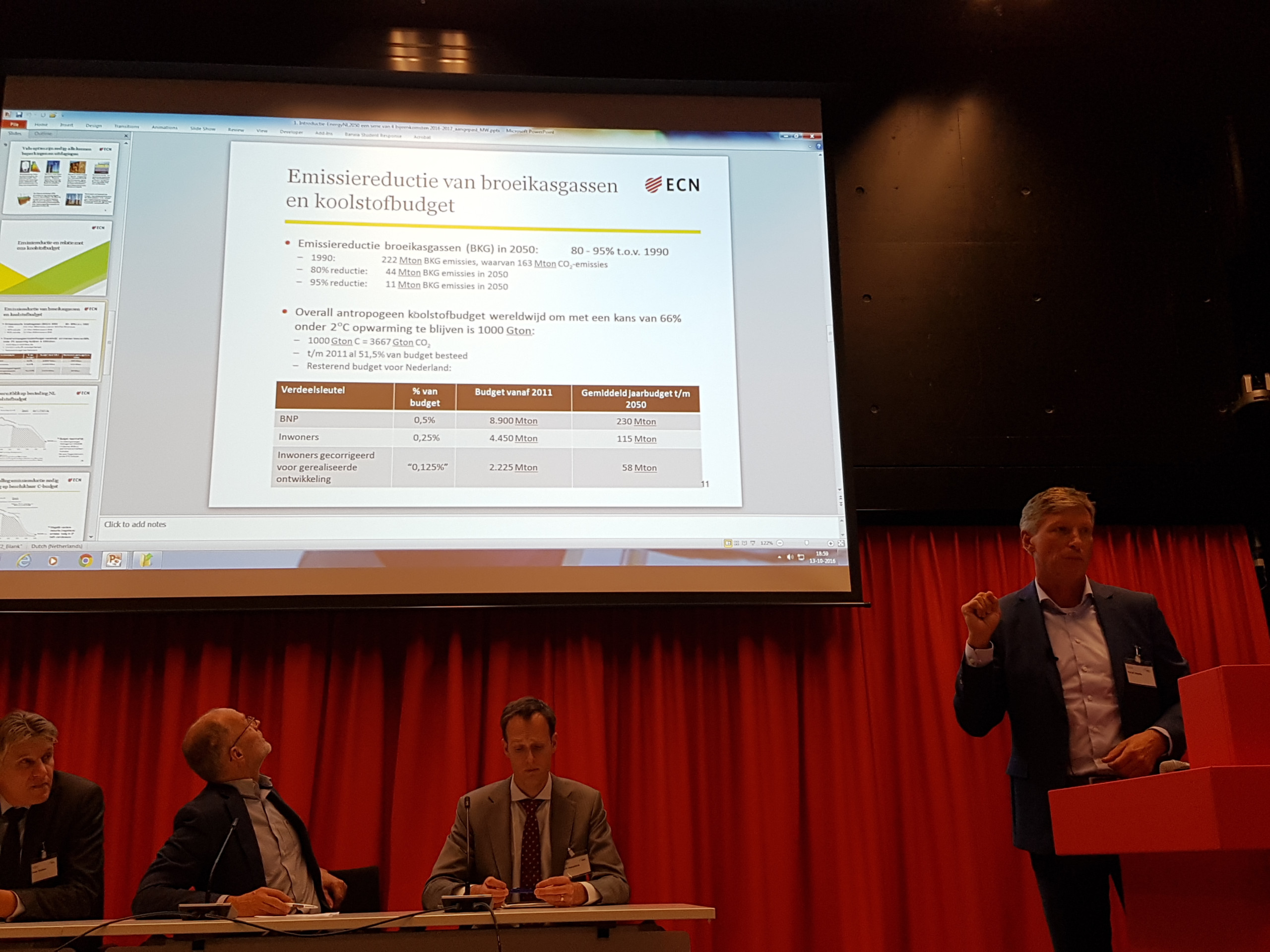
In the conclusions, the chairman of the day, Marcel Weeda, stressed that the world still has some CO2 budget, but with the expected growth in prosperity and population this will soon be consumed. Action is needed.
The entire meeting can be seen on video and can be found at
Videos Energy NL 2050 Seminars
You can read the speakers' presentations via the links below (attachments):
Chaired by Marcel Weeda (ECN), the problem of making choices for the energy transition was outlined and an initial exploration was made.
Frans Rooijers (CE-Delft) gave a clear presentation on the possibilities and feasibility of obtaining a Climate Neutral Energy System in 2050. The expected energy use in 2050 and the associated consequences were discussed.
He made it clear that we really need to move towards zero or smaller CO2 emissions in the energy system because non-energy activities also emit CO2 (e.g. agriculture).
For the transport and mobility sector, the possibilities and impossibilities within the strict CO2 limits for 2050 were sharply outlined by Bert van Wee (TU-Delft). He particularly brought up how society will look at making (international) aviation and shipping more sustainable. Adaptation will play a crucial role in meeting the CO2 target and will be paired with likely social dilemmas.
One of them is making choices to achieve CO2 reduction. For example: Flying a lot with overcompensation in other areas or flying less?
The possibilities for using biofuels for sustainable transport were explored by Carlo Hamelinck (Ecofys) with many angles and combinations, again, making choices will be a challenge, the possibilities of achieving the goal of a reduction in CO2 emissions are certainly there.
In the conclusions, the chairman of the day, Marcel Weeda, stressed that the world still has some CO2 budget, but with the expected growth in prosperity and population this will soon be consumed. Action is needed.
The entire meeting can be seen on video and can be found at
Videos Energy NL 2050 Seminars
Description
Paris climate agreements:
Following the agreements at the Paris climate summit, the urgency to bring global CO2 emissions to near zero is clear. This session of EnergyNL2050 is the first of a series of four
Transition:
On the agenda is the transition of the total Dutch energy system -electricity, heat transport- to a far more sustainable scenario. The objective is to make the energy system more sustainable and reduce CO2 emissions to well below 30 Mton. Electrification plays an important role in this and will therefore lead to a sharp increase in electricity demand, from the 120 TWh now to double or triple that in 2050.
Meeting EnergyNL2050:
This first meeting starts with an introduction on making the energy system more sustainable, presented by Frans Rooijers, CE-Delft.
Next, two presentations discuss making the transport sector more sustainable. Transport makes a significant contribution to CO2 current emissions.
Making it more sustainable is therefore important, but also complex. This applies not only to domestic transport (road, water and air transport), but also to international transport.
If the transport sector is to become more sustainable by 2050, electricity, hydrogen and sustainably produced fuels from biomass or synthetically prepared fuels will play an important role. While the share of fossil fuels will have decreased considerably.
The consequences of this are significant: for instance, the infrastructure will have to be adapted and the petrochemical industry will have to switch to the production of sustainable fuels to a large extent.
Starting point:
The basis will be a recent report published by CE-Delft at the request of the RLI institute entitled : "Verkenning functionele energievraag en CO2-emissies tot 2050", which can be found via the link below http://www.rli.nl/publicaties/2015/advies/rijk-zonder-co2-naar-een-duurzame-energievoorziening-in-2050.
This document includes reflections and scenarios from various bodies and parties.
Speaker(s)
Chairman of the day:
Dr Marcel Weeda ECN Senior reseacher Hydrogen transition & Infrastructure
Speakers:
Ir. F.J. (Frans) Rooijers, Director CE Delft, Research and Consultancy
Expertise: Electricity supply, Energy built environment and Government instruments. Director of CE Delft since 1999.
Prof. Dr. G.P. van Wee, Transport Policy and Transport Logistics Research group, TPM faculty, Delft University of Technology.
Dr. Ir. C. Hamelinck, Principal Consultant, ECOFYS, Utrecht
Senior strategic advisor to players in the biofuels arena. He advises to industry and governments to exploit opportunities and to accelerate sustainable development.
Location
Booth Room Library Utrecht University
Heidelberglaan 3 3584 CS Utrecht
Organiser
Electrical Engineering
Utrecht Sustainabilty Instute
Name and contact details for information
The Team EnergyNL2050 consists of the following members of KIVI-Elektrotechniek: Dr. Ir. Steven Luitjens M 06 46 72 66 89 Ir. Loek Boonstra Ir. Eric Persoon Ing.Paul van Moerkerken M 06 11 28 72 26
Current news items EnergyNL2050





Documents
- 0. KIVI EnergyNL2050 Planning en Programma 2016 - 2017
- 1. Introductie EnergyNL2050 een serie van 4 bijeenkomsten 2-16 - 2017MW ECN
- Het Nederlandse energiesysteem, roadmap naar een vergaande verduurzaamd scenario door Ir. Frans Rooijers, CE Delft
- Transport in 2050 binnen strenge CO2 grenzen door prof. dr. Bert van Wee, TU Delft
- Biobrandstoffen, belangrijk voor een duurzame transportsector door dr. Carlo Hamelinck, Ecofys, Utrecht
- Efficiënt energiegebruik Industrie en MKB door Frans Rooijers CE Delft op 30-09-2016