

EnergyNL2050-3 Renewable Energy-3
KIVI day chairman Prof Kornelis Blok (ECN) gave a concise summary of the energy demand on the expected energy demand in 2050 in Industry, "Mobility" and "Transport" and "Chemical industry". These were previously covered in the two meetings of the KIVI programme EnergyNL2050 on 16 October and 22 November last.
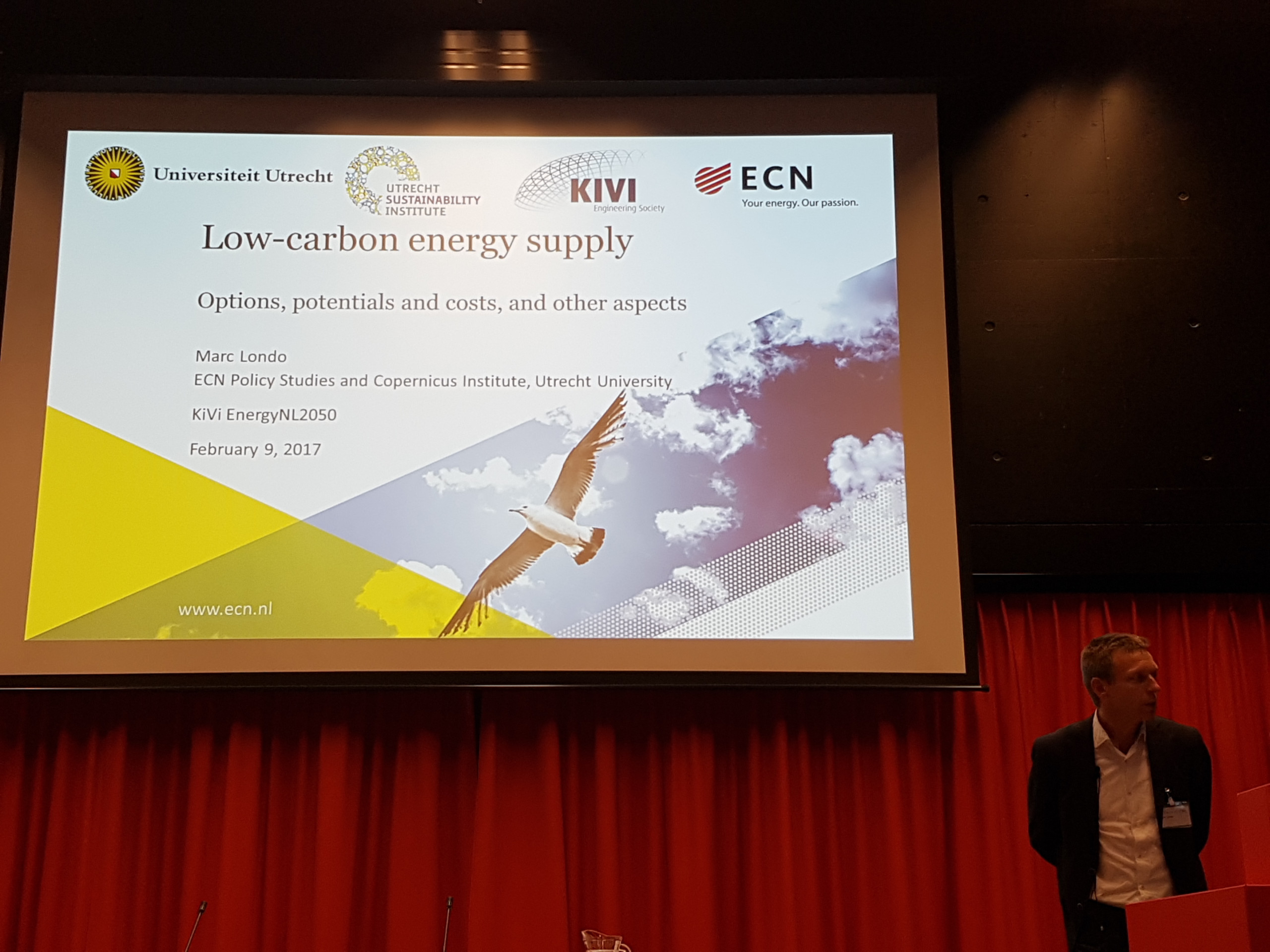
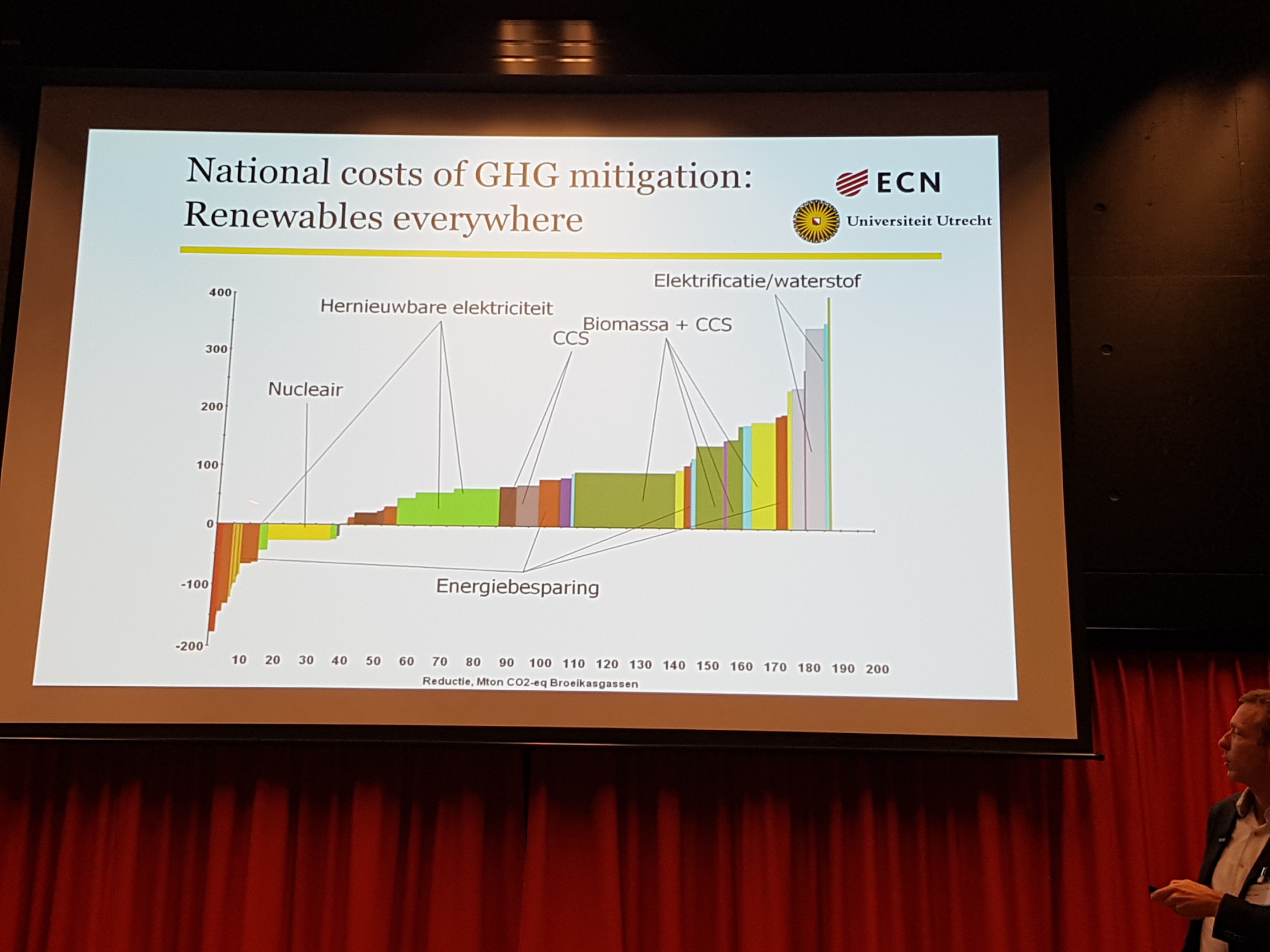
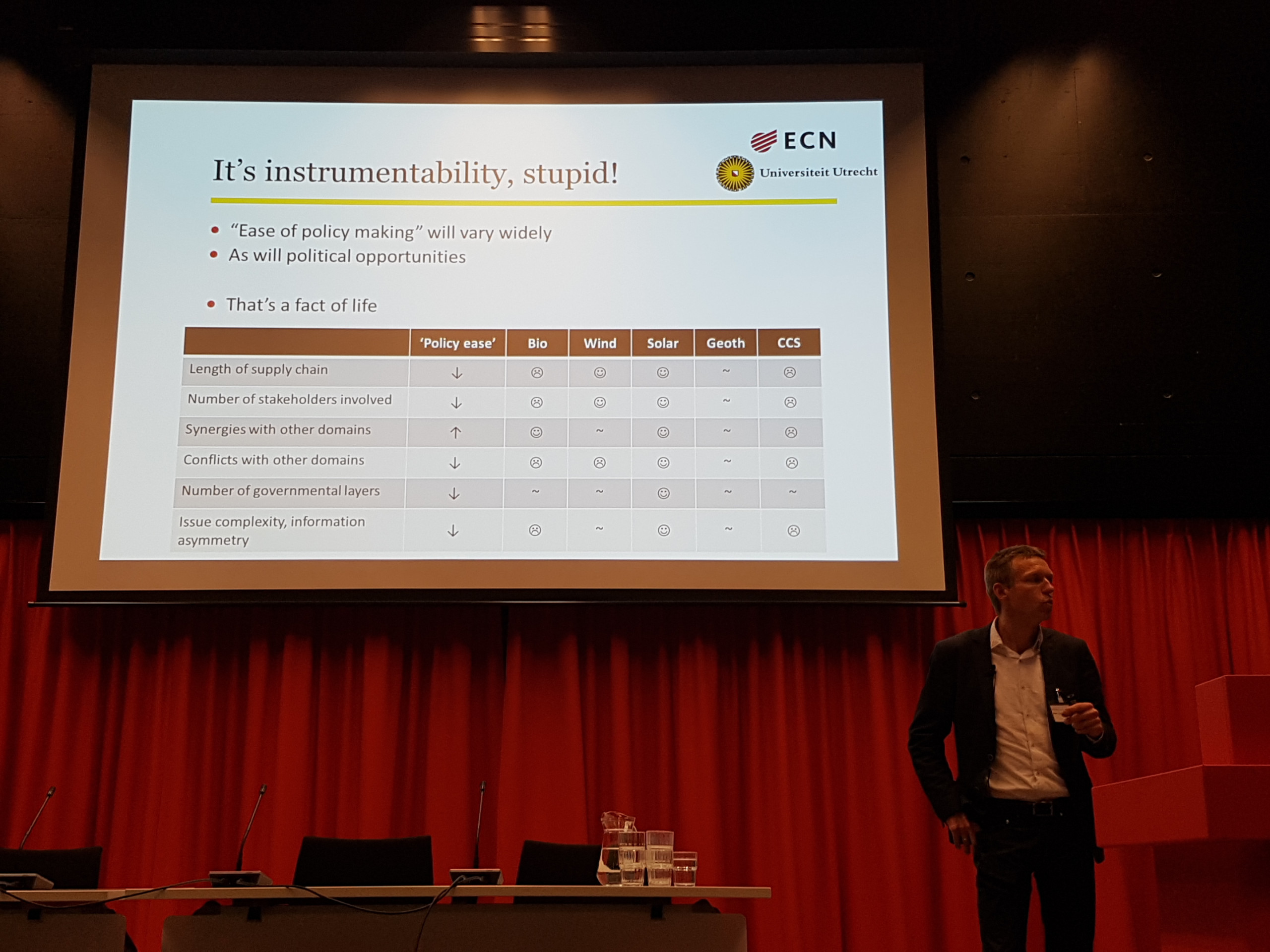
Afterwards, Dr Marc Londo (ECN Policy Studies and Copernicus Institute, Utrecht University) was given the floor to elaborate on the possible options of potential renewable energy sources, the look-through to costs and other aspects, such as societal influences and (necessary) political (policy) changes.
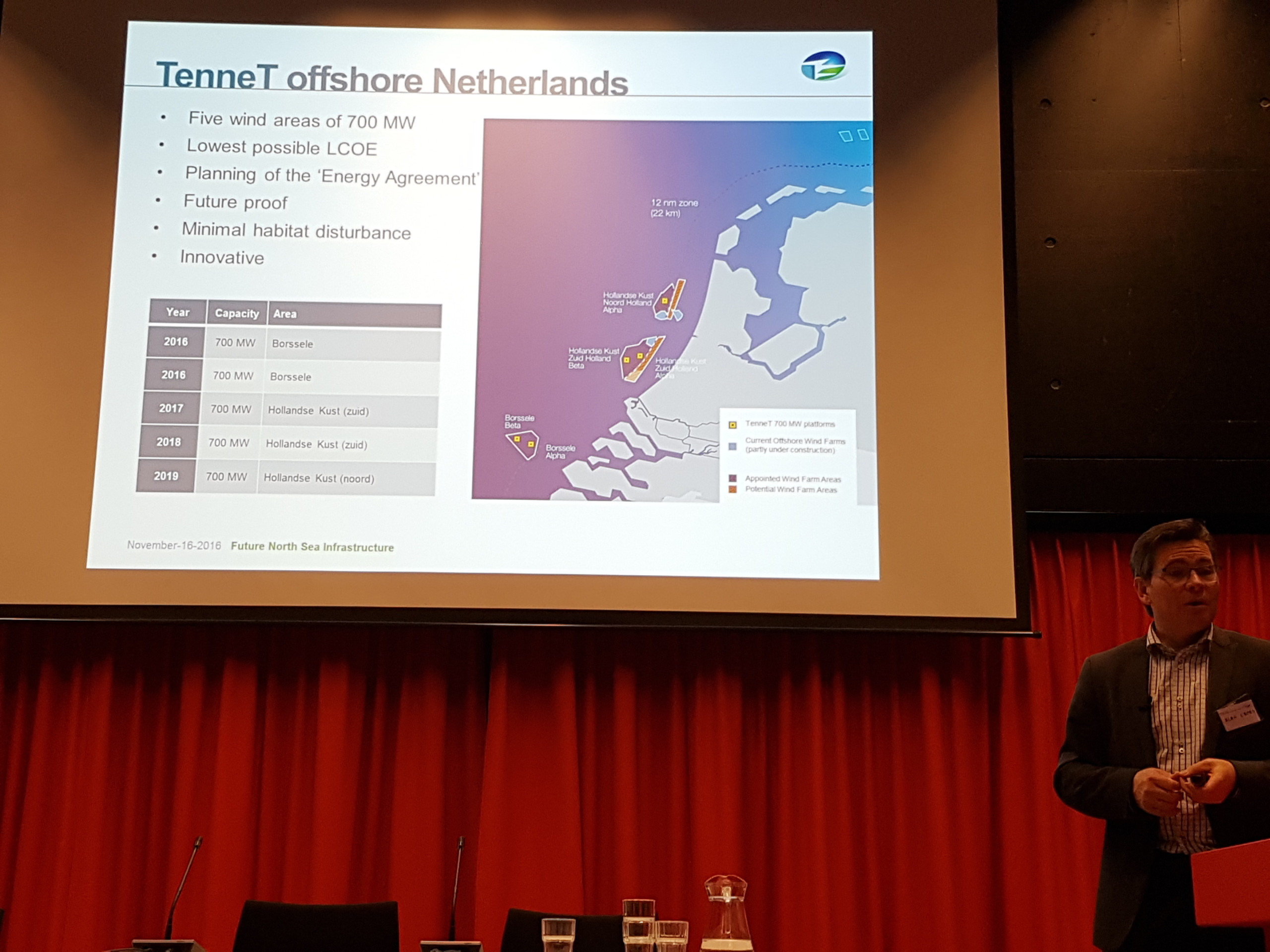
After the break, Alan Croes (as a worthy replacement for Mart van de Meijden) addressed the feasibility and costs of yet-to-be-realised high-voltage connections to the islands with wind farms under construction or planned/tendered off the German and Dutch coasts.
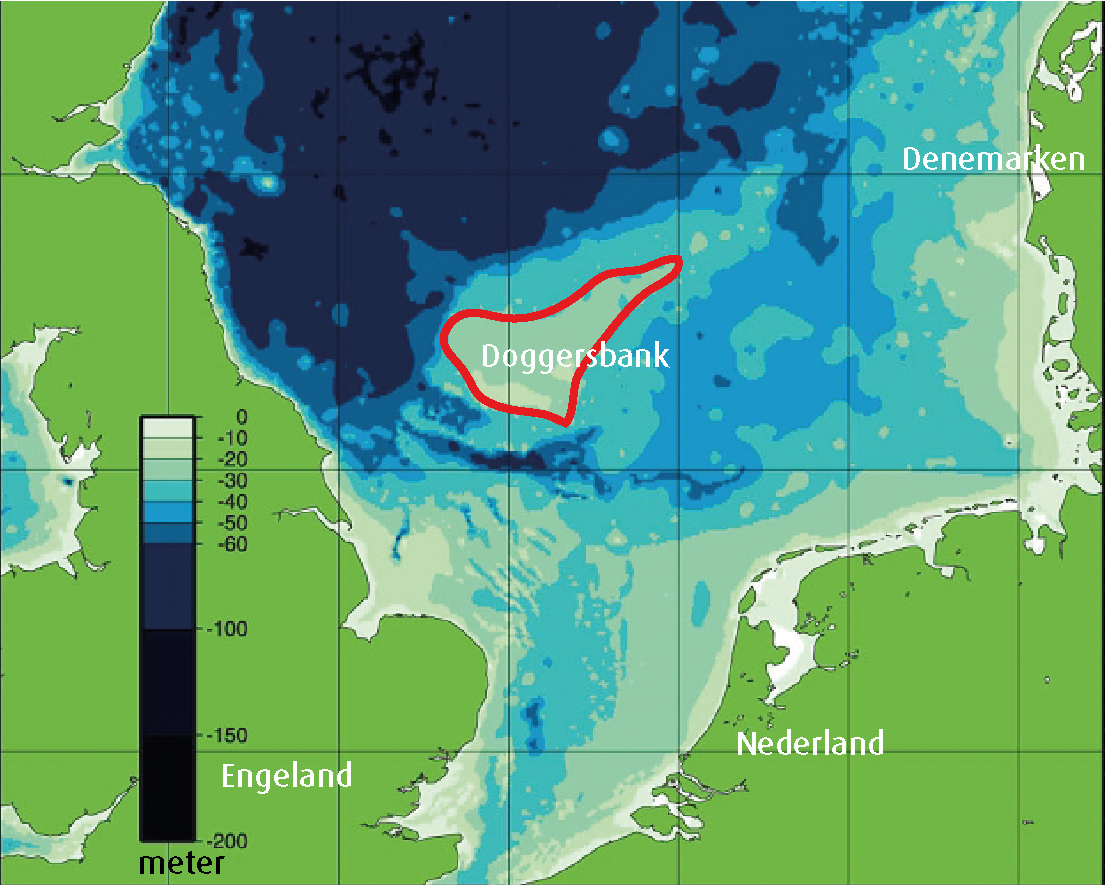
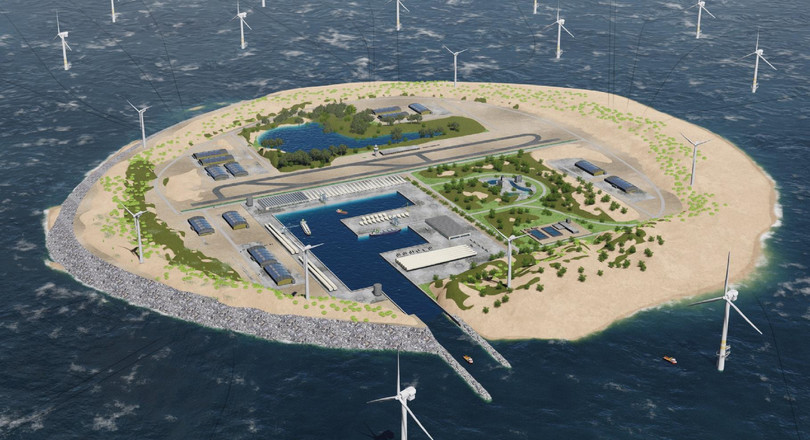
Based on rapid developments and innovations, Tennet has developed a vision to preserve the quality of energy supply, as we know it today, for the future with drafting a plan to realise a North Sea Island on Dogger Bank.
The island will then be located, like a star in the junction of high-voltage connections, making connections to the high-voltage grids in surrounding countries. This requires coordination and cooperation at European level. This allows for a significant cost reduction (investment and operation) for logistics, staffing and maintenance and efficiency, supply, during construction, maintenance.
On the island, the construction of an airport, hotel, sea port is possible, adding that the construction of the island gives a positive contribution to nature, both in the sea and for the birds on the island, etc.
Also, renewing the wind farm and HS installations after the end of life, a continued high availability and reliability to the generation and transmission of electrical energy should be required, and also then much lower investment and operating costs can be expected, than if these connections are constructed and managed on their own.
In addition, there is scope to convert excess electrical energy produced into e.g. hydrogen (H2) in times of surplus available electrical energy. The H2 can serve as storage or can be used as fuel or tapped.
Allan's presentation ended with video, which gave a good impression of the North Sea Island to be created by Tennet on Dogger Bank.
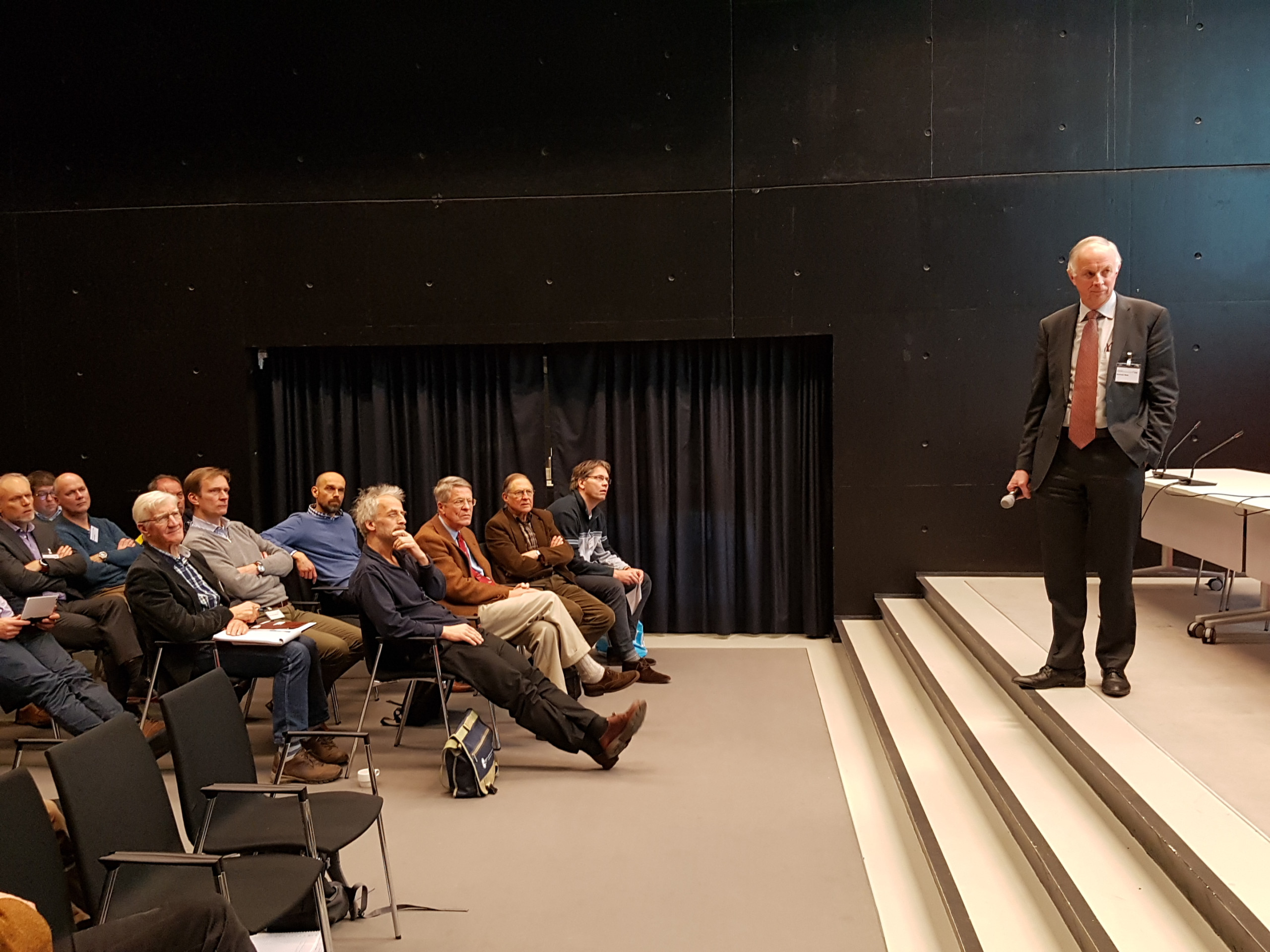
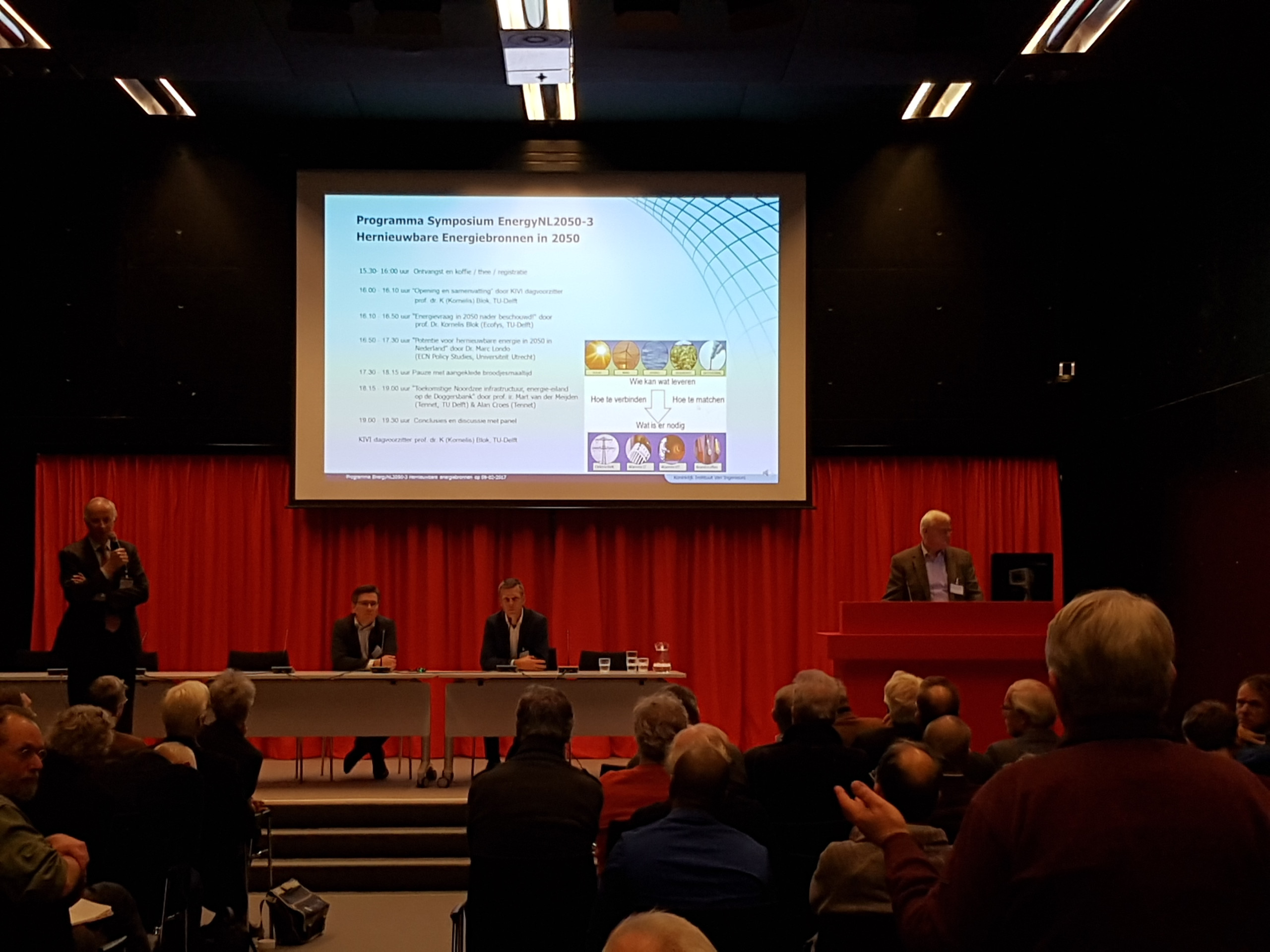
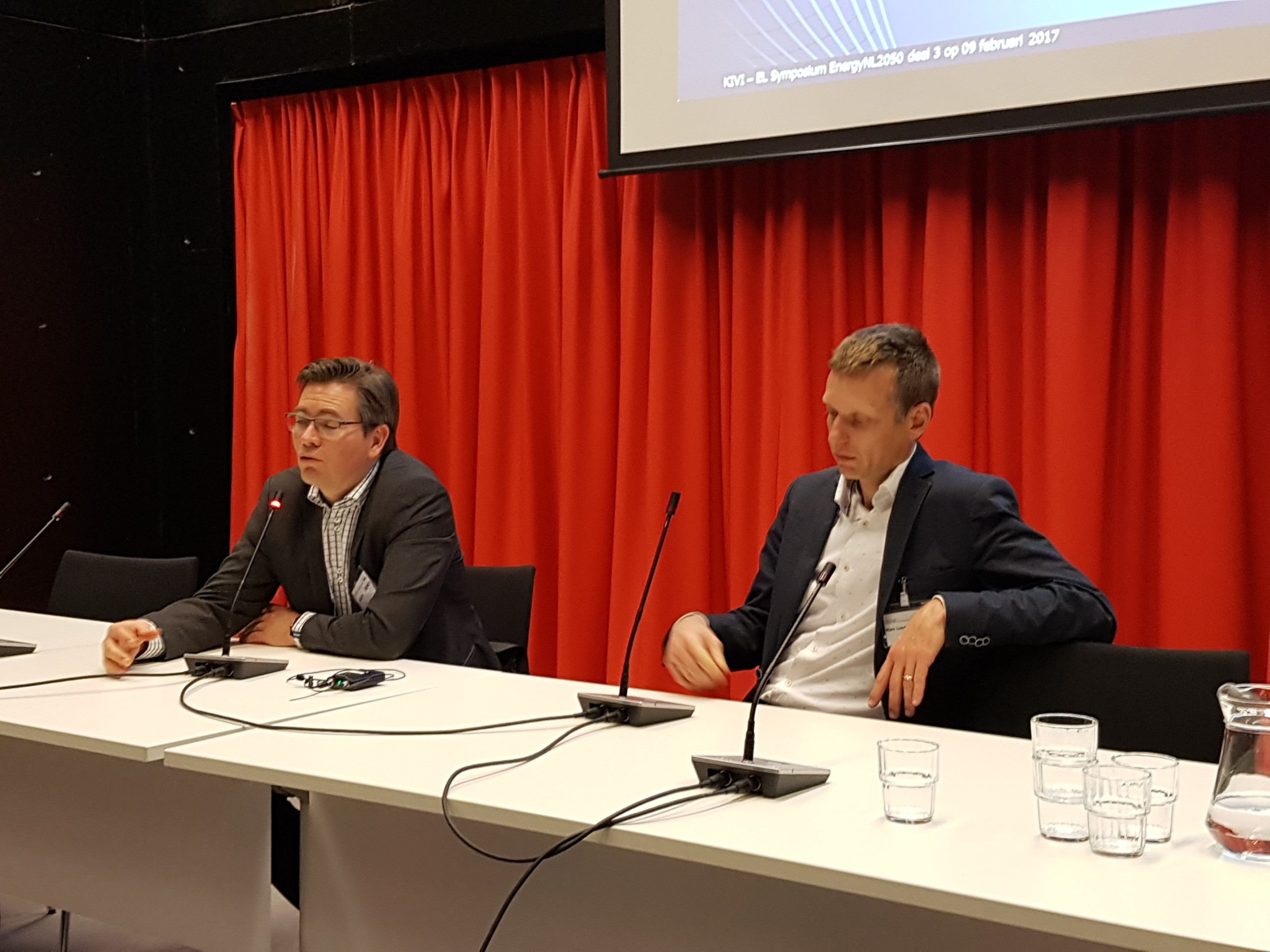
Led by the chairman of the day, the panel consisting of the speakers, was able to answer many good and focused questions from the audience, already looking through to the scenarios for energy systems in 2050 in conjunction with societal influences and profits.
The urgency and necessity of the transition to sustainability and CO2 reduction were also highlighted.
It was also clearly stated that the current political parties lack this urgency, while the EZ minister has made great strides in the right direction in the current government.
The earlier video recordings can also be seen again.
At the next meeting of EnergyNL2050-4 20 April 2017, the results will be summarised to arrive at a scenario for the energy situation in 2050. ECN has been found willing to give their view on the (im)possibilities based on their experience in analysing energy scenarios and tevems an outline of a CO2 neutral energy system for the Netherlands in 2050.
Will you also attend the next Symposium EnergyNL2050-4 on 20 April 2017?
You can already register for this now!!!
Also read the article "Flexible Power Market Nijmegen North" in De Ingenieur 21 March 2017.
Description
Paris Agreements:
Following the agreements at the Paris climate summit, the urgency to bring global CO2 emissions to almost zero is clear.
The Rutte government's energy agenda recently made public by Minister Kamp further highlights the topicality of the EnergyNL2050 meetings.
This meeting of EnergyNL2050 is the third of a series of four on the total energy demand of the Netherlands and what the energy supply could look like in 2050, which will then be (almost) CO2 free.
Transition:
The topic of discussion is the transition of the entire Dutch energy system -electricity, heat transport- to a highly sustainable scenario.
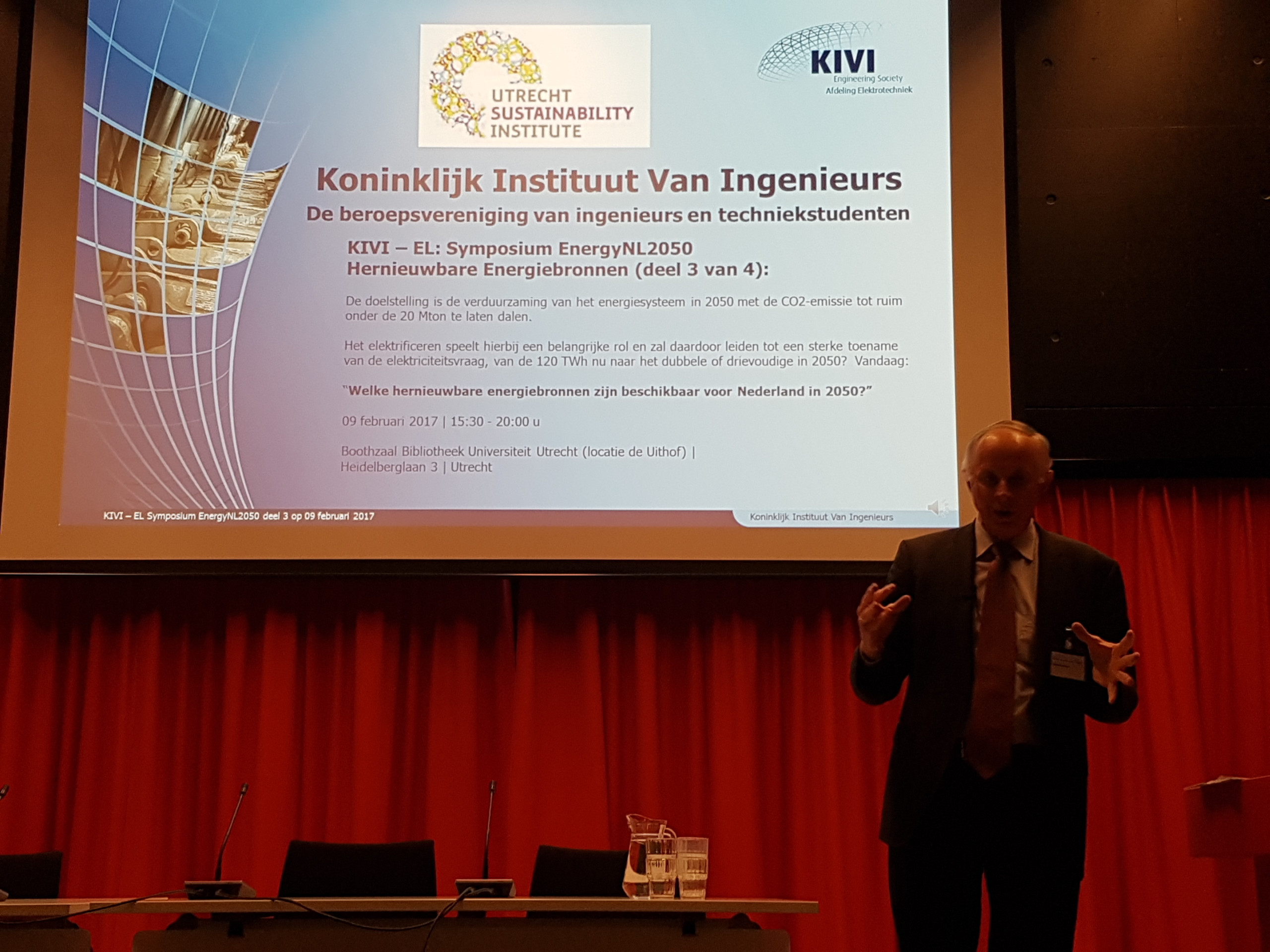
The objective is to make the energy system more sustainable and to reduce CO2 emissions to well below 30 Mton. Electrification plays an important role in this and will therefore lead to a sharp increase in electricity demand, from the 120 TWh now to double or triple that in 2050.
Meeting EnergyNL2050-3:
In the first two meetings, the size and sustainability of energy demand was discussed, in particular the energy demand of transport and industry, which is difficult to make sustainable.
In the third meeting, we want to examine which renewable energy sources are available for the Netherlands in 2050.
A large share will come from renewable sources, such as wind and solar (PV).
The discussion will include
- What energy demand the Netherlands can expect in 2050?
- Which renewable energy sources will be available to us by then and what are their variability characteristics?
- How can we optimally use the potential of offshore wind energy in the North Sea to provide reliable (electrical) energy for the Netherlands and the whole of Europe?
-How do we deal with strong fluctuations in energy supply in this context. In doing so, attention will be paid to the demand for back-up power in case of periods without sun and wind?
Starting point
Basis will be a recent report published by CE-Delft at the request of the RLI institute entitled: "Exploration of functional energy demand and CO2 emissions up to 2050", available via the link below. This document includes considerations and scenarios of agencies and parties.
Accessible by public transport via Utrecht CS and bus line 12 (departing from platform C8 Utrecht CS, Jaarbeurs side).
By car: Parking in car park Cambridgelaan on the Uithof or better i.because of the construction of the tram line at De Uithof, the car parks at De Uithof are often full during office hours.
New car park at exit 28 Utrecht - De Uithof, intersection Universiteitsweg with 2000 parking spaces. Cost per day maximum €5 including public transport from car park.
Speaker(s)
Chairman of the day: Prof Dr K. (Kornelis) Blok
Professor of Energy System Analysis Department ESS University of Technology Delft. In 1984 one of the founders of Ecofys where he is now scientific director.
Dr. Marc Londo ECN Senior Consultant Renewable Energy Policy and Strategy at ECN Utrecht and surroundings, the Netherlands Sustainability and environment, Utrecht University.
Prof. Ir. Mart van der Meijden, Full Professor Large-Scale Sustainable Power Systems at Delft University of Technology (part-time)the Netherlands,
Manager innovation at TenneT TSO BV the Netherlands
Location
Booth Room Library Utrecht University
Heidelberglaan 3 3584 CS Utrecht
Organiser
Electrical Engineering
Utrecht Sustainability Institute UU
Name and contact details for information
The Team EnergyNL2050 consists of the following members of the KIVI Department of Electrical Engineering: Dr Ir Steven Luitjens M 06 46 72 66 89 Ir Loek Boonstra Ir Eric Persoon Ing.Paul van Moerkerken M 06 11 28 72 26
Video recordings of meetings EnergyNL2050
Exploration of functional energy demand and CO2 emissions





Documents
- 0. intro USI-KIVI EnergyNL2050-3 Hernieuwbare energiebronnen in 2050 09-02-2017.pdf
- 1. Kornelis Blok 2017 Energievraag in 2050 nader beschouwd
- 2. Marc Londo KIVI Energy2050 low-carbon energy supply-v3
- 3. North Sea Infrastructure Tennet by Alan Croes KIVI EnergyNL2050
- Naar een toekomstig bestendig energiesysteem in Nederland Dr. Marc Londo
- Kabinet schets route naar CO2 amre energievoorziening