

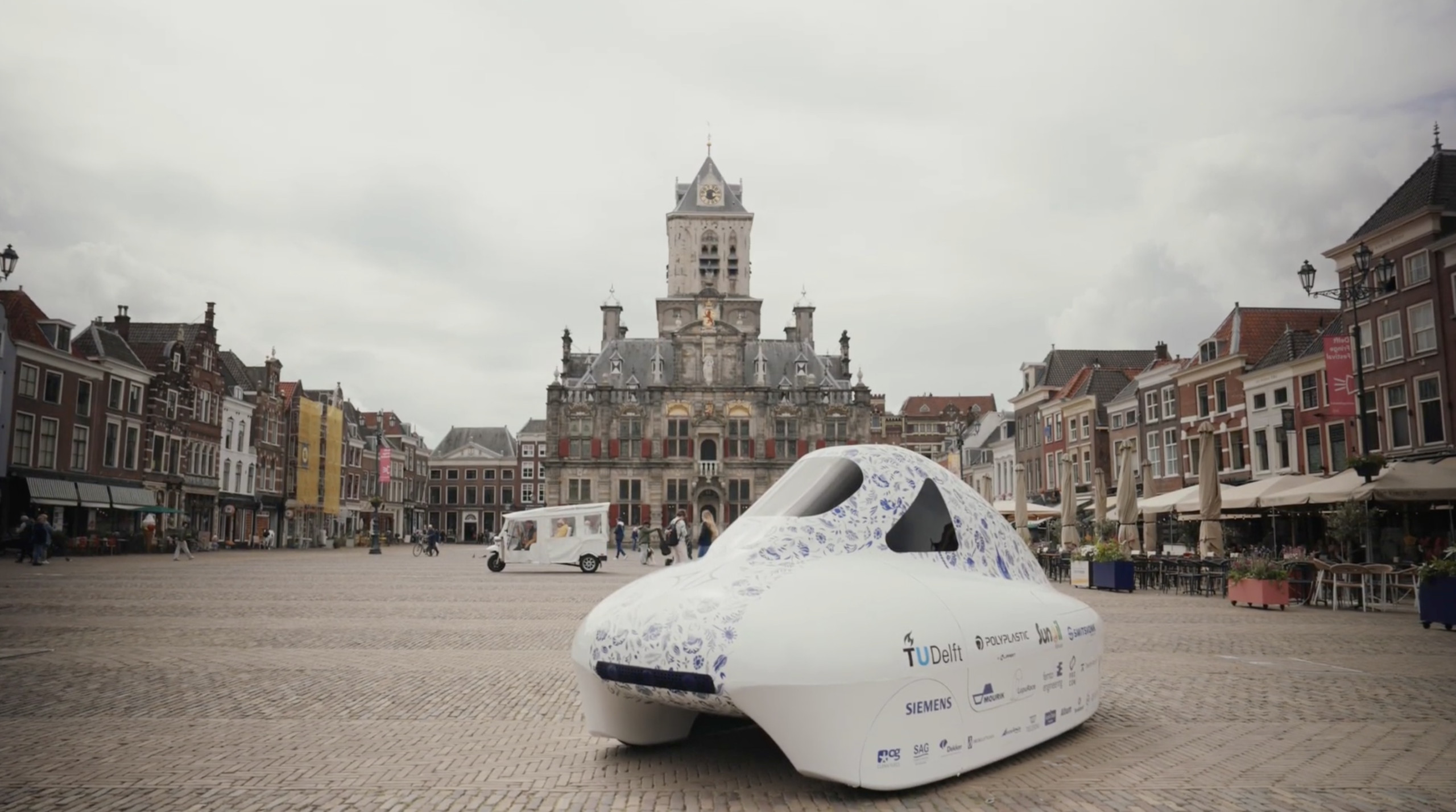
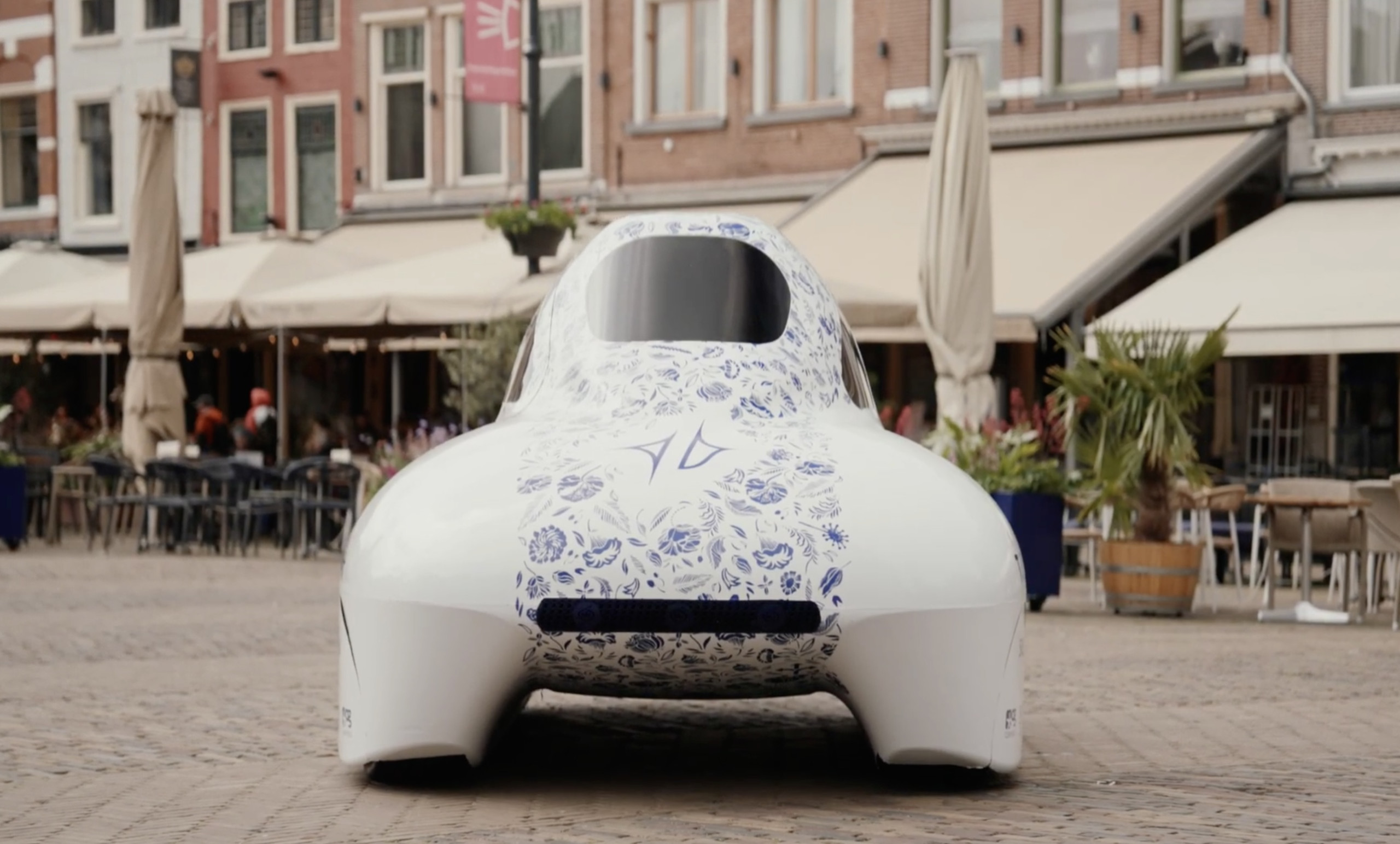
On 27 May, 26 students from TU Delft will present the Eco-Runner XVI at the Koninklijke Schouwburg in The Hague.
Delft, 27 May 2026 – With the current geopolitical tensions, the resulting rise in energy prices and pressure on the grid, one thing is clear: we are still too dependent on too few energy sources. The energy transition is in full swing, but the path to a safe, sustainable and affordable future remains uncertain. How do we ensure that technology is sustainable, yet also practical, affordable and scalable?
What if a car could adapt to whatever fuel is available? Students at Delft University of Technology are developing a vehicle that can run on multiple sustainable fuels: fuel flexibility.
For years, the team has been building extremely efficient hydrogen cars. Among other achievements, this resulted in a Guinness World Record of 2,488.456 kilometres on a single tank of hydrogen in 2023 and, in 2024, the first road-legal hydrogen car built by students. With the Eco-Runner XVI, the team is now consciously charting a new course: the focus is not on which single fuel ‘wins’, but on how mobility can adapt flexibly to different sustainable fuels in a world that is constantly changing economically, politically and in terms of infrastructure.
Why fuel flexibility?
Scaling up a new energy system and developing infrastructure requires a great deal of time and resources. As a result, we are now seeing bottlenecks emerge. Whilst the sector often seeks a single solution, we see that reality demands flexibility. Electrification is growing rapidly, but is also coming up against limitations, such as grid congestion, which is leading to energy shortages in Utrecht. At the same time, recent developments show just how dependent we still are on specific energy sources, regions and geopolitical developments. Fuel flexibility ensures that mobility can adapt to this uncertain future.
The technology behind flexibility: the micro gas turbine
The way in which they make this car flexible is through a micro gas turbine. Unlike a conventional engine, combustion takes place continuously. This allows the process to be better controlled, meaning different fuels can be used without major modifications to the engine.
With this reveal, Eco-Runner Team Delft aims not only to showcase a new car, but also to offer a different perspective on sustainable mobility. Rather than thinking in black-and-white terms about a single winning solution, the aim is to make progress by developing several realistic pathways simultaneously. In doing so, the Eco-Runner XVI positions itself as both a technical and a social statement: flexibility can act as a catalyst for the energy transition. At the same time, Eco-Runner also sees potential for scaling up to sectors where sustainability is particularly complex, such as heavy transport, maritime applications and aviation.
End of test
In two weeks’ time, on 11 June, the team will travel to Twente Airport, where we will fully assemble the engine and integrate all the systems to test the complete car. This will be followed by a special moment at the iconic Circuit Zandvoort, where the car can be seen in action and the team can look back together on their year and milestones. To round off the season, they will also be attending the Summer Trophy organised by Circuit Zandvoort in July.
Press contact
Jip Spaargaren, Operations Manager
j.spaargaren@ecorunner.nl
Tel: +31 6 20148157
Visit our website for more information and images: https://www.ecorunner.nl/.
About Eco-Runner Team Delft
Eco-Runner Team Delft is a multidisciplinary student team from Delft University of Technology. Since 2005, the team has been building cars that combine efficiency with groundbreaking sustainable technologies. Through innovation, motivation and collaboration, the students are working towards a more sustainable future for mobility. After years of record-breaking performances with efficient hydrogen cars, Eco-Runner is now focusing on the next step: a fuel-flexible car.





Comments