
ECOVAT applications in heat networks
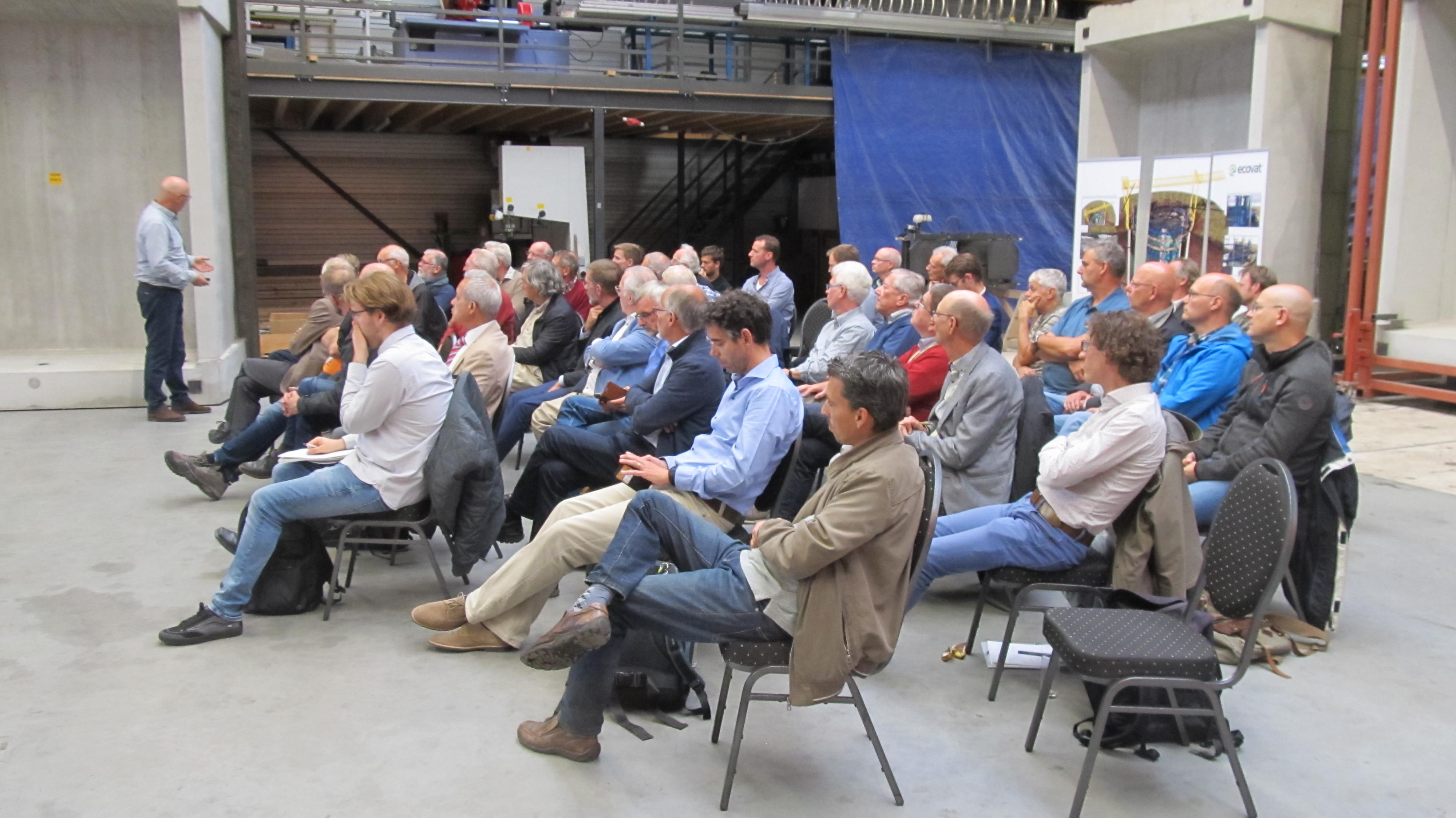
Report on KIVI visit to production site of ECOVAT in Oss.
This visit is a follow up to the earlier visit to ECOVAT on September 21, 2018. For that visit reference is made to the relevant report on the KIVI site.
At that visit it was announced that the system would be realised in a special project in Arnhem and it was agreed that KIVI would then visit the building location to see the system becoming in operation.
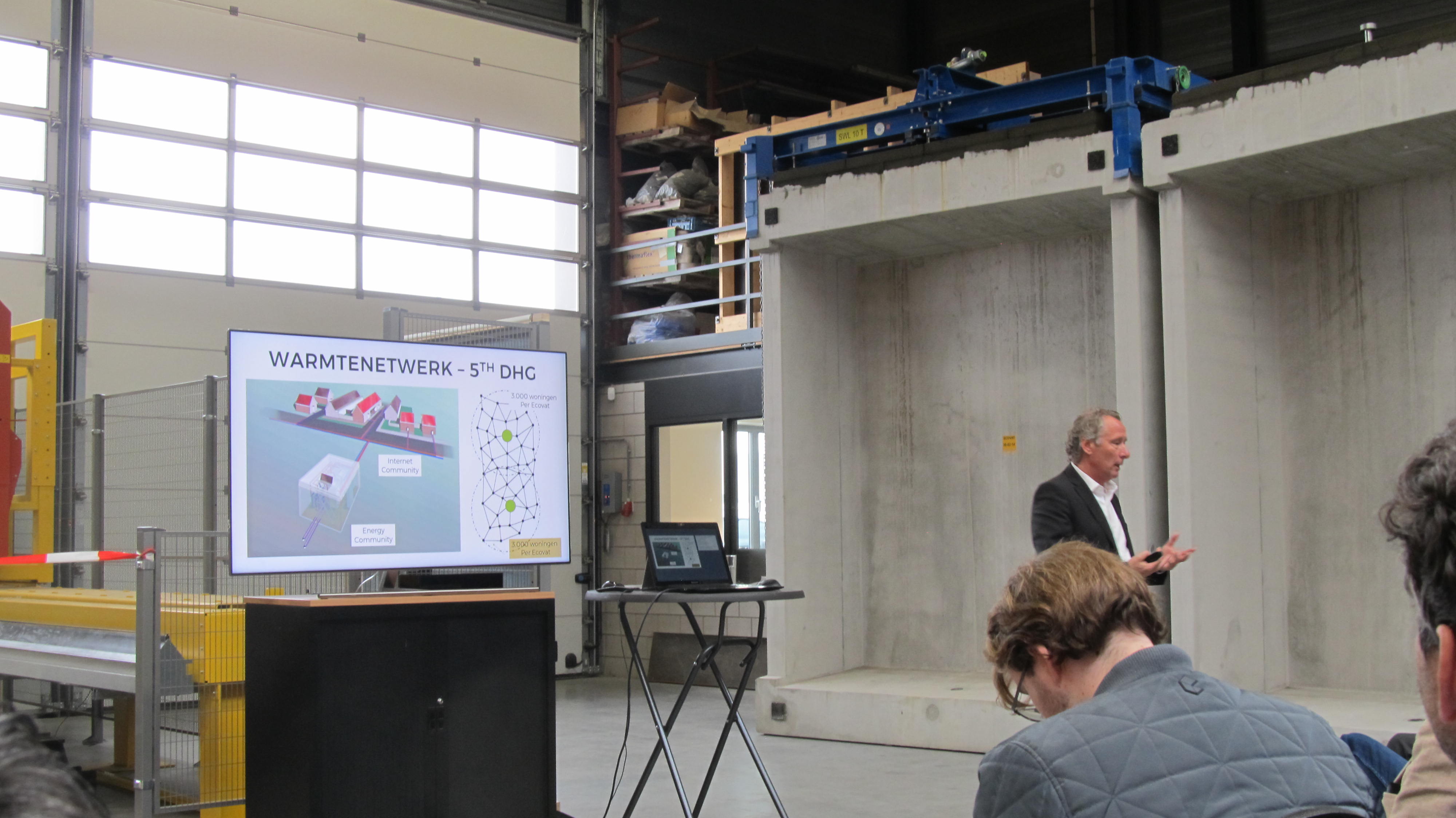
Today our host is again Aris de Groot, founder and managing director of ECOVAT. He states that unfortunately the project in Arnhem is in delay because instead of the originally targeted 500 houses the project now is to cover only 250 houses. The control system, therefore, has to be reengineered.
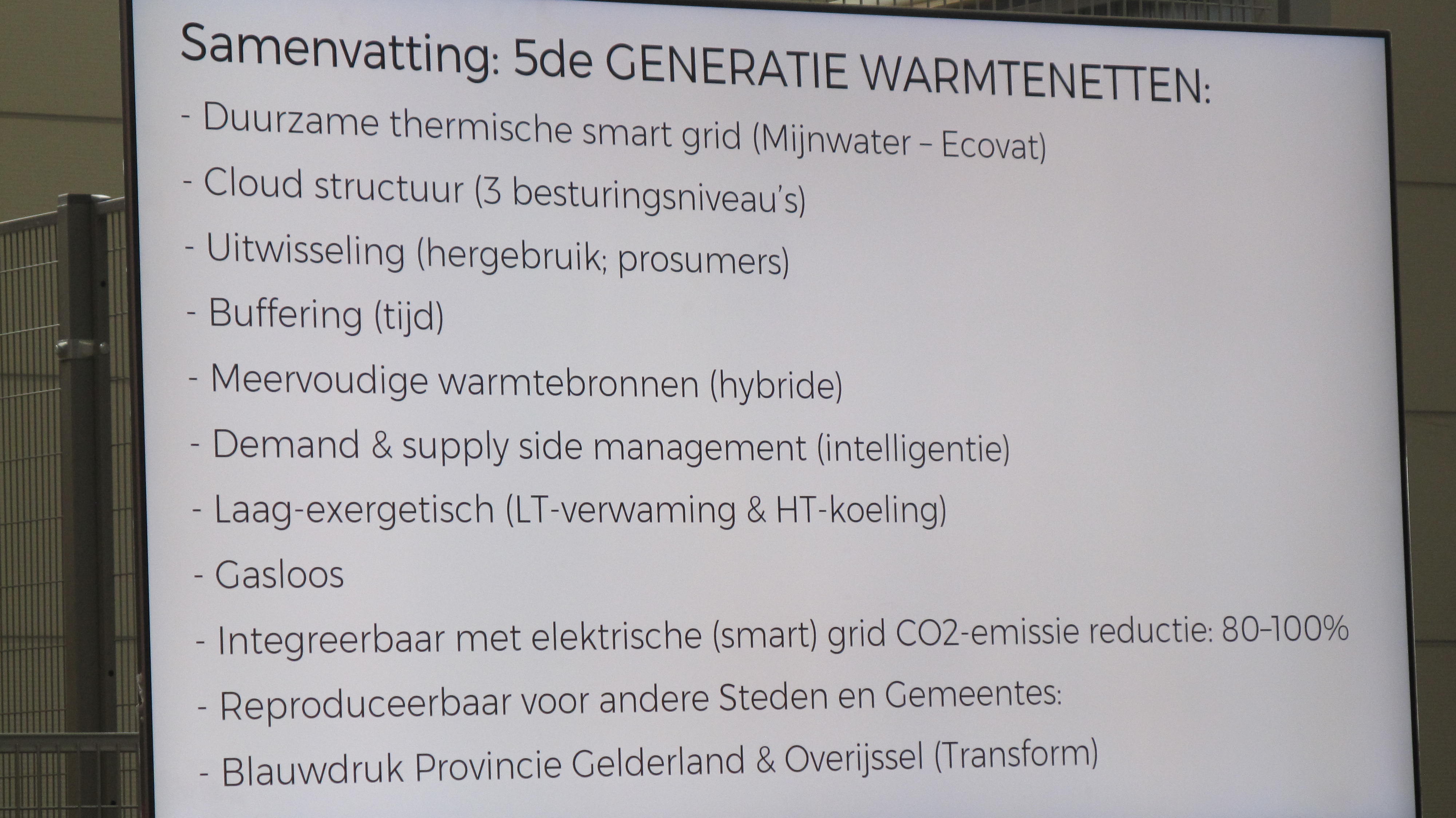
Meanwhile he is even more convinced that in future the advantages of renewable energies can only be harvested to the full extent if flexible storage of energy is possible at economically attractive prices and lasting for various seasons. With the storage systems known today this is only possible for short periods and not economically acceptable.
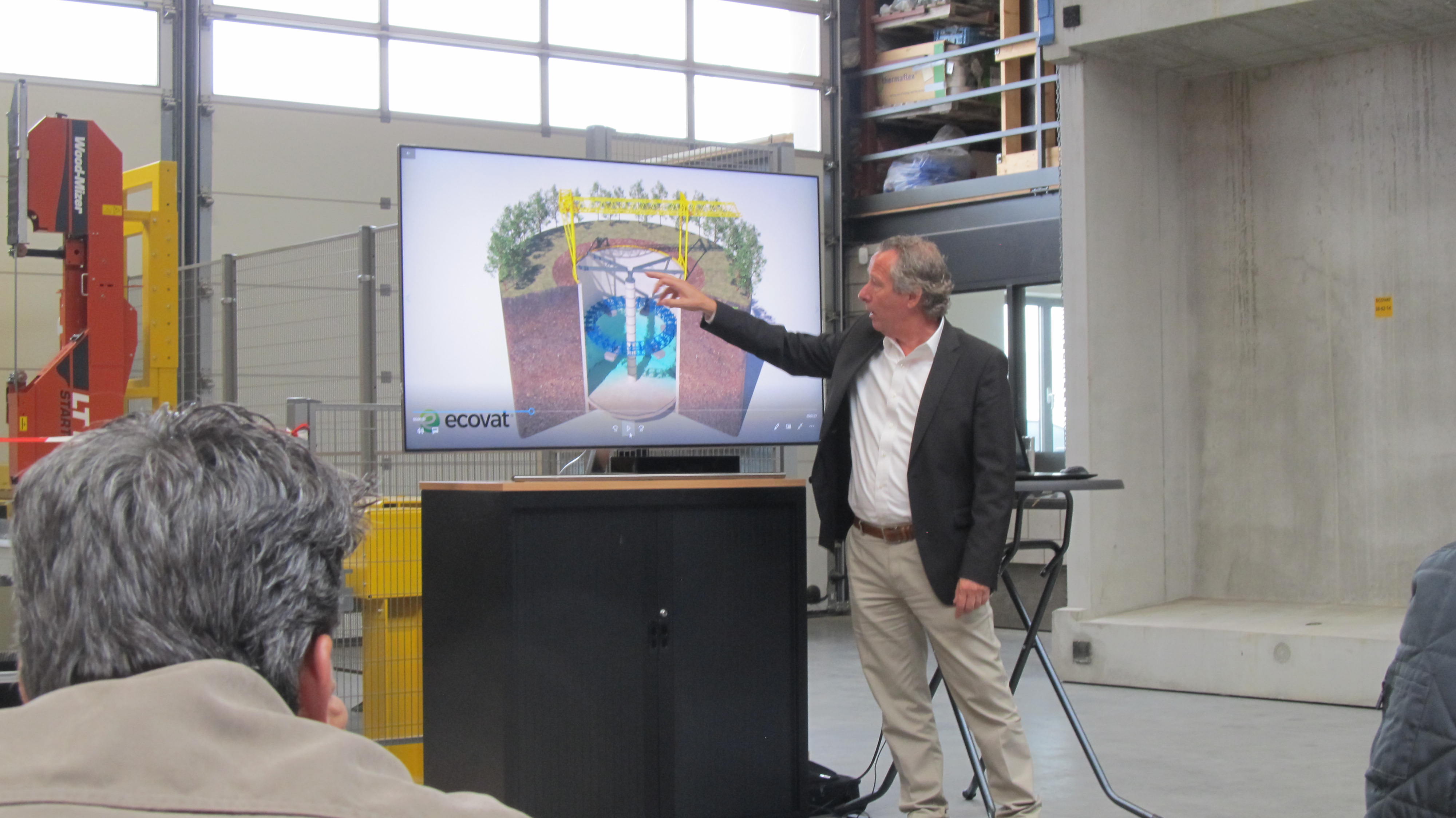
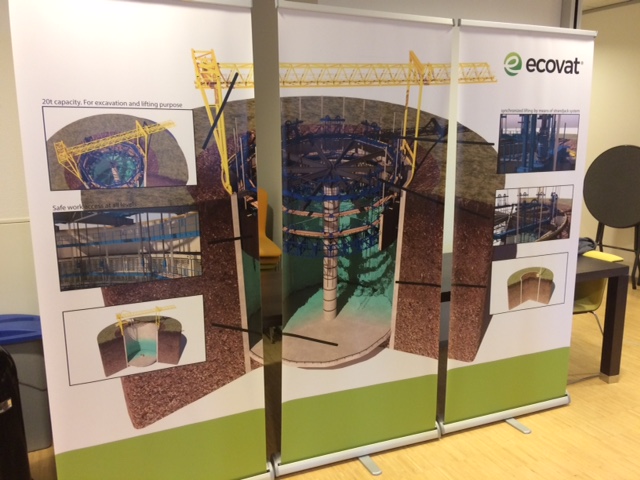
As a solution to these problems the new company ECOVAT is promoting their innovative solution for heating and/or cooling of a residential area with their highly isolated water-cask of up to 30 metres high and a diameter ranging from 30 up to 48 metres. The use of a four-pipe system in the area enables the supply or storage of water for heating as well as for cooling of a number of houses equipped with e.g. solar panels. A very innovative valve and controlling system ensures proper operation and service to the connected houses.
For details of the system reference is made to the website ECOVAT
A copy of the presentation can be found under "Documents" at the website or requested at the organiser of the visit.
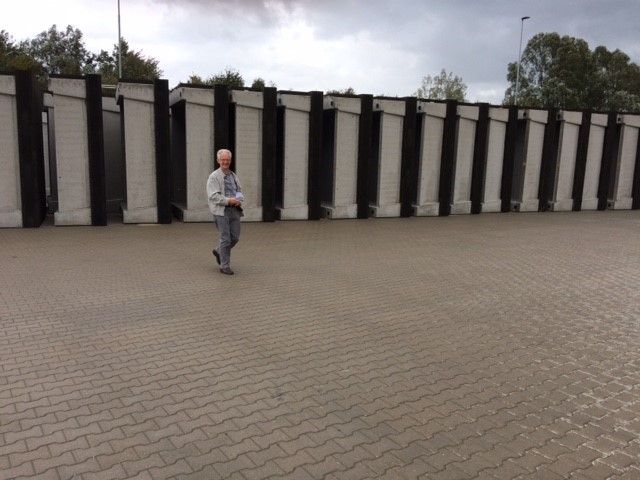
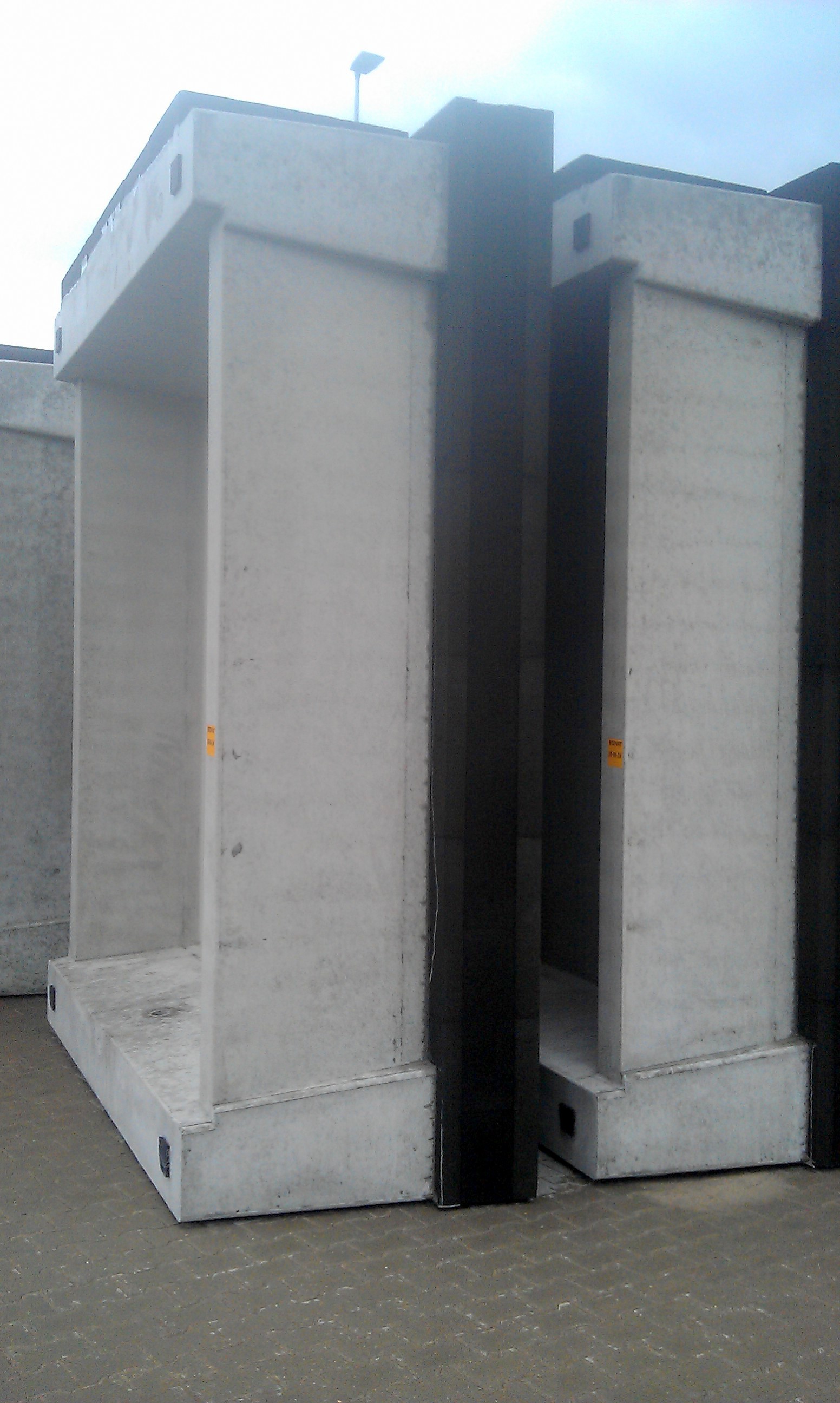
The entrance of the location still is clearly dominated by rows of construction parts intended for building the water-cask to be realised in the town of Arnhem. In the production hall the isolation walls originally were made by hand.
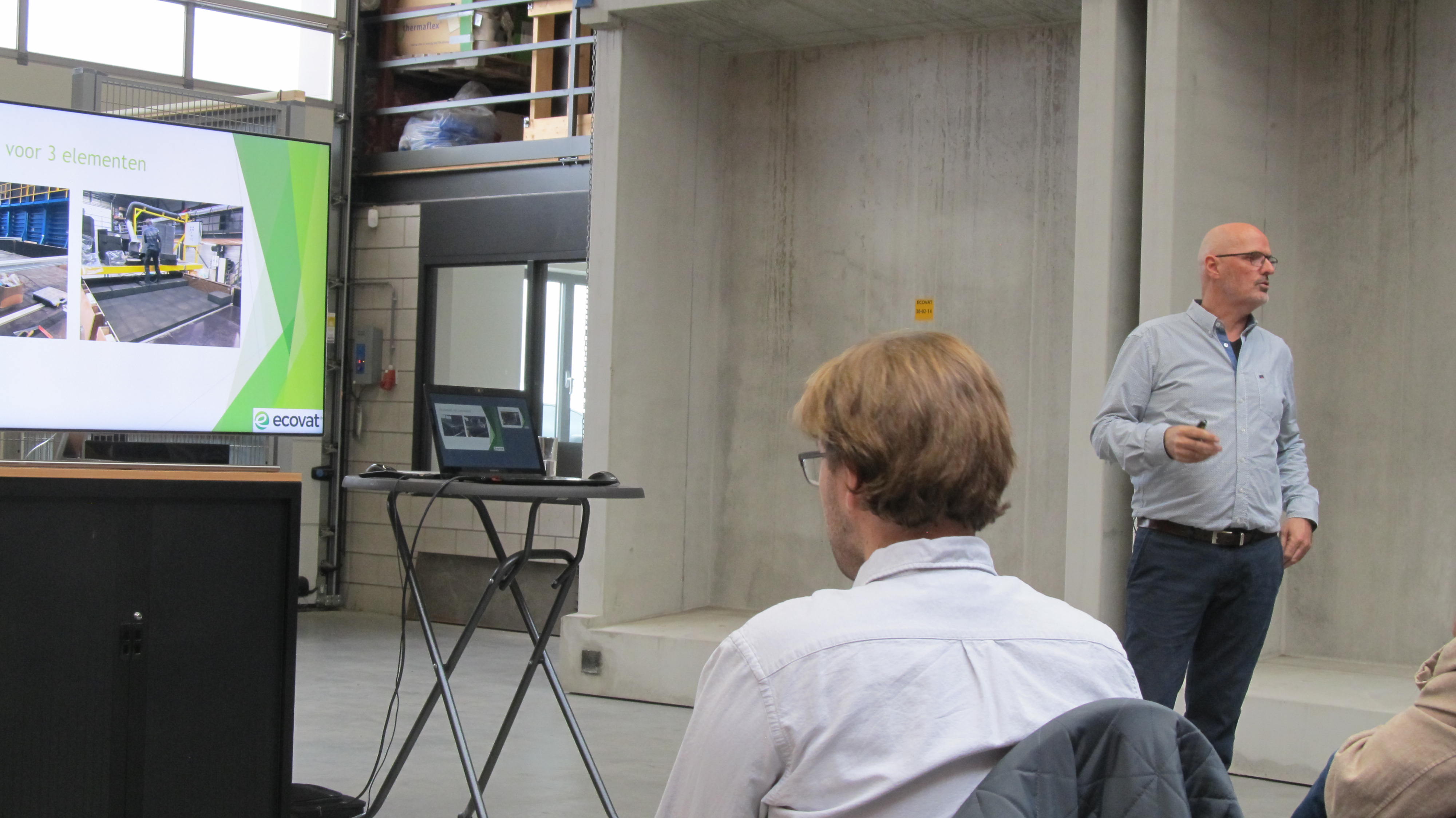
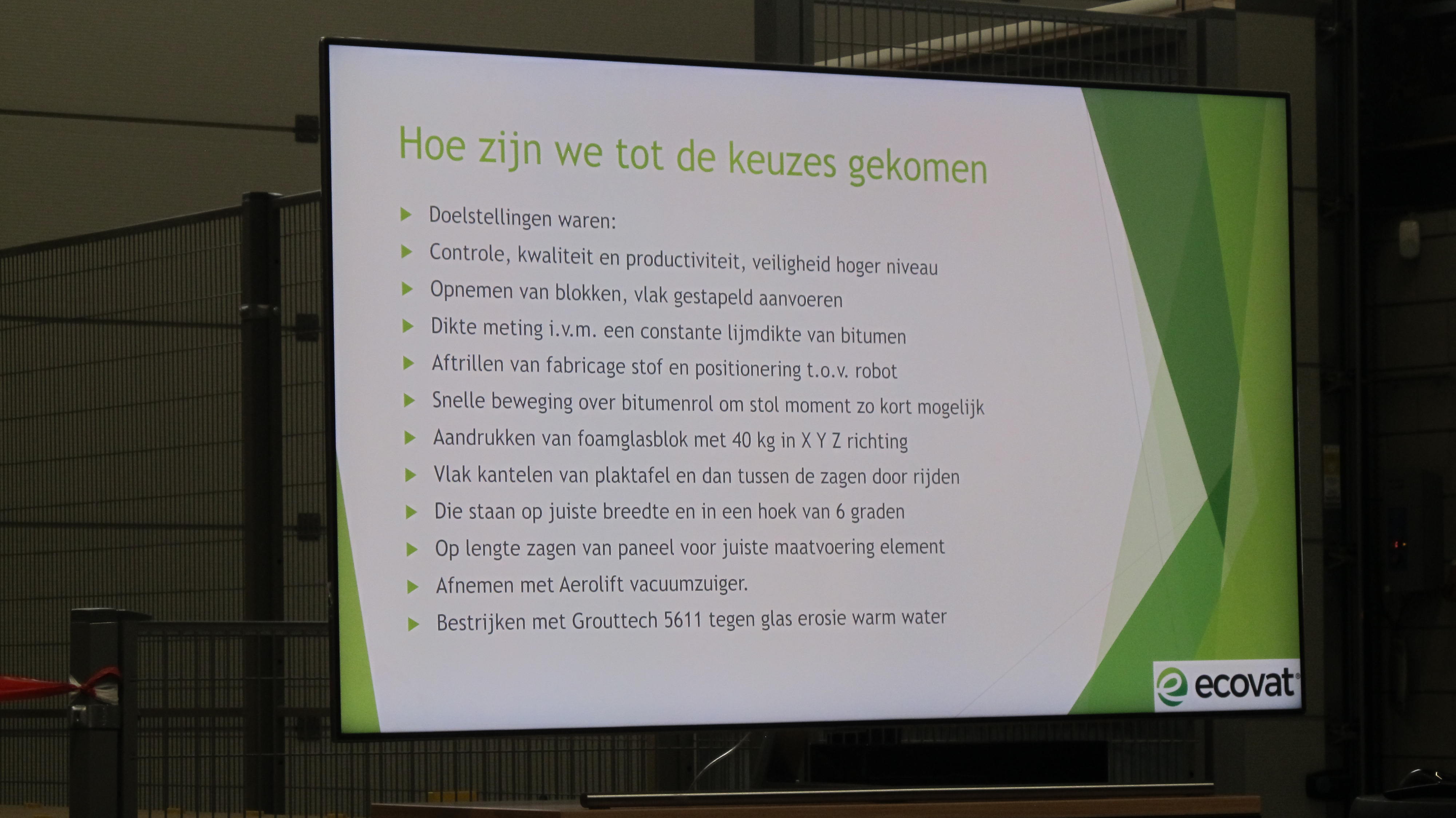
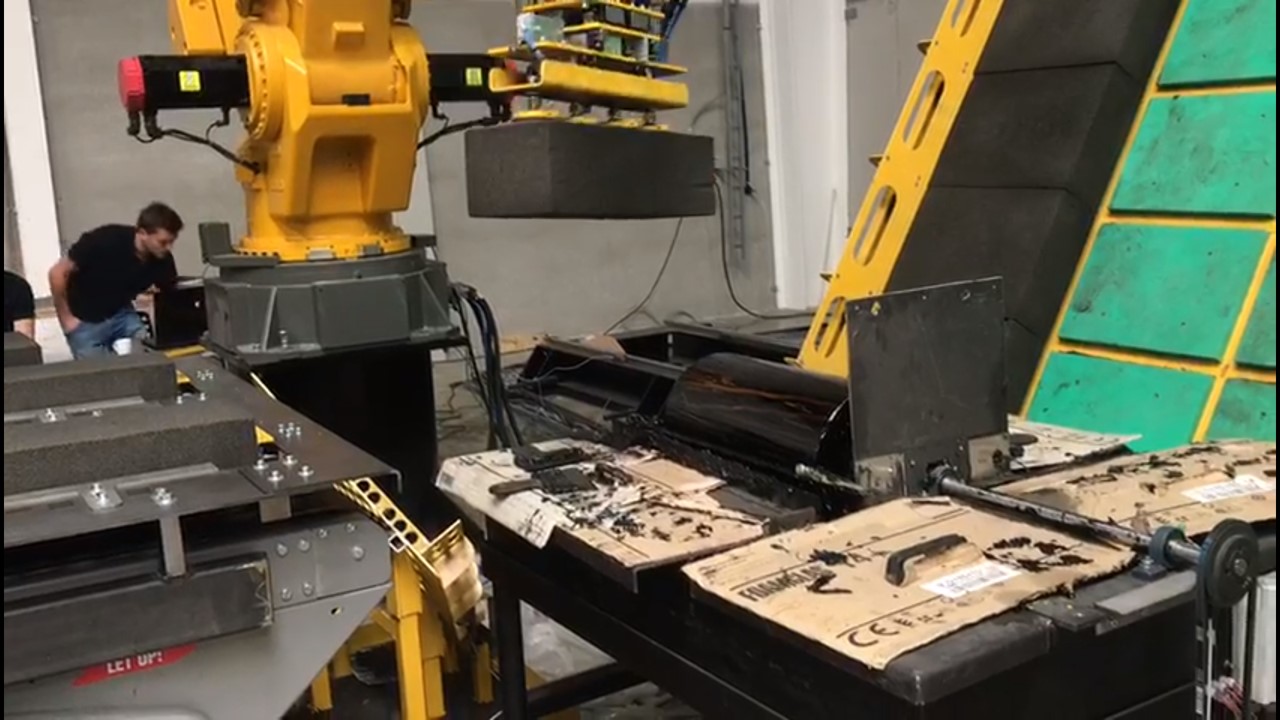
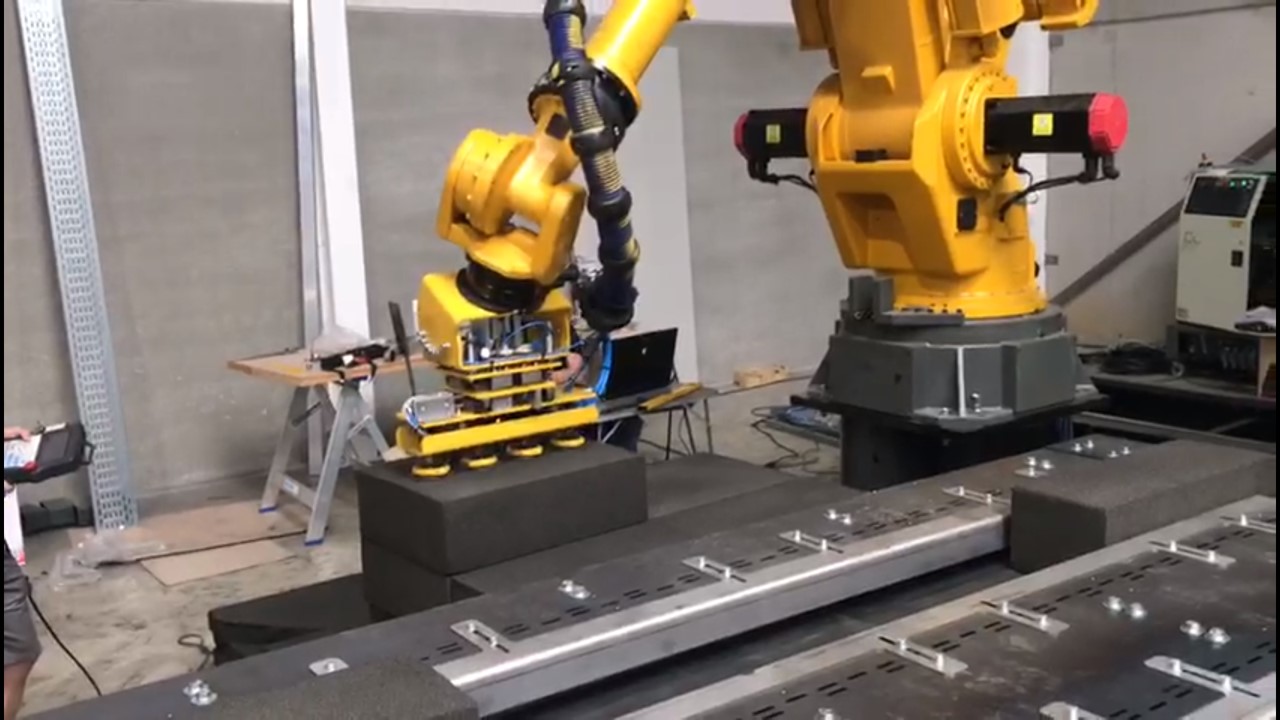
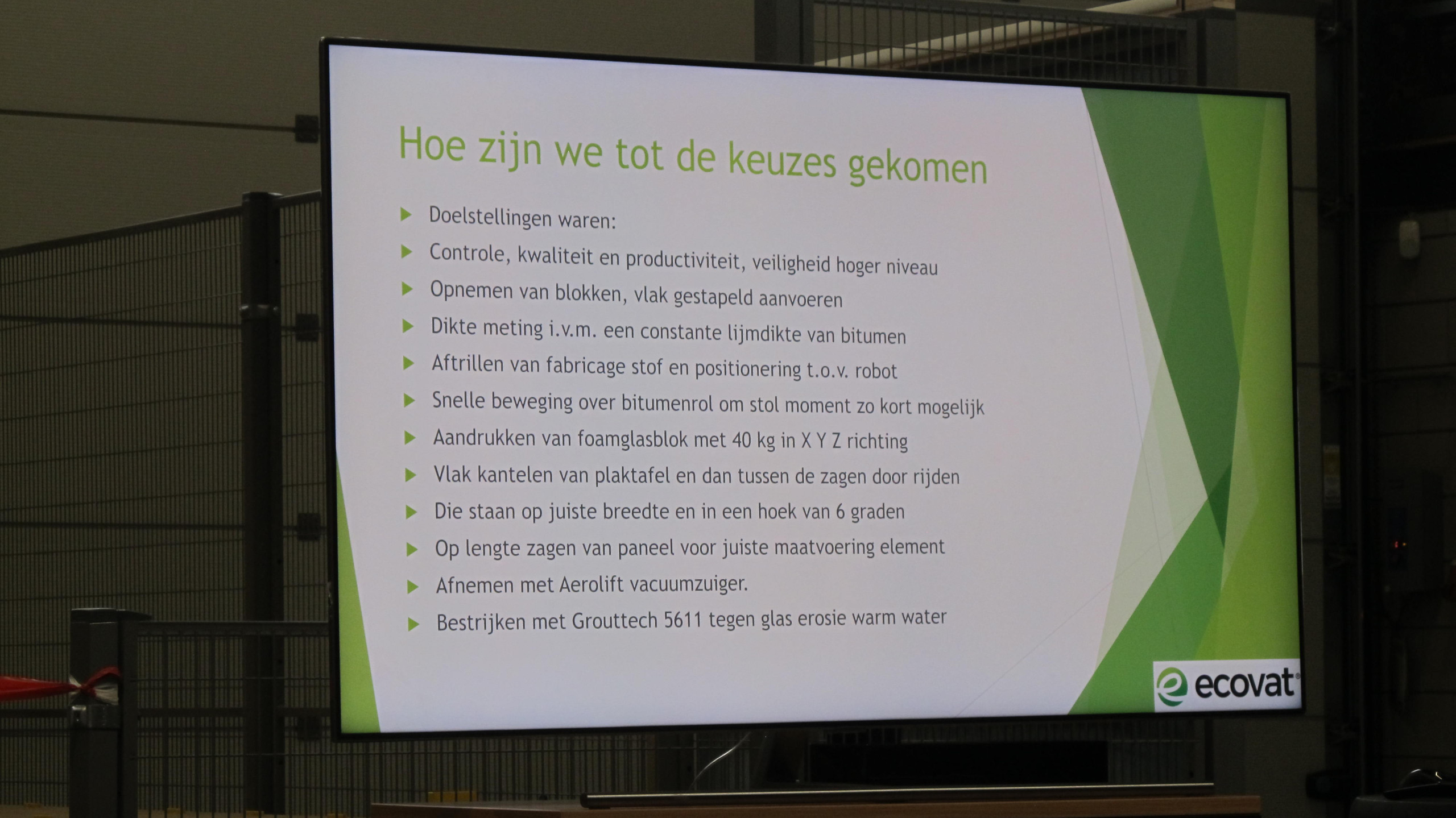
Today they are produced with a special robot system providing higher quality of the isolation. Logistic manager Ko Michelbrink explains why ECOVAT has chosen for a robot to improve the properties of the isolation walls.
Ecovat Thermal Energy Storage
To make maximum use of renewable energy, there is a demand for flexibility. The share of sustainably generated energy is growing and with it the demand for flexibility.
Energy storage allows us to use our energy flexibly. However, with the currently known thermal storage systems, energy can only be stored over short periods or the realisation is not profitable enough.
An Ecovat is a well-insulated, underground, concrete buffer tank with a guaranteed lifespan of 50 years. The attached image (Annex 1) is an Eco-Vat of 30 metres in diameter and 28.8 metres deep. Larger dimensions are also possible, smaller ones are not. An Ecovat can be used for large and small heat and cold networks. The number of connected homes (or home equivalents) per Ecovat can vary between 1,000 and 40,000 depending on the size of the vessel and the period to be bridged.
Applications:
There are roughly 3 possible applications. These will be explained in more detail in the meeting.
The lifespan and efficiency have been validated by DNV-GL. The service life is certified by TUV. The lifespan is also contractually defined and insured up to 30 years.
Building underground has a number of advantages:
First, the advantage that there is no visual nuisance for stakeholders such as local residents. This promotes support and the permit procedure.
Second, that the space can be used twice, e.g. for parking or greenery.
Thirdly, the Ecovat loses less heat in winter than above ground.
And finally, that the Ecovat needs less foundation than above ground. If desired, the Ecovat can also be partly above-ground. For example, in locations where the visual impact is less important and a larger vessel is desired. Concrete has the advantage that no corrosion can occur.
The purpose of an Ecovat in an energy system is to create balance between supply and demand of renewable energy through energy storage. Its high storage capacity and efficiency make it possible to store energy across the seasons. Thus, Ecovat optimally responds to energy supply and demand.
On 21 September 2018, an earlier visit to ECOVAT focused on renewable heat for homes. Meer duurzame energie betekent ook, dat er neer opslag nodig is voor de energiedragers (Gas â Elektriciteit â Warmte)
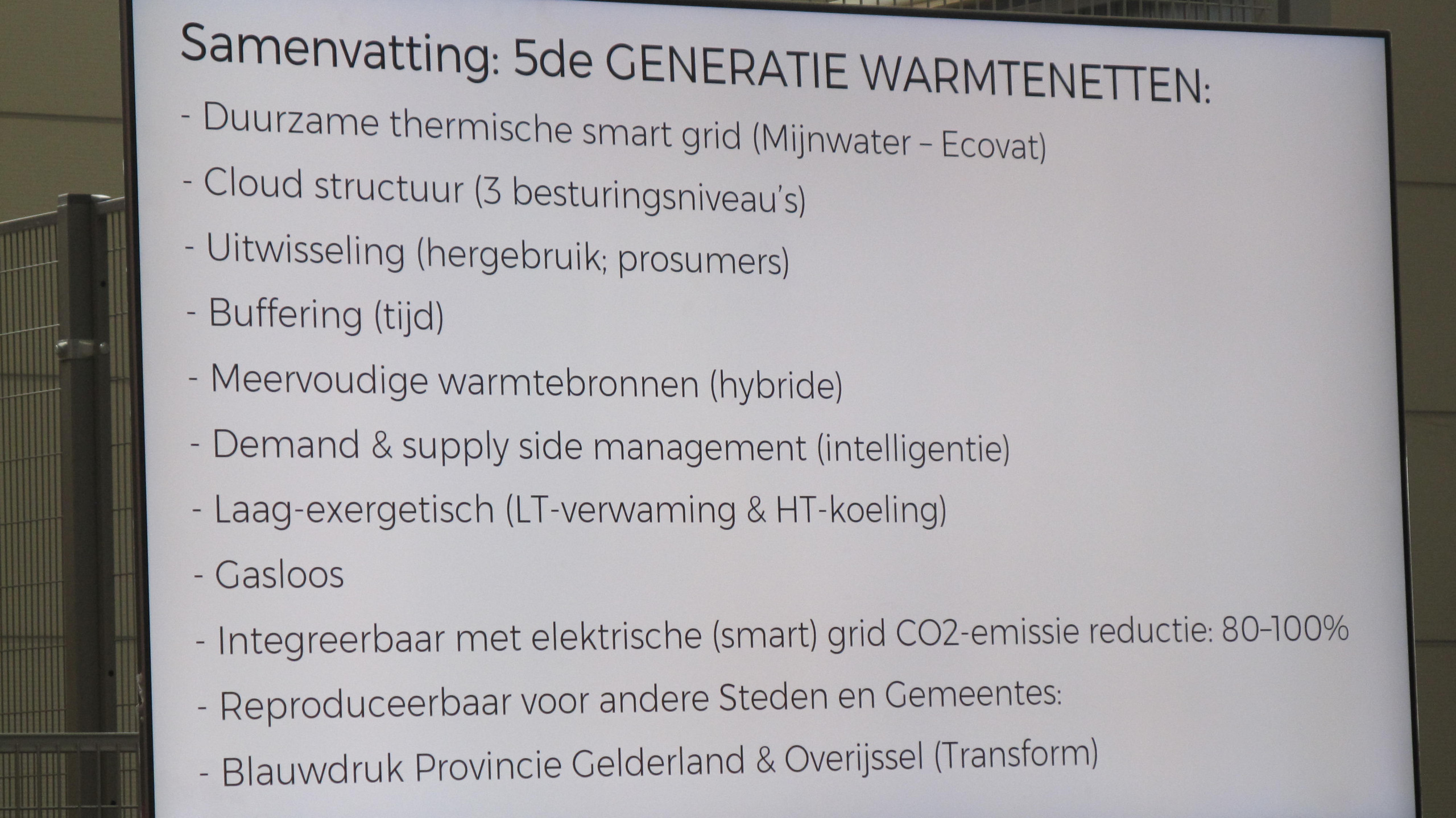
As a follow-up to the previous company visit to Ecovat, we will now take a closer look at the application possibilities of Ecovat in Heat Networks.
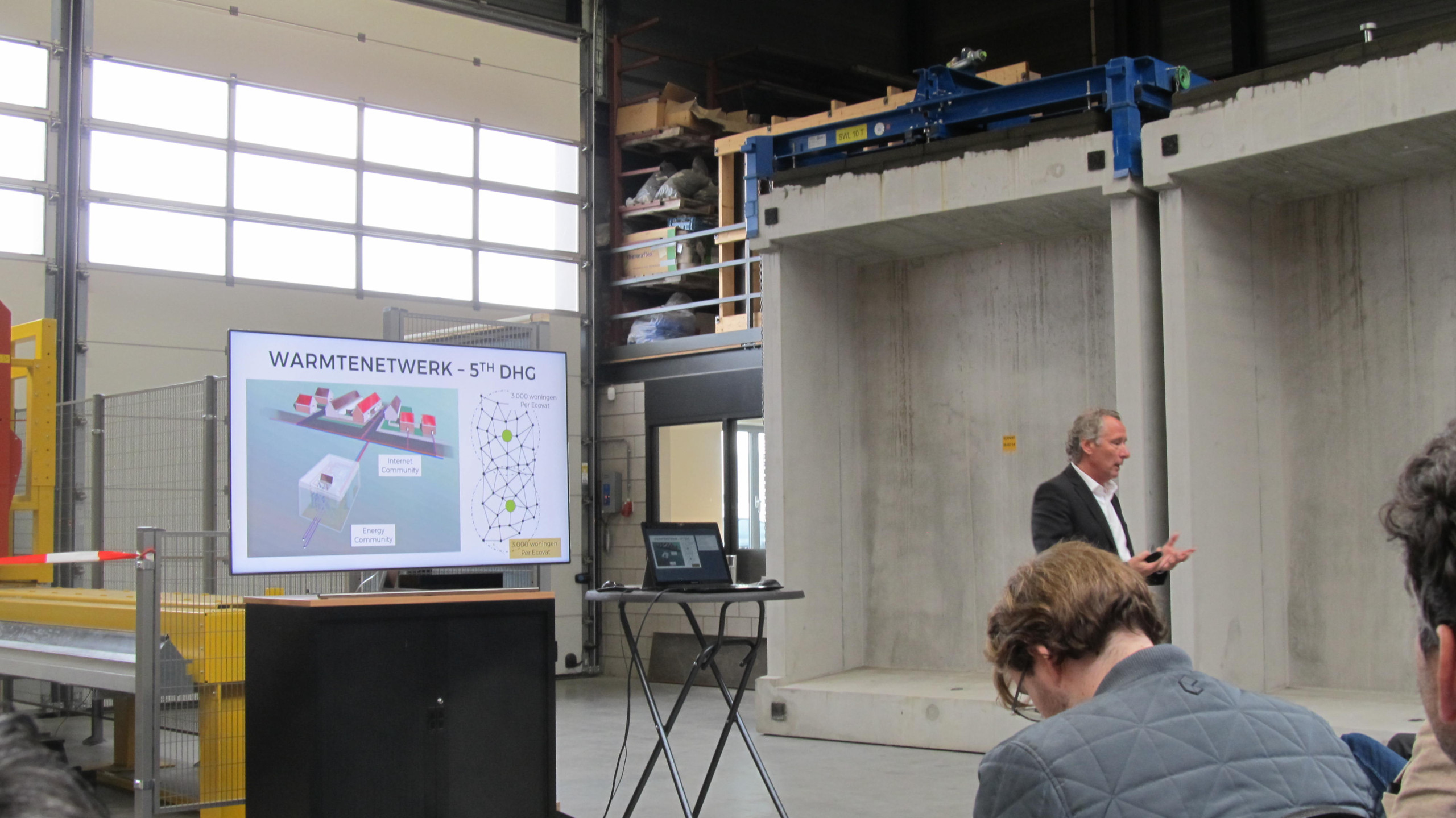
The company visit will consist of a presentation with technical and financial content of Ecovat and the business case.
Concluding with a viewing of the new robotic line for composing insulation packages for the prefabricated concrete elements.
Our host will be Aris de Groot (Founder and Managing Director Ecovat).