
Meet our speakers
- Inês Antunes
Inês Antunes is Science Lead for Human Research at the European Space Agency (ESA) in the Directorate of Human and Robotic Exploration (HRE). She leads and coordinates human research activities across spaceflight and a broad range of analogue environments used to simulate aspects of human exploration missions, including Antarctic expeditions, isolation and confinement studies, bed rest campaigns, planetary simulations, submarine missions, and other operational research platforms. Her work focuses on advancing our understanding of human adaptation, health, and performance, supporting the development of countermeasures and technologies, and preparing humans for long-duration exploration missions beyond low Earth orbit. She works closely with European space industry and international partners, including NASA, JAXA, CSA, and CNES, on collaborative research initiatives in space life sciences.
Human space exploration presents unique challenges to human health, performance, and wellbeing. This presentation will provide an overview of ESA's Human Research programme and how spaceflight and analogue environments are used to better understand human adaptation to exploration missions and address the medical and operational challenges faced by astronauts. Examples from research conducted in Antarctica, isolation and confinement facilities, bed rest studies, submarines, planetary simulations, and other operational settings will illustrate how these platforms contribute to the development of evidence-based countermeasures, technologies, and operational approaches to support future missions to the Moon, Mars, and beyond.
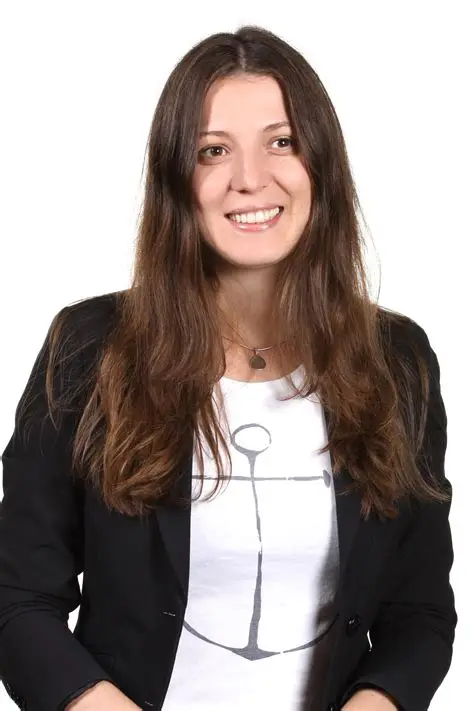
- Mónica Estébanez Camarena
Mónica is the CEO of Weather Impact, a climate consultancy company from the Netherlands. Weather Impact has the mission to enhance global food security, with a special focus on Africa, through two pillars: delivering climate advisory services to smallholder farmers and capacity building for national meteorological offices and stakeholders in the agricultural sector – from farmers to Government agencies.
Mónica holds a PhD in Water Management from the Delft University of Technology, the Netherlands. Her research focused on the modelling of West African rainfall through Earth Observation, Citizen Science and Deep Learning. During her PhD she acquired and led the Schools and Satellites project, that worked with schools and farmers in the north of Ghana to monitor daily rainfall. She also holds a BSc in Aerospace Engineering (Technical University of Madrid, Spain), a MPhil in Space Studies (University of Cape Town, South Africa) and a MSc by Research in Space Navigation (University of Cranfield, the UK).
She is passionate about global collaboration and co-creation for a fairer and safer world for all.
In her talk, Mónica will share insights from her journey from a childhood of dreaming of outer space, to becoming the CEO of Weather Impact, helping farmers in Africa and Asia become more climate resilient.
Drawing on her own experience, she will talk about how we can use space for the benefit of society and the planet. Her work spans from designing low-cost satellites to monitor wild fires, to using Earth Observation (EO) data to support policy making for climate preparedness in multiple African countries, to produce better weather information to support the decision making of smallholder farmers and to support natural disaster early warning.
She will also share experiences from the ground – on working with local communities and diverse partners to gather data to complement EO observations, link space observations to realities from the ground and turn science into actionable advice and recommendations. She will show how combining different perspectives, disciplines, and skills – as well as leaning on our “soft skills” like empathy and intuition - can turn technological innovation into practical and meaningful services for people and the planet.
Mónica will also share personal insights from her path across continents and cultures, including navigating the challenges of being a woman in engineering, and encourage us to be a role model for others.
Ultimately, she hopes that her talk can inspire the audience to use their talents and skills to make the world a little bit better. Because we all can!
- Mariana Belgiu
Mariana Belgiu is Associate Professor at the Faculty of Geo-Information Science and Earth Observation (ITC), University of Twente, the Netherlands. Her research focuses on integrating Earth Observation, geospatial data, and advanced modelling approaches, including GeoAI, to better understand environmental processes and address societal challenges. She develops and applies geospatial methods to extract meaningful information from satellite observations and other geospatial datasets, with applications in agricultural monitoring, food security, and environmental sustainability. Her recent research explores how Earth Observation and geospatial modelling can contribute to understanding the nutritional quality of crops and addressing hidden hunger. She is also interested in advancing responsible and trustworthy GeoAI, with particular attention to the reliability, transparency, and real-world applicability of geospatial models.
Understanding our planet from space: the potential and challenges of GeoAI
Satellites provide us with an unprecedented view of our planet. But how can we transform this wealth of observations into reliable, actionable knowledge that helps us address some of today's most pressing environmental and societal challenges? Advances in GeoAI are enhancing our ability to extract meaningful information from Earth Observation and other geospatial data, helping us identify complex patterns and relationships across space and time. These approaches contribute to a better understanding of environmental processes, agricultural systems, and challenges related to food security and human health. Yet, deriving reliable and actionable knowledge from complex satellite observations remains a significant challenge.
In her presentation, Mariana will explore both the potential and challenges of GeoAI in transforming Earth Observation data into useful knowledge. Drawing on examples from her research, including the use of satellite observations to investigate crop nutritional quality and hidden hunger, she will illustrate why integrating different data sources, and ensuring responsible use of GeoAI are essential. Ultimately, her talk will invite the audience to look beyond technological advances and reflect on what it takes to transform data from space into knowledge that can make a meaningful difference in addressing real-world challenges.

Inês Antunes

Mónica Estébanez Camarena